
Browne Wins Fourth Term in Antigua Election

PM Gaston Browne secures landslide victory in snap election, leading Labour party to win 15 of 17 parliamentary seats in Antigua and Barbuda.
Gaston Browne, the prime minister of Antigua and Barbuda, has secured a commanding fourth consecutive term following a snap general election that has reinforced his political dominance in the Caribbean nation. With preliminary election results indicating his party is poised to capture an impressive 15 of the 17 available parliamentary seats, Browne's victory represents a decisive endorsement from voters and signals continued confidence in his administration's governance.
The landslide outcome underscores the strength of Browne's political position within Antigua and Barbuda, a twin-island nation located in the eastern Caribbean. The Antigua and Barbuda Labour Party (ABLP) victory margin suggests widespread public support for the incumbent administration's policies and vision for the nation's future development. This electoral mandate provides Browne with substantial parliamentary backing to advance his legislative agenda during his fourth term in office.
In an address to jubilant party supporters gathered early Friday morning, Browne delivered remarks that emphasized the electorate's clear preference for his administration. "You have spoken, you have spoken clearly," the prime minister declared, his voice carrying the weight of vindication. "You have indicated that the Antigua and Barbuda Labour party (ABLP) is the best institution to run this country." His words reflected both gratitude toward voters and confidence in the mandate his party had received.
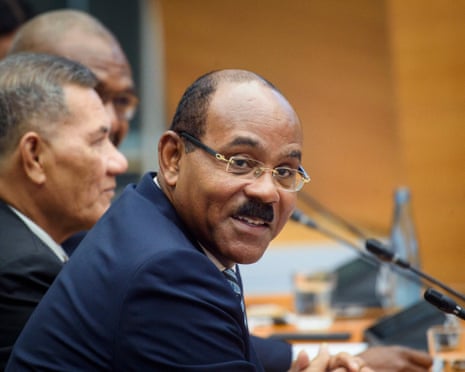
The decision to call a snap election proved strategically advantageous for Browne's administration, allowing the government to capitalize on favorable political conditions and public sentiment. Snap elections, called outside the regular electoral cycle, often reflect a government's confidence in its standing with voters. In this case, Browne's timing appears to have paid dividends, resulting in one of the most decisive electoral victories in recent Antigua and Barbuda political history.
The parliamentary election results demonstrate the electorate's assessment of Browne's governance record and his vision for steering the nation through contemporary challenges. With such a substantial majority, the prime minister will enjoy considerable legislative flexibility in advancing government initiatives without significant parliamentary obstruction. This supermajority position strengthens the executive branch's ability to implement policy reforms and budget measures deemed essential for national development.
Browne's fourth consecutive electoral victory represents a remarkable achievement in Caribbean politics, where electoral competition often proves highly competitive. His sustained appeal to voters across multiple election cycles reflects consistent governance, effective political organization by the ABLP, and maintenance of electoral coalitions that have proven resilient despite challenges inherent to Caribbean political dynamics. The breadth of his support extends across various demographic and geographic constituencies within the twin-island nation.
The election results carry significance beyond Antigua and Barbuda's borders, as they influence regional political dynamics and demonstrate patterns of electoral behavior within Caribbean democracies. The decisive nature of Browne's victory, with predictions of winning 15 of 17 seats, suggests that opposition parties failed to mount a compelling alternative vision that could resonate with sufficient numbers of voters. This outcome will likely shape discussions within Caribbean political circles regarding electoral strategies and governance effectiveness.
Looking ahead, Browne's substantial parliamentary majority positions his government to pursue ambitious legislative agendas without the constraints typically imposed by narrower margins. The prime minister will have considerable latitude to address national priorities, whether related to economic development, tourism infrastructure, climate resilience, or other issues affecting Antigua and Barbuda's citizens. The electoral mandate provides political capital that leaders often leverage during their tenure to implement transformative policies.
The snap election campaign itself reflected the competitive nature of Caribbean politics, with various parties articulating their visions for the nation's future. Browne's messaging clearly resonated more effectively with voters than alternative propositions, as evidenced by the preliminary results indicating ABLP dominance in parliamentary representation. The outcome suggests that voter confidence in Browne's leadership remains strong heading into what promises to be an eventful fourth term.
As Browne prepares to embark on his fourth term, the international community and regional observers will monitor how his administration addresses persistent challenges affecting Caribbean nations. Issues including economic diversification, climate change adaptation, tourism sustainability, and social development remain central concerns for Antigua and Barbuda's future trajectory. With decisive electoral support firmly established, the prime minister possesses the political capital necessary to tackle these multifaceted challenges.
The electoral victory also reflects the strength of the ABLP's political organization and its capacity to mobilize supporters effectively during campaign periods. Political parties that achieve sustained electoral success typically demonstrate superior organizational capabilities, more compelling messaging, and stronger connections with constituency bases. The ABLP's performance in this snap election reinforces its position as the dominant political force in Antigua and Barbuda's contemporary political landscape.
Source: The Guardian


