
BYD Eyes Global EV Dominance Without US Market

Chinese automaker BYD positions itself as a leader in the global shift away from fossil fuels, confident it can thrive independently of the US market.
BYD, China's automotive giant and world's leading electric vehicle manufacturer, has declared its strategic confidence in thriving on the global stage without dependence on the American market. The bold statement comes as energy costs continue to surge worldwide, accelerating the transition away from traditional petroleum-based vehicles and toward sustainable electric vehicle alternatives. With fossil fuel prices reaching unprecedented levels, BYD positions itself at the forefront of this fundamental shift in the automotive industry, leveraging its technological advantages and manufacturing prowess.
The company's announcement reflects a broader strategic pivot within the Chinese automotive sector, where manufacturers have invested heavily in EV technology and battery innovation over the past decade. As crude oil prices fluctuate and environmental concerns mount globally, the demand for zero-emission vehicles continues to accelerate across Europe, Asia, and developing markets. BYD's confidence stems from its comprehensive vertical integration, controlling everything from battery production to vehicle assembly, a competitive advantage that distinguishes it from many international competitors.
Fuel price volatility has become an increasingly critical factor influencing consumer purchasing decisions in emerging markets where gasoline costs consume a significant portion of household budgets. Countries throughout Southeast Asia, South America, and Africa are experiencing surging transportation costs that make electric vehicles an increasingly attractive economic proposition. BYD has strategically positioned itself to capture market share in these price-sensitive regions where its competitive pricing and advanced battery technology offer compelling value propositions compared to traditional combustion engine vehicles.
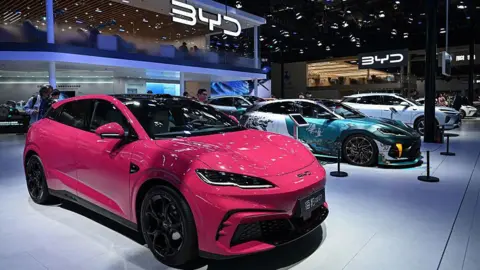
The company's manufacturing infrastructure spans multiple continents, with production facilities in Brazil, India, Thailand, and Japan, complementing its massive domestic manufacturing capacity in China. This global production footprint allows BYD to serve regional markets efficiently while minimizing logistics costs and navigating tariff barriers that might otherwise constrain international growth. The strategic expansion demonstrates the company's commitment to becoming a truly global automotive player, independent of any single market's regulatory environment or trade policies.
Battery technology innovation remains central to BYD's competitive strategy, with the company investing billions in research and development to improve energy density, charging speed, and cost efficiency. The company's proprietary lithium iron phosphate (LFP) batteries have gained recognition for their safety, longevity, and affordability compared to conventional lithium-ion chemistries used by competitors. This technological differentiation creates a significant moat against competition, particularly in price-conscious markets where consumers prioritize value and reliability over premium brand status.
Consumer preferences are rapidly evolving as awareness of climate change intensifies and governments implement stricter emissions regulations. The global EV market is projected to grow exponentially through 2030, with demand expected to accelerate as charging infrastructure improves and battery costs continue declining. BYD's diversified vehicle portfolio, ranging from budget-friendly sedans to premium SUVs and commercial vehicles, positions the company to capture demand across multiple market segments and consumer demographics.

The company's sustainability initiatives extend beyond vehicle manufacturing to encompass renewable energy systems, energy storage solutions, and comprehensive environmental responsibility programs. BYD has positioned itself as an integrated clean energy solutions provider rather than merely a vehicle manufacturer, appealing to environmentally conscious consumers and government bodies seeking to reduce carbon emissions. This broader business model creates additional revenue streams and enhances brand positioning within the rapidly evolving clean technology sector.
Government support throughout Asia and emerging markets continues driving favorable conditions for EV adoption, with subsidies, tax incentives, and regulatory mandates accelerating the transition from fossil fuels. China's aggressive push toward electrification has created domestic market conditions that allowed BYD to scale operations, achieve manufacturing efficiencies, and refine product offerings before expanding internationally. These competitive advantages, developed through years of operating in the world's largest electric vehicle market, position the company well for continued global expansion.
Industry analysts note that BYD's independence from the American market reflects broader geopolitical realities where Chinese manufacturers increasingly develop alternative supply chains and market channels. Trade tensions and potential regulatory barriers in developed Western markets have incentivized Chinese companies to pursue growth strategies focused on Asia, Africa, and Latin America. This geographic diversification reduces vulnerability to policy changes or market disruptions in any single region while capturing growth opportunities in faster-expanding emerging markets.
The global automotive industry stands at an inflection point where the transition from internal combustion engines to electric propulsion has become inevitable rather than aspirational. BYD's early commitment to electrification, combined with substantial investments in production capacity and battery technology, has positioned the company as a principal beneficiary of this transformation. The company's confidence in thriving without US market access reflects not arrogance but rather realistic assessment of global market dynamics where the company's competitive advantages translate into compelling value propositions for consumers globally.
Looking forward, BYD continues expanding its product lineup, investing in autonomous vehicle technology, and exploring emerging market opportunities where rising fuel costs make electric vehicles increasingly essential rather than optional. The company's strategic vision encompasses becoming the world's dominant automotive manufacturer over the next decade, achieving this goal through innovation, scale, and customer-centric product development. As fossil fuel prices remain elevated and environmental consciousness grows, BYD's positioning within the clean transportation revolution appears increasingly advantageous for long-term value creation and market expansion.
Source: BBC News


