
Cabin Layout Optimization: Improving Aircraft Evacuation Times

New research challenges the FAA's 90-second evacuation requirement, finding significantly longer times. Discover the latest insights on optimizing cabin layouts for efficient emergency evacuations.
Cabin layout optimization has become a critical focus in the aviation industry, as airlines and regulators seek to ensure the safety and efficiency of aircraft evacuations. The Federal Aviation Administration (FAA) currently requires that all airplane passengers must be able to evacuate any aircraft within a 90-second window in the event of an emergency. However, a new paper published in the journal AIP Advances suggests that this requirement may not be realistic, particularly given the increasing number of elderly passengers who might need more time and assistance.
This isn't the first time scientists have explored this optimization problem. Back in 2011, Jason Steffen, a physicist at the University of Nevada, Las Vegas, became intrigued by the question of the most efficient boarding method for airplanes. Steffen applied the same optimization routine used to solve the famous traveling salesman problem to airline boarding strategies, and was surprised to find that the commonly used "back-to-front" boarding strategy was actually the least efficient.
The most efficient, aka the "Steffen method," has the passengers board in a specific order to minimize the time and movement required to find their seats. This research highlights the importance of optimizing cabin layouts and boarding procedures to improve the safety and efficiency of aircraft evacuations.
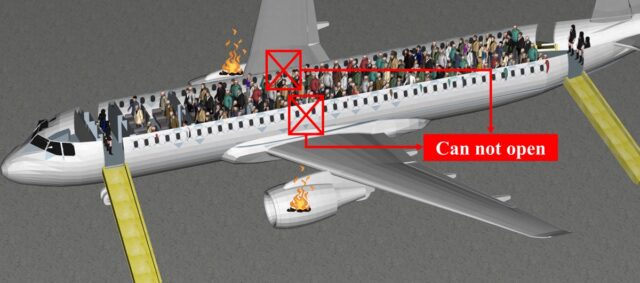
The new study published in AIP Advances used simulated evacuation scenarios to evaluate the impact of various cabin layout factors, such as seat spacing, aisle width, and passenger demographics. The results showed that evacuation times were significantly higher than the 90-second requirement, in some cases exceeding 2 minutes.
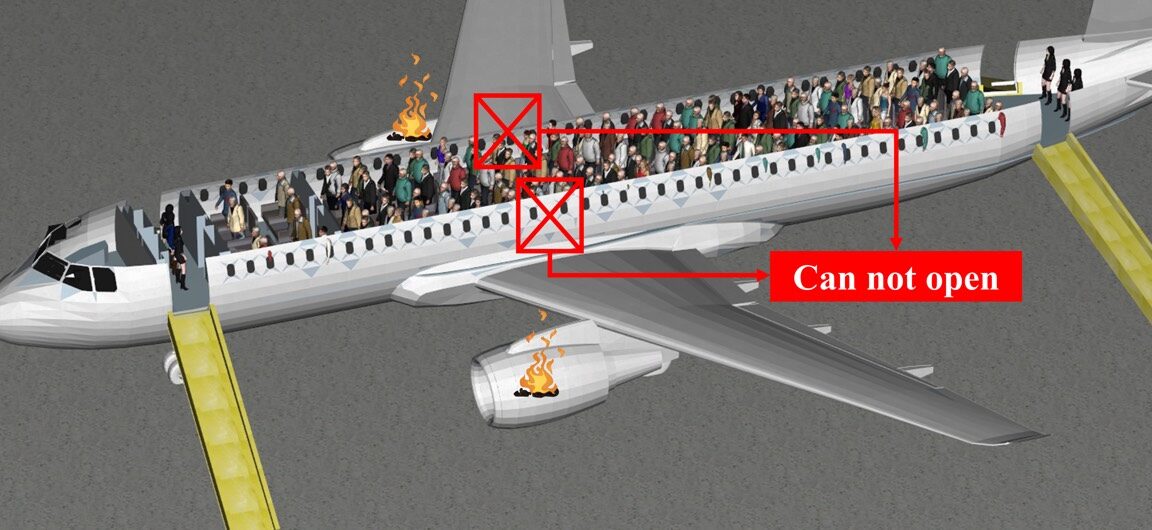
These findings challenge the FAA's current evacuation standards and highlight the need for a more nuanced, data-driven approach to cabin design and emergency procedures. By optimizing cabin layouts and incorporating the latest research on passenger behavior and evacuation dynamics, airlines and regulators can work to improve the safety and efficiency of aircraft evacuations.
As the aviation industry continues to evolve, with factors like aging populations and increasing passenger volumes, the need for evidence-based cabin layout optimization will only become more critical. The insights from this latest study and previous research on boarding strategies provide valuable guidance for the industry to enhance the safety and passenger experience of air travel.

Source: Ars Technica


