
California Brush Fire Spreads Rapidly Across Simi Valley

A fast-moving brush fire in Simi Valley, California has forced evacuations and destroyed homes. Watch aerial footage of the Sandy fire spreading across the region.
A rapidly intensifying brush fire that erupted on Monday morning in Southern California has triggered mandatory evacuation orders affecting thousands of residents and has already resulted in significant property damage. The incident represents one of the region's latest challenges with wildfire management as dry conditions continue to plague the area heading into the typically dangerous fire season.
The Sandy fire was officially reported just after 10 a.m. in Simi Valley, a populous city located in Ventura County approximately 30 miles northwest of downtown Los Angeles. By its second day of burning, the blaze had expanded to engulf more than 1,300 acres of land, demonstrating the ferocious pace at which it consumed vegetation and structures in its path. The rapid expansion of the fire underscores the extreme fire behavior conditions present in the region during this period.
Multiple neighborhoods situated in the northern portions of Los Angeles County were placed under evacuation warnings as the fire continued its advance. Under an evacuation warning, residents are not legally mandated to depart their homes immediately but are strongly encouraged to remain vigilant and maintain preparedness to evacuate should conditions deteriorate. These warnings serve as critical intermediate alerts that allow residents time to prepare while officials assess whether full evacuation orders become necessary.
The Sandy fire evacuation represents one of the most significant displacement efforts in the Simi Valley region in recent memory, with emergency management officials coordinating extensive resources to ensure public safety. Evacuation orders have been implemented in the most at-risk areas where fire progression poses the most immediate threat to human life and property. Officials continue to assess damage as firefighting crews work tirelessly to contain the expanding perimeter.
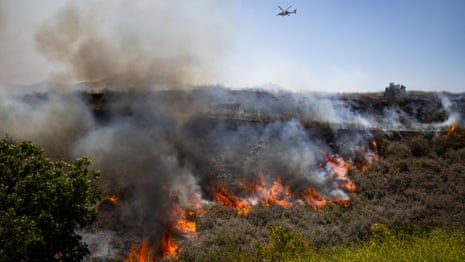
Aerial footage captured by news helicopters and emergency response drones provides a sobering perspective on the scale of destruction, revealing the blackened terrain left in the fire's wake and the dramatic smoke columns rising from active burn zones. The video documentation of the fire spread demonstrates the unpredictable nature of wildfire behavior in Southern California's challenging terrain, where canyons and hillsides can accelerate flame advancement and create dangerous wind patterns.
The region's topography, characterized by steep hillsides, dense brush, and numerous canyons, creates inherent challenges for both fire suppression efforts and evacuation operations. Narrow roads in many affected neighborhoods limit access for both emergency vehicles and residents attempting to flee the area. Fire officials have emphasized the importance of residents following evacuation instructions promptly to avoid creating bottlenecks that could endanger lives.
Local, state, and federal firefighting agencies have mobilized significant resources to combat the Sandy fire, including ground crews, aerial water tankers, and helicopters equipped for firefighting operations. The coordinated response reflects the established protocols developed through decades of managing California's recurring fire crises. Despite these extensive efforts, the fire's rapid growth rate has challenged containment strategies from the outset.
Weather conditions have played a critical role in the fire's explosive growth, with hot temperatures, low humidity levels, and wind gusts creating the perfect conditions for rapid fire advancement. The forecast for coming days will be closely monitored by emergency management officials who are preparing contingency plans should conditions continue to deteriorate. Historical weather patterns for this time of year suggest that conditions may remain challenging for the foreseeable future.
Residents throughout the affected areas have experienced significant disruption to their daily lives, with schools potentially facing closures and businesses shuttering operations due to the emergency. The smoke generated by the fire has created air quality concerns extending far beyond the immediate burn area, affecting communities throughout the greater Los Angeles metropolitan region. Air quality alerts have been issued for sensitive populations, particularly children, elderly individuals, and those with respiratory conditions.
The damage assessment process is ongoing as officials work to determine the total number of structures impacted by the Sandy fire. At least one home has been confirmed destroyed, though preliminary surveys suggest that this number could increase substantially as assessments continue in accessible areas. Insurance adjusters and disaster recovery specialists are mobilizing to assist affected property owners in the coming weeks.
The Sandy fire serves as another reminder of California's vulnerability to large-scale fire events, particularly during transition seasons when conditions can shift rapidly from favorable to dangerous. State officials have renewed calls for residents to maintain defensible space around their properties, including clearing dead vegetation and removing accumulated brush that could fuel rapid fire advancement. These preventive measures, while sometimes labor-intensive, can significantly improve the likelihood of property survival during fire events.
Community resilience and mutual aid networks have been activated as residents work together to support those displaced by the fire. Local organizations, charitable groups, and government agencies have established assistance centers providing shelter, supplies, and information to evacuees. The coordinated response demonstrates the importance of community preparedness and the critical role of mutual support during disaster situations.
Looking ahead, fire managers are preparing for what may be an extended firefighting campaign, with predictions suggesting that full containment could take several days or longer depending on weather patterns and fire behavior. Mutual aid agreements between nearby jurisdictions have been activated to ensure adequate resource sharing among responding agencies. The situation remains fluid, with officials providing regular updates to the public through emergency notification systems and media briefings.
The Sandy fire continues to evolve as environmental conditions and firefighting strategies interact in complex ways across the challenging Simi Valley terrain. Residents who have received evacuation orders are urged to leave immediately, while those under evacuation warnings should prepare to depart on short notice. Real-time updates regarding the fire's progress and evacuation status are available through official county emergency management channels and authorized news sources covering this ongoing situation.
Source: The Guardian


