
California Launches Free Diapers Program for Newborns

California becomes the first state to offer free diapers to all newborns, providing hundreds of diapers before hospital discharge to ease financial burdens.
In a groundbreaking initiative designed to support working families and reduce the financial strain of early parenthood, California has officially launched the nation's first comprehensive free diaper program for newborns. The ambitious program, unveiled on Friday by Governor Gavin Newsom, marks a significant step forward in addressing one of the most basic and costly necessities facing new parents across the state.
Under this new California diaper assistance program, families bringing their newborns home from the hospital will receive hundreds of complimentary diapers before discharge. This proactive approach aims to eliminate one of the immediate financial pressures that new parents face during those critical first weeks of their child's life. The initiative recognizes that diaper costs can quickly accumulate, often straining household budgets for families already managing the expenses of childbirth and infant care.
The program will initially be implemented across approximately 65 to 75 hospitals throughout California during its first operational year. These participating medical facilities collectively handle roughly one-quarter of all births occurring within the state and predominantly serve low-income and underserved patient populations. This strategic focus ensures that the program reaches families who would benefit most significantly from this assistance, addressing existing health and economic disparities in maternal and infant care access.
Governor Newsom's office has confirmed that while the initiative will expand to additional hospitals statewide in subsequent years, specific expansion timelines and final hospital counts have not yet been disclosed. This phased rollout approach allows state health officials to refine operations, assess outcomes, and ensure quality implementation before broadening the program's reach. The measured expansion strategy demonstrates the state's commitment to sustainable program growth that prioritizes effectiveness over rapid scaling.
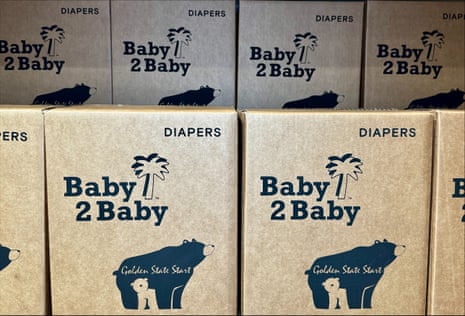
To execute this visionary program, California has established a strategic partnership with Baby2Baby, a respected nonprofit organization dedicated to providing essential resources to children in poverty. Together, they have created a specialized diaper product bearing the distinctive label "Golden State Start", reflecting California's commitment to giving every newborn in the state an equitable beginning. This collaboration leverages Baby2Baby's extensive experience in distributing critical supplies to vulnerable populations while maintaining quality standards.
The "Golden State Start" branded diapers represent more than just a product; they symbolize the state's recognition that basic necessities should not be obstacles to healthy child development. By manufacturing diapers specifically for this initiative, California and Baby2Baby ensure consistency, quality, and appropriate sizing for newborns. This dedicated production demonstrates the state's willingness to invest in infrastructure that directly serves vulnerable populations.
The free newborn diaper initiative addresses a critical gap in public health support that has long been overlooked by policymakers. Research consistently demonstrates that diaper insecurity affects a significant portion of low-income families, often forcing parents to choose between purchasing diapers and other essential needs such as food, medication, or utilities. By providing diapers directly at the hospital before discharge, California removes this painful decision point during one of the most vulnerable periods for new families.
Beyond the immediate financial relief, this program carries substantial implications for infant health outcomes. Access to an adequate supply of clean diapers directly correlates with reduced rates of diaper dermatitis, urinary tract infections, and other hygiene-related complications in newborns. Additionally, when parents are relieved of the burden of purchasing diapers immediately after birth, they can allocate limited resources toward other critical needs such as healthy nutrition, safe housing, and preventive healthcare.
The economic impact of diaper costs on low-income households cannot be overstated. Families in poverty often spend 14 percent or more of their income on diapers, wipes, and related supplies—a burden that far exceeds what middle and upper-income families experience. This disproportionate financial pressure has led many advocates to characterize diaper insecurity as a form of structural inequality that perpetuates cycles of poverty and limits parental ability to engage in early childhood education and development activities.
California's approach to this challenge reflects a broader policy recognition that poverty reduction requires addressing basic material needs. By removing even one significant financial barrier for new families, the state acknowledges that meaningful poverty alleviation requires practical, direct interventions. This philosophy aligns with emerging research on social determinants of health that identifies basic resource security as foundational to improved health and developmental outcomes.
The partnership between state government and nonprofit organizations exemplifies the increasingly collaborative approach to addressing social challenges. Baby2Baby brings operational expertise, community connections, and an established track record of effective resource distribution to vulnerable populations. Meanwhile, the state contributes regulatory authority, healthcare access through hospitals, and the financial resources necessary to sustain the program at scale. This complementary relationship allows both organizations to leverage their respective strengths toward a common goal.
Looking toward the future, California's initiative has the potential to inspire similar programs in other states. The success or challenges of this first-year rollout will provide valuable data and lessons for other jurisdictions considering comparable interventions. As other states grapple with how to support low-income families and improve maternal and infant health outcomes, California's groundbreaking diaper program will likely serve as a reference point and potential model for replication.
The announcement of this program has been widely praised by child welfare advocates, public health officials, and maternal health organizations. Many have highlighted that it represents the kind of concrete, evidence-based intervention that can meaningfully improve lives without requiring extensive bureaucratic barriers to access. The universal nature of the program—available to all newborns at participating hospitals rather than requiring income verification—ensures that all families benefit from state support during this critical period.
Implementation of the California newborn diaper initiative will require coordination across multiple state agencies, hospital systems, and nonprofit partners. Quality assurance protocols must be established to ensure consistent product availability and appropriate sizing. Training programs will need to be developed for hospital staff responsible for distributing diapers to new parents. Evaluation mechanisms must be put in place to assess program outcomes and identify opportunities for improvement as implementation proceeds.
As California moves forward with rolling out this innovative program, families across the state can anticipate meaningful relief from one of the earliest and most pressing financial challenges of parenthood. The hundreds of diapers provided through "Golden State Start" will represent not just a practical resource, but a tangible demonstration of state commitment to supporting vulnerable families and ensuring that all California children begin life with basic dignity and security. This pioneering effort underscores that comprehensive support for families requires attention to foundational needs often overlooked by broader policy frameworks.


