
Can You Walk to MetLife Stadium from NYC?

We tested if fans can walk to MetLife Stadium for World Cup 2026 after train fares skyrocketed from $13 to $105. Here's what happened.
As World Cup 2026 approaches, fans planning to attend matches at MetLife Stadium in New Jersey are facing an unexpected hurdle: skyrocketing transportation costs. The standard train fare from New York City to the stadium has surged from a modest $13 to an eye-watering $105 per ticket, prompting many spectators to explore alternative routes to the venue. This dramatic price increase has sparked a broader conversation about accessibility and transportation infrastructure for one of the world's most prestigious sporting events.
The cost explosion has left many fans wondering whether they might simply walk to MetLife Stadium instead of paying the inflated fares. While walking to a sporting event might seem unconventional in the modern era, the economic pressure created by these ticket price hikes has made such alternatives worth investigating. To answer this burning question, we enlisted comedian and adventurer Mark McPartland to embark on a real-world journey from New York City to MetLife Stadium, documenting the challenges and feasibility of pedestrian travel across this distance.
McPartland's expedition revealed a sobering reality about pedestrian infrastructure in the New York metropolitan area. The journey, which took approximately 4.5 hours of continuous walking, exposed significant gaps in the region's ability to accommodate foot traffic over longer distances. While portions of the route offered scenic views and relatively pleasant walking conditions, the overall experience highlighted the fundamental mismatch between American infrastructure design and European-style pedestrian travel patterns.
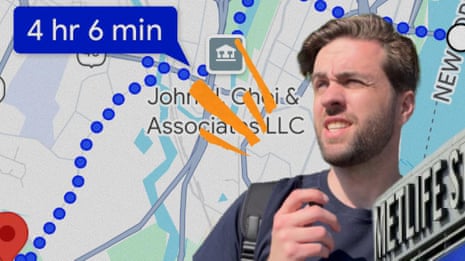
The initial stretch of the walk through New York City proved manageable, with sidewalks and designated pedestrian pathways guiding travelers through familiar urban landscapes. However, as McPartland ventured beyond the city limits into New Jersey, the infrastructure quality diminished considerably. Many roads lack proper sidewalks, forcing pedestrians into dangerous situations where they must share space with vehicular traffic or traverse unpaved shoulders.
One of the most frustrating discoveries during this stadium access experiment came near the end of the journey. Despite successfully covering the majority of the distance, blocked-off pedestrian routes and restricted access points prevented McPartland from completing the final leg to MetLife Stadium. These barriers, likely designed for security or traffic management purposes, would prove insurmountable for any fan attempting to walk directly to the venue. The blocked passages underscore a larger issue with how American sporting venues are designed and protected, with little consideration for pedestrian access from surrounding communities.
The timing of this investigation is particularly significant given the broader context of World Cup 2026 preparations in the United States. As FIFA and local organizers finalize details for hosting matches across multiple cities, questions about fan accessibility and transportation become increasingly critical. MetLife Stadium, which will host several matches during the tournament, sits in a challenging location relative to New York City—close enough to seem reachable but far enough that pedestrian travel becomes genuinely difficult.
The stark contrast between American and European approaches to pedestrian-friendly design becomes apparent when examining this journey. In many European cities, fans attending major sporting events can realistically walk to stadiums thanks to comprehensive sidewalk networks, pedestrian zones, and continuous pathways. The absence of comparable infrastructure in the New York-New Jersey corridor reflects broader urban planning differences that have evolved over decades of automobile-centric development in the United States.
Transportation experts have long noted that American cities, unlike their European counterparts, were largely designed around personal vehicle use rather than public transportation or walking. This fundamental difference in urban philosophy means that sudden spikes in transportation demand—such as those created by major sporting events—cannot be easily accommodated through alternative modes of travel. The transportation challenge facing World Cup fans at MetLife Stadium exemplifies these systemic limitations.
The inflated train fares that prompted this investigation deserve closer examination. The jump from $13 to $105 represents roughly an 708% increase, far exceeding typical price escalation patterns even for premium sporting events. Such dramatic pricing suggests either severe capacity constraints on the rail system or profit-maximizing strategies that prioritize revenue over accessibility. Either way, fans are caught in a difficult position where legitimate transportation options become financially prohibitive.
Local officials and transportation authorities have faced criticism for insufficient infrastructure investment ahead of the 2026 FIFA World Cup in the United States. Critics argue that hosting a global event of this magnitude requires corresponding investments in transportation systems, yet many facilities remain unchanged from previous decades. The blocked pedestrian routes discovered during McPartland's walk appear to be permanent features rather than temporary World Cup-related restrictions, suggesting systemic problems rather than event-specific oversights.
For fans determined to attend matches at MetLife Stadium despite these challenges, several alternatives exist beyond the prohibitively expensive train option. Rideshare services, private vehicle rentals, and organized bus tours represent viable alternatives, though each comes with its own financial and logistical considerations. Some fans may choose to explore parking options in New Jersey and driving personally, though this approach creates its own complications around stadium parking capacity and traffic management.
The broader implications of McPartland's walking experiment extend beyond just MetLife Stadium. As the United States prepares to host the World Cup 2026 across multiple cities and venues, transportation accessibility will become an increasingly important factor in fan satisfaction and attendance. Cities without robust public transportation systems may struggle to manage the influx of visitors, potentially diminishing the overall experience and raising questions about America's readiness to host events of this magnitude.
Looking ahead, there remains time for transportation authorities and local governments to address these gaps before the tournament begins. Temporary shuttle services, enhanced bus routes, and even coordinated rideshare arrangements could significantly improve fan access to MetLife Stadium. However, the bureaucratic and budgetary hurdles involved in implementing such solutions have historically proven challenging in the United States, where transportation planning often moves slowly.
McPartland's 4.5-hour walking journey ultimately serves as a cautionary tale about the state of American pedestrian infrastructure and the challenges facing major sporting events in the modern era. While his determination allowed him to cover nearly the entire distance to MetLife Stadium, the final blocked passages and dangerous road conditions highlight why simply walking to a sporting event remains impractical for most fans in contemporary America. As organizations prepare for the World Cup, they would be wise to learn from these discoveries and prioritize meaningful improvements to transportation access before fans from around the world descend upon American stadiums.
Source: The Guardian


