
Catch the Dazzling Lyrid Meteor Shower This Spring

Discover the ancient history and celestial wonders of the Lyrid meteor shower, returning to light up the night sky. Explore the best viewing times and where to spot this spectacular display.
For over 2,300 years, the annual Lyrid meteor shower has graced the spring night skies, captivating stargazers with its dazzling celestial display. This ancient astronomical event first recorded in 687 BC has an intriguing origin story - the meteors were once part of the tail of a long-lost comet discovered in 1861.
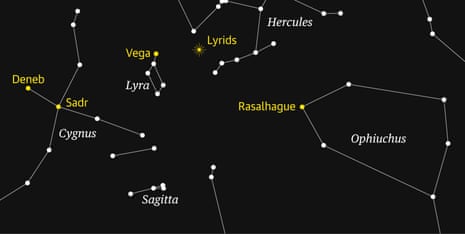
This year, the Lyrids are set to peak during the late evening of Wednesday, April 22nd and early the next morning. The chart below shows the view looking east from London at 00:01 (BST) on Thursday, April 23rd, with the radiant point of the meteors, known as the Lyrids, sitting in the constellation of Lyra, the Lyre, close to the bright star of Vega.
While the Lyrids are typically a moderate shower, producing around 10-20 meteors per hour at their peak, they can occasionally deliver a more spectacular show, with bursts of up to 100 meteors per hour. These outbursts are unpredictable, making the Lyrids an exciting and dynamic event for stargazers.
To catch the best views of the Lyrids, head out to a dark, open area with an unobstructed view of the northeast sky. The shower is best observed in the hours after midnight, when the radiant point is highest in the sky. Be patient and allow your eyes to adjust to the darkness, and you may be rewarded with shooting stars streaking across the inky black canvas of the night.
The Lyrid meteor shower is a celestial event with a rich history, dating back to ancient times. As the Earth passes through the trail of debris left behind by the long-lost comet, it provides a dazzling display for skywatchers around the world. So step outside this spring, gaze up at the night sky, and witness the timeless beauty of the Lyrids in all their glory.
Source: The Guardian


