
Chaos Erupts as Airspace Closures Strand Hundreds of Thousands of Travelers Across Middle East

Sweeping airspace closures force major airlines to cancel over 1,000 flights, disrupting travel for passengers across the region amid escalating conflicts.
Hundreds of thousands of travelers have been left stranded or diverted across the Middle East as key transit hubs in Dubai, Abu Dhabi, and Doha have been forced to close their airspace amid the rapidly unfolding regional conflicts. Over 1,000 flights by major Middle Eastern airlines have been cancelled, causing widespread chaos and disruption for passengers.
The sweeping airspace closures come in response to the recent US and Israeli attacks on Iran, which have escalated regional tensions to a boiling point. Israel, Qatar, Syria, Iran, Iraq, Kuwait, and Bahrain have all closed their airspaces, while the United Arab Emirates has also announced a "temporary and partial closure" of its skies, according to flight tracking website FlightRadar24.
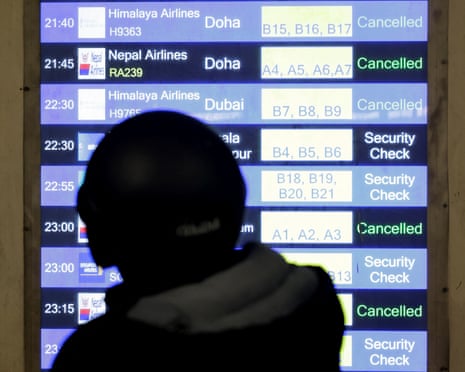
The disruption to air travel across the region is unprecedented, with hundreds of thousands of passengers either unable to depart or forced to be diverted to other airports outside their original destinations. The situation has created a logistical nightmare for airlines and travelers alike, with many facing uncertainty over when normal operations will resume.
"We are doing our best to reroute passengers and get them to their final destinations, but the scale of this disruption is something we've never seen before," said a spokesperson for Emirates Airlines, one of the region's largest carriers. "Our priority is ensuring the safety of our passengers and crew, but this is an incredibly challenging situation for everyone involved."
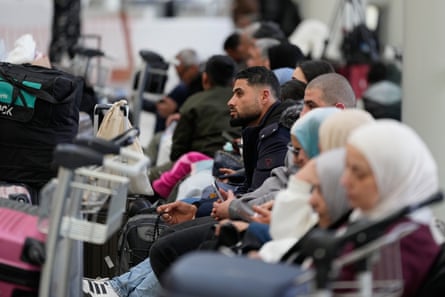
Industry experts warn that the airspace closures could have far-reaching economic consequences, not just for the airlines, but for the broader travel and tourism sectors in the affected countries. The Middle East is a critical global transit hub, and the inability to move people and goods through the region could have ripple effects worldwide.
"This is a crisis of historic proportions for the aviation industry in the Middle East," said Samer Majali, the chairman of the Arab Air Carriers Organization. "The financial toll on airlines and the overall economic impact on the region will be severe if this situation is not resolved quickly."
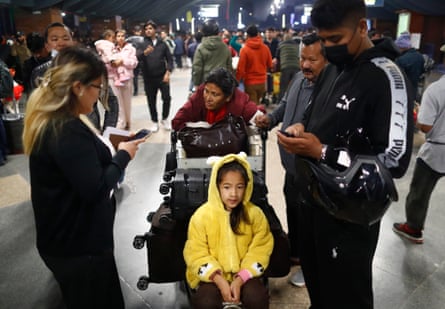
As the geopolitical tensions continue to simmer, travelers and industry stakeholders alike are anxiously awaiting any signs of a resolution that could restore normalcy to air travel in the Middle East. Until then, the chaos and disruption seem set to persist, with no clear end in sight for the hundreds of thousands caught in the middle of this unfolding crisis.


