
ChargePoint's 600 kW Fast Charger Transforms EV Charging

ChargePoint launches Express Solo DC fast charger with 600 kW capacity, addressing charging speed concerns and setting new US EV infrastructure standards.
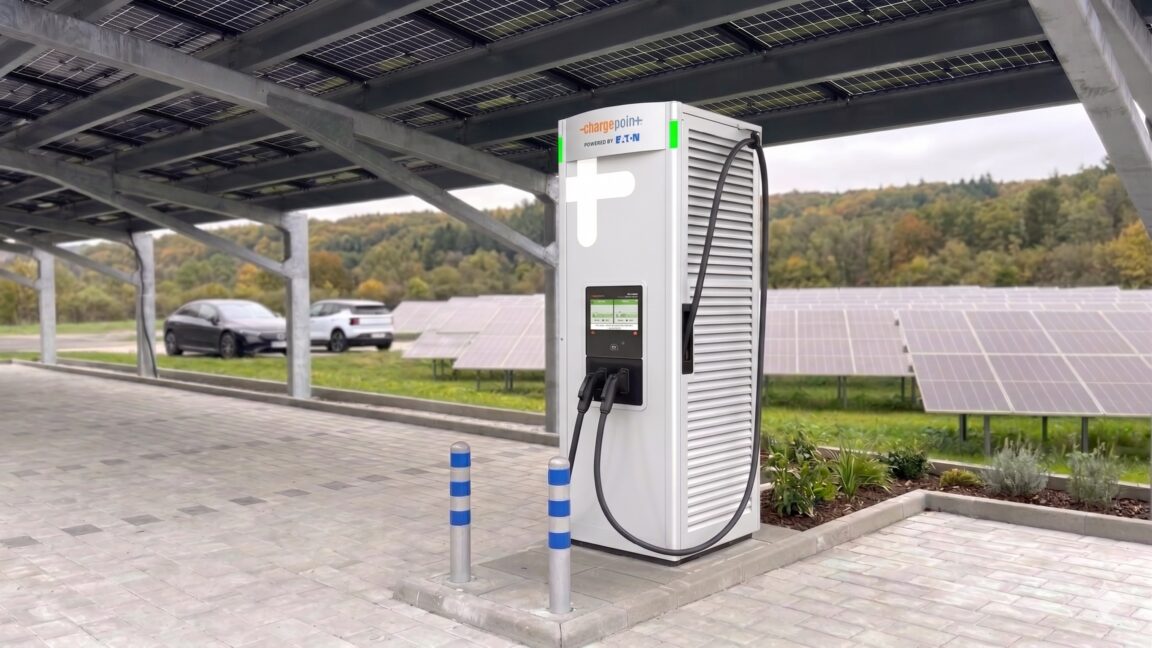
Electric vehicle charging infrastructure is undergoing a significant transformation as ChargePoint introduces its innovative Express Solo DC fast charger, marking a substantial leap forward in addressing one of the primary concerns holding back widespread EV adoption. The new charging solution has been meticulously engineered to deliver exceptional performance while maintaining a compact footprint, making it ideally suited for installation in constrained urban environments. With an impressive 600 kW maximum output capacity, the Express Solo represents a considerable advancement in publicly accessible EV fast charging technology, potentially redefining how quickly drivers can replenish their vehicle batteries during long-distance journeys or quick top-ups.
The design philosophy behind the Express Solo emphasizes practicality and accessibility, addressing real-world deployment challenges that have plagued previous DC fast charging solutions. By utilizing dedicated DC power technology and incorporating a space-efficient architecture, the charger can be seamlessly integrated into locations where traditional charging infrastructure would be impractical or impossible to install. This breakthrough in charging hardware design opens new possibilities for expanding the charging network into convenience stores, gas stations, and urban parking facilities that previously lacked the physical space or electrical infrastructure to support high-powered charging equipment.
The timing of ChargePoint's announcement coincides with a broader industry trend demonstrating that EV battery technology is evolving at an accelerating pace. Recent developments showcase batteries becoming increasingly capable of handling higher charging speeds and power inputs, creating a perfect environment for next-generation chargers like the Express Solo. As battery chemistry improves and thermal management systems become more sophisticated, manufacturers are pushing the boundaries of what's possible in rapid energy transfer, creating a positive feedback loop where battery improvements and charger capabilities reinforce each other.
Just this week, battery manufacturer CATL unveiled a cutting-edge LFP battery capable of charging from 10 percent to 98 percent capacity in less than seven minutes, demonstrating the remarkable progress being made in battery technology. Similarly, BYD's Blade battery platform supports charging speeds of up to 1.5 megawatts, with these ultra-high-speed charging capabilities already becoming commonplace across China's rapidly expanding EV infrastructure network. These technological achievements illustrate how global battery manufacturers are preparing their products for the next generation of high-power charging infrastructure, creating a significant disparity between international markets in terms of charging capability and convenience.
The contrast between American and international EV charging networks reveals a concerning gap in infrastructure development. Current Tesla Supercharger stations typically peak at 250 kW, Electrify America's network maxes out at 350 kW, and the newly launched IONNA charging network—despite being a more recent development—is limited to 400 kW per charging plug. These limitations represent a substantial lag compared to what's available in other parts of the world, particularly in Asia where megawatt-level charging is already becoming normalized. The Express Solo's 600 kW capacity therefore represents a noteworthy milestone for the United States, bringing American fast charging infrastructure closer to capabilities already deployed in more advanced EV markets.
To contextualize the significance of the Express Solo's power output, the 600 kW capacity equals the electrical power transfer rate used in Formula E racing pit stops, where vehicles need rapid energy replenishment for competitive advantage. This analogy underscores the technical sophistication and engineering challenges involved in delivering such substantial power safely and efficiently. The fact that a commercially available, standalone charger can now match the power delivery of elite racing infrastructure demonstrates how dramatically the industry has progressed and how quickly consumer-focused technology is catching up to and surpassing specialized applications.
One of the most compelling aspects of the Express Solo's design is its suitability for deployment in locations previously considered unsuitable for fast charging infrastructure. The compact form factor means that convenience stores, urban gas stations, and parking facilities can now install these chargers without requiring extensive real estate or significant grid infrastructure modifications. This democratization of fast charging access is crucial for addressing the "range anxiety" problem that continues to deter potential EV buyers from making the switch from traditional combustion vehicles.

The broader implications of the Express Solo's introduction extend beyond mere technical specifications. The charger represents a philosophical shift in how the charging industry approaches problem-solving, prioritizing practical deployment scenarios and user convenience alongside raw performance metrics. As EV adoption accelerates and battery technology continues its rapid advancement, charging station networks must evolve to meet increasing demand while simultaneously improving the user experience and reducing charging times to levels competitive with traditional refueling.
ChargePoint's investment in developing this technology reflects the company's recognition that infrastructure represents the critical bottleneck in EV market expansion. With hundreds of thousands of new electric vehicles hitting roads each year, the existing charging network simply cannot meet demand efficiently, particularly for those undertaking longer journeys. By introducing a charger capable of delivering meaningful range restoration in minutes rather than hours, ChargePoint is directly addressing one of the most persistent objections to EV ownership and usage.
The Express Solo's 600 kW capacity also provides substantial future-proofing for the charging network. As forthcoming battery technologies push toward even higher charging speeds, this charger is well-positioned to support the next generation of electric vehicles without requiring wholesale replacement or significant modifications. This forward-thinking design philosophy ensures that investments made in deploying Express Solo chargers will continue delivering value as the industry evolves and advances progress toward mainstream EV adoption.
Looking ahead, the introduction of the Express Solo charger signals that the United States is beginning to address its lagging position in EV charging infrastructure development. While international competitors continue pushing boundaries with even higher power outputs and more extensive networks, American manufacturers and operators are demonstrating renewed commitment to modernization and expansion. The success of chargers like the Express Solo will ultimately be measured by their ability to convince skeptical consumers that electric vehicles represent a practical and convenient alternative to traditional cars, making charging speed and availability nonissues in the decision-making process.
Source: Ars Technica


