
ChatGPT Now Alerts Trusted Friends During Mental Health Crises

OpenAI introduces new safety feature allowing ChatGPT users to designate trusted contacts who receive alerts if conversation signals self-harm risk.
OpenAI has unveiled a groundbreaking safety initiative designed to protect vulnerable ChatGPT users by enabling the AI platform to notify trusted contacts when conversations suggest potential self-harm risks. This innovative feature represents a significant step forward in responsible AI development, combining advanced language processing with real-world mental health support mechanisms. The implementation demonstrates OpenAI's commitment to addressing the mental health dimensions of AI interaction, recognizing that digital platforms increasingly serve as spaces where users disclose personal struggles and psychological distress.
The new capability allows ChatGPT users to nominate a Trusted Contact through their account settings, establishing a direct line of communication between the platform and designated individuals who can provide immediate support. When ChatGPT's monitoring systems detect patterns of conversation that indicate someone may be experiencing suicidal ideation or self-harm thoughts, the designated contact receives a notification alerting them to reach out. This approach leverages the power of existing social support networks while maintaining user privacy and autonomy throughout the intervention process.
The development of this feature involved extensive collaboration between OpenAI's safety research teams, mental health professionals, and crisis intervention specialists. These experts worked together to identify conversation patterns and linguistic indicators that suggest heightened risk without relying on overly intrusive monitoring mechanisms. The system has been designed to prioritize accuracy in detection while minimizing false positives that could create unnecessary alarm or erode trust between users and the platform.
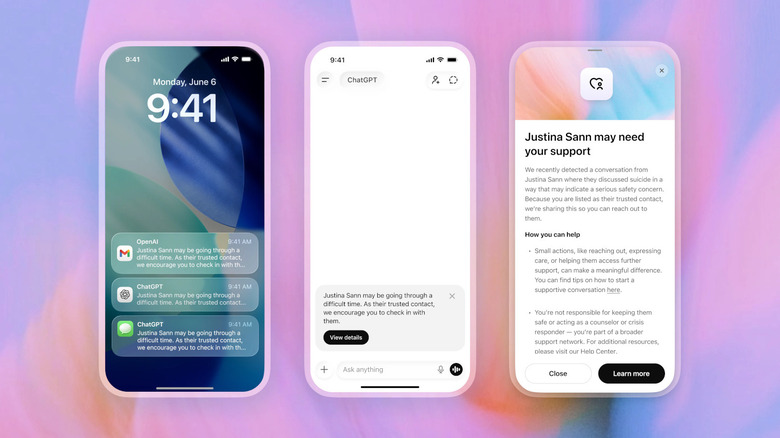
Mental health professionals have praised this initiative as a pragmatic solution to an increasingly pressing problem. As younger generations and vulnerable populations turn to digital tools for support, the absence of safeguards has created concerning gaps in crisis intervention systems. The ability to integrate AI-powered detection with human-centered support networks addresses this gap by creating a hybrid approach that leverages technological capabilities while preserving the irreplaceable value of human connection and intervention.
The implementation process is deliberately straightforward, ensuring that users of varying technical proficiency can easily set up the feature. Users simply navigate to their account settings, select the option to designate a trusted contact, and provide the necessary contact information for that person. The system then securely stores this information and activates monitoring protocols designed to trigger alerts only when conversations reach concerning thresholds, ensuring that normal conversations remain entirely private.
Privacy and data protection remain central to this feature's design architecture. OpenAI has implemented multiple safeguards to ensure that the activation of this alert system doesn't inadvertently create broader surveillance of user conversations. The system specifically focuses on detecting self-harm indicators rather than comprehensively monitoring all interaction content, and alerts are generated through automated systems that maintain strict confidentiality standards.
This initiative arrives at a critical moment when conversations about AI's role in mental health support have intensified significantly. The pandemic accelerated the shift toward digital mental health resources, and many individuals now rely on conversational AI as a primary source of emotional support and crisis discussion. While AI cannot replace professional mental health treatment, it can serve as an accessible first line of engagement, particularly for individuals who face barriers to traditional care access through cost, geography, or stigma concerns.
The feature addresses documented patterns in user behavior that reveal individuals increasingly disclosing mental health struggles to AI chatbots. Research indicates that some users feel less judgment and greater anonymity when discussing sensitive topics with artificial intelligence compared to human interactions, making these digital spaces genuinely important for vulnerable populations. Recognizing this reality, OpenAI's approach attempts to harness this accessibility while creating accountability mechanisms that ensure concerns don't go completely unaddressed.
The rollout of this feature will occur gradually across the ChatGPT user base, allowing OpenAI to monitor implementation effectiveness and gather feedback from both users and their designated trusted contacts. This phased approach enables refinement of the alert criteria and notification messaging based on real-world usage patterns and user experiences. OpenAI has committed to transparency throughout this process, publishing detailed technical documentation about how the detection algorithms function and what triggers activate alerts.
The designation of trusted contacts represents a departure from traditional crisis response models that typically rely on professional intervention or emergency services. By empowering existing social networks to serve as first responders, this approach acknowledges the profound importance of peer support in mental health crises. Research consistently demonstrates that individuals are more likely to disclose suicidal ideation to trusted peers than to professionals, making this mechanism potentially more effective at initiating supportive conversations.
OpenAI has also provided resources to help designated trusted contacts understand their role and respond appropriately when they receive alerts. Educational materials explain that receiving an alert indicates concern rather than imminent crisis, emphasizing the importance of reaching out without judgment while respecting the individual's autonomy. These materials recognize that trusted contacts themselves may experience stress upon receiving such notifications, providing guidance for self-care and when to escalate to professional crisis resources.
The feature's introduction raises important questions about the broader responsibilities of technology companies in addressing mental health crises. This development signals that AI platforms are increasingly expected to implement safety mechanisms that extend beyond traditional content moderation into proactive mental health support. As artificial intelligence becomes more sophisticated and widely integrated into daily life, companies face mounting pressure to consider the psychological wellbeing of their users as a core design principle rather than an afterthought.
The implementation also reflects evolving ethical frameworks within the technology industry regarding AI responsibility and societal impact. OpenAI's decision to build this feature from the ground up rather than purchasing a third-party solution demonstrates a commitment to integrating mental health considerations directly into product development. This approach contrasts with some industry practices where safety features are added as superficial additions rather than being woven into fundamental platform architecture.
Looking forward, this feature may serve as a template for other technology companies developing conversational AI systems and digital platforms that facilitate user self-disclosure. As more organizations recognize the mental health dimensions of their platforms, OpenAI's transparent approach to documenting both successes and limitations could provide valuable guidance for the broader industry. The company has indicated willingness to share technical insights with other organizations working on similar problems, positioning this feature as part of a larger movement toward responsible AI development.
Source: Engadget


