
ChatGPT Now Offers Personalized Financial Advice

ChatGPT integrates with Plaid to access 12,000+ financial institutions. Connect your bank account for personalized financial guidance and advice.
ChatGPT is expanding its capabilities into the financial advisory space with a significant new integration that allows users to receive personalized financial advice tailored to their unique financial situations. The advancement represents a major step forward in how artificial intelligence can assist everyday users with critical money management decisions. This development positions the AI chatbot as a more comprehensive financial tool for personal wealth management and financial planning.
The key to this new functionality lies in a partnership with Plaid, a leading financial data aggregation platform that serves as a bridge between consumer applications and financial institutions worldwide. By leveraging Plaid's extensive network, ChatGPT financial integration now enables users to securely connect their bank accounts and provide the AI system with real-time access to their financial data. This connection allows ChatGPT to analyze spending patterns, account balances, transaction histories, and financial obligations with unprecedented detail and accuracy.
The scope of this integration is truly impressive, with Plaid's infrastructure providing access to information from more than 12,000 financial institutions across multiple countries and regions. This vast network includes traditional banks, credit unions, online banks, and various fintech platforms, ensuring that the majority of users can connect their primary financial accounts regardless of which institutions they use. The comprehensive coverage means that ChatGPT can now serve as a financial advisor for a substantially larger user base than would have been possible with a more limited banking network.
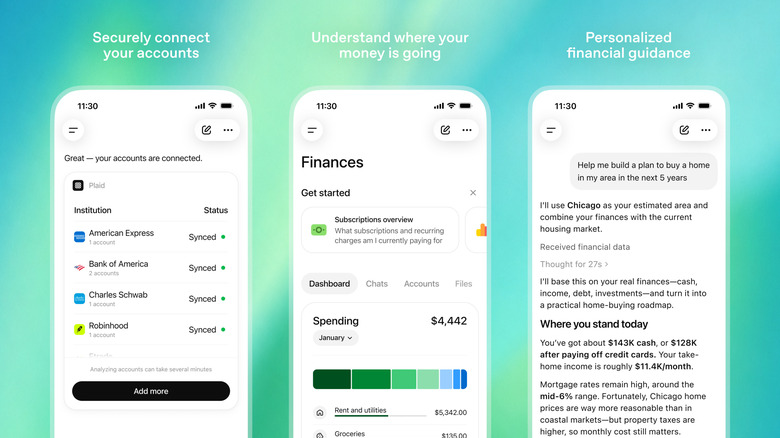
Once users authorize the connection between their bank accounts and ChatGPT, the AI system gains the ability to provide context-specific financial recommendations. The personalized advice could potentially cover a wide range of financial topics, including budgeting strategies, savings optimization, debt reduction planning, investment considerations, and expense tracking insights. Rather than offering generic financial guidance that applies to everyone, ChatGPT can now analyze individual financial situations and provide recommendations that directly address each user's specific circumstances and financial goals.
Security and privacy considerations are paramount in this type of integration, particularly when sensitive financial information is involved. Plaid has built a strong reputation for maintaining robust security protocols and has undergone extensive scrutiny from financial regulators and security experts. The integration utilizes industry-standard encryption and authentication methods to ensure that financial data is protected throughout the connection process. Users maintain full control over their data and can revoke access at any time through their account settings.
The financial technology landscape has been increasingly competitive, with numerous fintech companies and established financial institutions developing AI-powered advisory tools. ChatGPT's financial capabilities through the Plaid integration position OpenAI as a significant player in this market segment. The move reflects a broader trend of AI systems becoming more integrated into everyday financial decision-making processes, moving beyond simple chatbot functionality to provide substantive, data-driven analysis.
The implementation of this feature also raises important questions about the role of artificial intelligence in financial advisory services. While ChatGPT can process large amounts of financial data and identify patterns that might not be immediately obvious to individual users, it's important to recognize the differences between AI-generated suggestions and advice from licensed financial professionals. Many jurisdictions have specific regulations around what constitutes financial advice and who is authorized to provide it, so OpenAI will likely need to navigate regulatory considerations carefully.
Users interested in leveraging ChatGPT's personalized financial advice can begin by connecting their accounts through the Plaid integration within the ChatGPT interface. The setup process is designed to be user-friendly, guiding users through the authorization steps while maintaining transparency about what information is being shared. Once connected, users can ask ChatGPT questions about their finances, request analysis of their spending habits, or seek suggestions for financial improvements based on their actual account data.
The potential applications of this integration extend beyond simple personal finance management. Small business owners might use the feature to analyze their business account activity, while freelancers and gig workers could leverage it to better understand their irregular income patterns. Students managing their first bank accounts could benefit from educational insights about their spending, and families could use the tool to develop collaborative financial strategies.
Looking ahead, this ChatGPT banking integration could serve as a foundation for additional financial services and capabilities. OpenAI might expand the feature set to include more sophisticated financial analysis tools, integration with investment platforms, or connections to other financial services. The Plaid partnership opens doors for numerous possibilities in how AI can assist users with comprehensive financial management and planning.
The broader implications of AI systems having access to detailed financial information represent both significant opportunities and important considerations for users and regulators. As these technologies become more prevalent in financial services, establishing clear guidelines, maintaining strong security protocols, and ensuring user transparency will be critical to building and maintaining trust. The ChatGPT Plaid integration demonstrates how modern technology can enhance financial decision-making while highlighting the importance of careful implementation in sensitive domains like personal finance.
Source: Engadget


