
Cheaper European Goods for Aussies in Landmark EU Trade Deal

Australia and the EU have struck a major trade agreement, lowering tariffs on European food, wine, cars and fashion. But farmers are unhappy with meat export quotas.
Australians can look forward to cheaper prices on European goods like wine, chocolate and cars under a landmark trade deal reached between Australia and the European Union. The agreement, which comes after nearly a decade of negotiations, will see both sides slash tariffs and expand trade across a range of sectors.
However, the deal has not been welcomed by all, with Australian farmers expressing fury over the meagre quotas allocated for meat exports to the EU. While the details are still being finalized, it's clear this trade pact will have significant impacts - both positive and negative - on various industries and consumers.

One key change is that Australian manufacturers will be able to use protected European food names like parmesan and kransky, though terms like feta, romano and gruyere will eventually be phased out. This is a concession the EU has demanded in exchange for lowering tariffs on Australian goods.
For consumers, the trade deal is expected to make a range of European products more affordable, from luxury cars to fine wines and decadent chocolates. This is seen as a win for Australian households struggling with the rising cost of living. The reduced tariffs should translate to lower prices at the checkout.
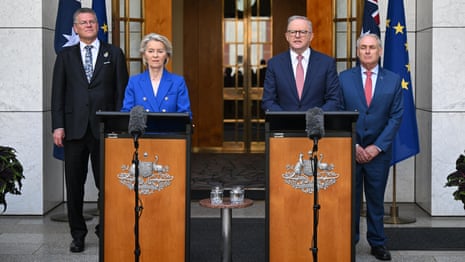
However, the farming community in Australia has voiced its discontent over the agreement. While the beef, lamb, sugar and dairy industries will gain some new export opportunities, the quotas allocated for these products are considered inadequate by many agricultural groups. They argue the deal does not go far enough in supporting Australian producers.
The landmark trade pact is the result of years of negotiations between Australia and the EU. It represents a significant shift in economic ties between the two regions, with the potential to shape consumer habits and industry dynamics for years to come. As the details are finalized and implementation begins, the full impacts - both positive and negative - will become clearer.
Source: The Guardian


