
China's Driverless Revolution Accelerates at Beijing Auto Show

Chinese automakers showcase autonomous vehicle technology at Beijing auto show, shifting focus to AI-powered mobility as domestic EV sales plateau and global competition intensifies.
The automotive landscape in China is undergoing a dramatic transformation as the nation's leading manufacturers pivot toward autonomous driving technology and artificial intelligence solutions. At the world's most significant automotive exhibition, which commenced in Beijing on Friday, the scale of innovation on display was staggering—hundreds of manufacturers showcasing more than 1,000 vehicles attracted hundreds of thousands of enthusiasts eager to witness the future of mobility. Perhaps most notably, the exhibition floor was conspicuously absent of the traditional sight most associated with car shows: drivers actively operating vehicles.
China's automotive industry has already established itself as a formidable force in the electric vehicle market, having successfully dominated domestic sales and captured significant international market share. The country's EV manufacturers have created a robust ecosystem of battery technology, charging infrastructure, and manufacturing expertise that has allowed them to outpace traditional automotive giants in many segments. However, as growth in the traditional EV market begins to stabilize and competition intensifies, Chinese automakers are strategically redirecting their investments and development efforts toward next-generation technologies that promise to define the automotive industry for decades to come.
The strategic pivot toward autonomous vehicle development represents a calculated response to multiple market pressures currently affecting China's automotive sector. Domestic sales growth has decelerated as the electric vehicle market reaches saturation in key urban centers, forcing manufacturers to seek new avenues for expansion and differentiation. Rather than competing solely on battery technology and manufacturing efficiency—areas where Chinese companies already excel—these firms are now investing heavily in the sophisticated software, sensor arrays, and artificial intelligence systems necessary to enable true autonomous driving capabilities.

The competitive landscape driving this technological shift extends beyond China's borders. Global automotive manufacturers from Europe, Japan, and North America have long pursued autonomous driving as a strategic priority, investing billions of dollars into research and development initiatives. Chinese companies recognize that achieving leadership in autonomous vehicle technology offers multiple strategic advantages: it provides differentiation in increasingly crowded EV markets, appeals to technology-savvy consumers seeking cutting-edge features, and positions Chinese manufacturers as innovation leaders rather than simply as cost-competitive producers.
The Beijing auto show serves as an important barometer of industry sentiment and technological capability. The abundance of autonomous vehicle demonstrations and AI-powered mobility solutions on display reflects the widespread recognition among Chinese automakers that this represents a crucial inflection point for the industry. Companies ranging from established traditional manufacturers to newer EV-focused startups are showcasing vehicles equipped with advanced driver assistance systems, lidar technology, camera arrays, and machine learning algorithms capable of processing complex driving scenarios in real time.
Investment in autonomous driving technology also addresses China's aspirations for overseas market expansion. As the company noted in recent reports, Chinese firms are increasingly working to establish their presence in European and other international markets, particularly as tariffs and trade barriers rise. Autonomous driving capabilities represent a significant competitive advantage in these markets, where consumers and regulators are deeply interested in safety features, technological sophistication, and innovation leadership. By leading in autonomous vehicles, Chinese manufacturers can position themselves as forward-thinking innovators rather than simply as affordable alternatives to established brands.
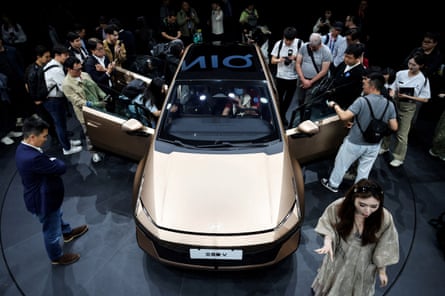
The technical challenges involved in achieving true autonomous driving capability are substantial and multifaceted. Developing reliable artificial intelligence systems that can safely navigate complex urban environments, interpret unpredictable human behavior, and make split-second decisions requires extensive testing, validation, and refinement. Chinese automakers are investing in vast datasets of driving scenarios, simulation environments, and real-world testing programs to train and validate their autonomous systems. This represents a long-term commitment requiring sustained investment and technological expertise.
Consumer perception and regulatory approval represent additional critical factors influencing the pace of autonomous vehicle adoption. While technology enthusiasts at the Beijing show expressed enthusiasm for self-driving demonstrations, broader public acceptance of autonomous vehicles remains uneven. Concerns about safety, liability, cybersecurity, and the displacement of professional drivers must be addressed through rigorous testing, transparent communication, and appropriate regulatory frameworks. Chinese regulatory authorities have been relatively progressive in establishing testing zones and pilot programs for autonomous vehicles, providing manufacturers with opportunities to demonstrate capability and build public confidence.
The shift toward autonomous driving technology also reflects broader trends in the global automotive industry regarding electrification, digitalization, and software-defined vehicles. Modern vehicles are increasingly sophisticated computing platforms where software updates, artificial intelligence systems, and data connectivity are central to the driving experience and vehicle functionality. Chinese manufacturers, many of whom have deep expertise in software development, consumer electronics, and artificial intelligence through their participation in other technology sectors, possess competitive advantages in developing these integrated systems.
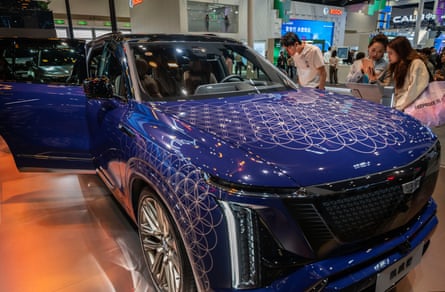
The economic implications of successful autonomous vehicle development are profound. The transition to self-driving vehicles promises to reshape multiple industries including transportation services, logistics, insurance, and real estate. Chinese companies positioned as leaders in autonomous technology could capture substantial market share across these interconnected sectors, creating new revenue streams and business models extending far beyond traditional vehicle sales. This opportunity explains the urgency and scale of investment visible at the Beijing show.
Looking forward, the success of Chinese manufacturers in achieving autonomous driving capabilities will depend on sustained investment, technological talent acquisition, strategic partnerships, and favorable regulatory environments. Companies must navigate complex international standards, varying regulatory frameworks across different markets, and intense competition from both established automotive manufacturers and technology-focused startups. The Beijing auto show demonstrated that Chinese industry participants are fully committed to winning this technological race, with numerous demonstrations and announcements signaling confidence in their ability to lead in the autonomous vehicle revolution.
The absence of drivers at Beijing's largest automotive exhibition serves as a powerful symbol of the industry's transformation. Chinese automakers are betting that the future of mobility belongs to autonomous vehicle technology and artificial intelligence, and they are investing accordingly. Whether this optimism proves justified will depend on technological progress, consumer acceptance, regulatory support, and competitive developments in markets around the world. Nevertheless, the scale and sophistication of autonomous vehicle development visible at the Beijing show confirms that China intends to play a major role in defining how people will move in the decades ahead.


