
China Suspends Death Sentences for Ex-Defence Ministers

China announces suspended death sentences for two former defence ministers following recent military leadership purges. Details on the charges and implications.
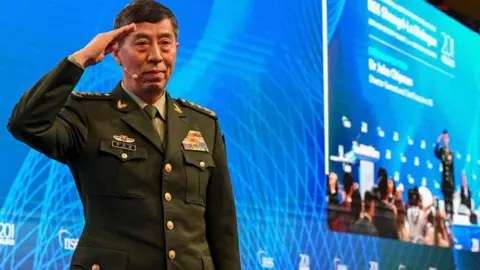
China has announced suspended death sentences for two former defence ministers, marking a significant development in the country's ongoing anti-corruption campaign within its military establishment. The judicial decision represents a notable shift in how the Chinese government is handling high-level officials implicated in corruption and misconduct, opting for suspended capital punishment rather than immediate execution. This announcement underscores the serious nature of the charges while simultaneously reflecting evolving judicial practices within the Chinese Communist Party's disciplinary framework.
The suspended death sentences come in the wake of a broader series of military leadership changes that have sent shockwaves through China's defence establishment. Over recent months, several top military officials have been removed from their positions amid investigations into alleged corruption, abuse of power, and other serious misconduct. The ousting of these high-ranking officers represents one of the most significant purges within China's military hierarchy in recent years, signalling President Xi Jinping's continued commitment to rooting out corruption within the armed forces and consolidating control over key institutional structures.
The former defence ministers convicted in this case face charges that extend beyond simple financial misconduct, encompassing allegations of serious crimes that threatened military integrity and national security. While official Chinese state media has provided limited details about the specific charges, international observers suggest the cases involve substantial corruption schemes, misuse of defence budgets, and potential breaches of security protocols. The severity of these allegations justified the initially severe sentencing, though the suspended nature of the death sentences indicates the judiciary's consideration of mitigating factors or broader political considerations in the final verdict.
The concept of suspended death sentences in the Chinese legal system functions as a form of capital punishment that is deferred, typically for a period of two years, during which the convicted individual's behaviour is monitored. If the prisoner demonstrates genuine reform and does not commit additional serious offences during this probationary period, the sentence may ultimately be commuted to a lengthy prison term or even released conditionally. This judicial mechanism allows the government to maintain the appearance of severe justice while providing a potential pathway for mercy or reduced punishment, depending on circumstances and political conditions.
The timing of these announcements is particularly significant given the broader context of military modernization and institutional reform underway in China. Xi Jinping has long prioritized the establishment of a military force that is not only technologically advanced but also politically loyal and corruption-free. The systematic removal and prosecution of corrupt officials serves multiple purposes: it demonstrates the government's commitment to clean governance, eliminates potential power bases that could challenge central authority, and reshapes the military hierarchy to ensure loyalty to the current leadership structure.
International observers of Chinese politics note that these purges reflect patterns established over the past decade of consolidating power within China's highest echelons. The anti-corruption campaign launched by Xi Jinping in 2012 has evolved from targeting provincial-level officials to addressing corruption at the very top of China's military apparatus. This progression indicates a deepening commitment to institutional control and suggests that no position, regardless of seniority or historical importance, is beyond scrutiny or potential prosecution under the current administration.
The defence ministry itself has undergone substantial structural changes in recent years, with new leadership implementing reforms designed to increase transparency and accountability within military procurement and budget allocation. These institutional changes work in tandem with the criminal prosecutions of former officials, creating a comprehensive approach to rooting out entrenched corruption. The replacement of previously convicted officials with new appointees carefully selected from Xi's trusted inner circle further consolidates central control over military operations and strategy.
Relations between China's military establishment and the central government have historically been complex, with the People's Liberation Army maintaining considerable autonomy in certain areas. The current wave of prosecutions appears designed to reduce this autonomy and ensure that all military functions operate under direct oversight of the Communist Party leadership. The cases against former defence ministers represent high-profile examples of this broader effort to assert greater civilian and party control over military affairs, a priority that has become increasingly emphasized in recent policy directives.
The criminal investigation process leading to these convictions involved extensive interrogations, document reviews, and testimony from numerous witnesses within military circles. State media reported that the defendants were initially placed under investigation by China's Party discipline authorities before cases were transferred to civilian courts for prosecution. This transition from party discipline to criminal proceedings underscores the severity of the alleged crimes and the determination of authorities to secure formal legal convictions rather than relying solely on internal party sanctions.
The financial implications of the corruption schemes allegedly perpetrated by these former officials are substantial, involving misappropriation of defence funds, manipulation of military contracts, and other economic crimes that reportedly cost the government hundreds of millions of yuan. The recovery of these funds has become a secondary focus of investigations, with prosecutors working to trace assets and trace the flow of diverted money to determine whether illicit gains were hidden within China or transferred internationally. These financial investigations are ongoing and may result in additional asset seizures or penalties beyond the criminal sentences already imposed.
The announcement of the suspended death sentences serves multiple strategic purposes for the Chinese government beyond simple justice. It demonstrates to other military officials that even the highest ranks are not immune from prosecution, thereby creating a deterrent effect against corruption throughout the armed forces. Simultaneously, it signals to international observers that China maintains functioning legal processes and considers military officials subject to law, even while questions persist about the independence of Chinese courts and the political influences shaping judicial outcomes in high-profile cases.
As China continues implementing its military modernization agenda and positioning itself as a major global power, the internal integrity of the defence establishment becomes increasingly critical to national interests. The prosecutions of former defence ministers should be understood as integral to this broader modernization effort, ensuring that military institutions operate efficiently, transparently, and under reliable party control. The suspended sentences reflect both the seriousness of the offences and the evolving sophistication of Chinese approaches to managing institutional challenges while maintaining political stability within the military hierarchy.
The implications of these convictions will likely reverberate throughout the Chinese military establishment for years to come, influencing personnel decisions, procurement practices, and organizational structures across defence ministry operations. Future officials will undoubtedly take note of the consequences facing their predecessors, potentially encouraging greater caution in financial dealings and increased compliance with new oversight mechanisms. The precedent established by these high-profile prosecutions creates a new baseline for accountability within China's military, one that emphasizes political loyalty alongside professional competence and honest conduct in matters of state.
Source: BBC News


