
Chrome's 4GB AI Model: What's Really Going On

Chrome's 4GB AI download has users confused. Here's why Google's on-device AI isn't new, despite recent attention to the storage-hungry feature.
Google Chrome's local AI capabilities have been generating considerable discussion among desktop users who've recently noticed the browser consuming significant storage space for artificial intelligence processing. The culprit appears to be a substantial 4GB model download that has sparked confusion about whether Google is secretly installing new AI features without user knowledge. However, the reality of the situation is more nuanced than it initially appears, revealing a pattern of unclear communication from Google regarding its AI integration strategy.
The recent wave of attention stems from users discovering that Chrome had quietly downloaded a 4GB Gemini Nano model, leading many to conclude that Google was aggressively rolling out advanced AI capabilities across all Chrome installations. This interpretation gained traction on privacy-focused blogs and tech forums, with observers questioning Google's transparency about the feature rollout. However, a closer examination of Google's announcements and development timeline reveals that this on-device AI functionality is not a new development, but rather part of an initiative that has been in the pipeline for considerably longer than recent reports suggest.
According to Google's official developer documentation, the company made a significant announcement back in 2024 regarding its plans to integrate local AI processing capabilities directly into Chrome. This initiative was designed to enable various user-facing features including Help Me Write, which assists users with composing text, intelligent tab organization that learns user browsing patterns, and enhanced scam detection mechanisms to protect users from fraudulent websites. These features represent Google's broader strategy to bring artificial intelligence benefits to users without necessarily requiring constant cloud connectivity or data transmission to remote servers.

The confusion surrounding Chrome's 4GB AI model download can be attributed largely to Google's inconsistent and opaque communication strategy regarding AI deployments. The technology giant has earned a reputation for launching AI features with minimal explanation of what data is being used, how the models function, or what privacy implications users should consider. This pattern of poor communication has created an environment where users and tech observers must essentially reverse-engineer Google's intentions based on file system observations and indirect evidence. The company's failure to proactively and clearly explain the on-device AI initiative before users discovered it organically represents a missed opportunity for transparency.
What makes this situation particularly noteworthy is that Google hasn't actually changed anything about how these on-device AI features operate in recent months. The company has not suddenly activated new AI capabilities or deployed models that were previously dormant. Instead, Google has been gradually implementing plans that were publicly announced over a year ago, albeit with minimal fanfare or user education. The discovery by privacy advocates serves less as evidence of a new initiative and more as an indicator of how effectively Google has compartmentalized information about its AI development efforts.
The 4GB Gemini Nano model represents Google's commitment to on-device artificial intelligence processing, which offers several theoretical advantages compared to cloud-based alternatives. By processing data locally on users' devices, Google can theoretically reduce latency, improve privacy by avoiding data transmission to external servers, and provide functionality that works even when internet connectivity is intermittent. However, the trade-off involves consuming considerable local storage space, which has become the visible point of friction for users who prefer to maintain ample free disk space on their computers.
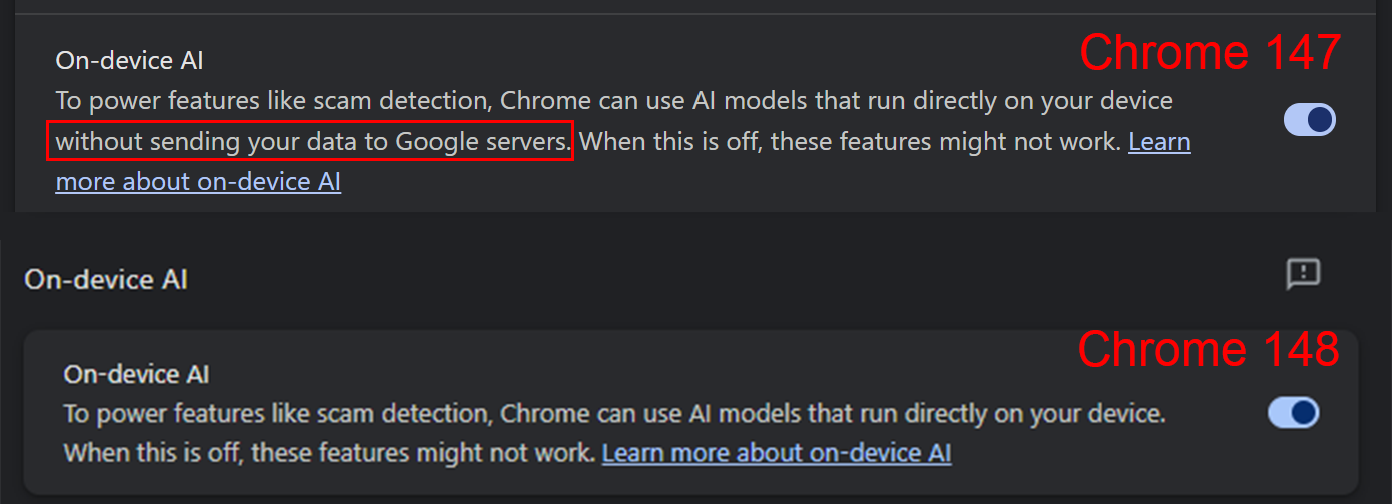
The broader context of this situation illuminates a significant challenge facing technology companies as they integrate increasingly sophisticated AI systems into mainstream consumer products. AI feature integration in browsers and operating systems represents a fundamental shift in how computing devices operate, yet many companies have struggled to develop effective communication strategies around these changes. Users expect transparency about what data their devices are processing, what models are being run, and what implications these features have for privacy, performance, and storage utilization. Google's approach has frequently fallen short of these expectations, particularly with regard to AI-related announcements.
The Help Me Write feature exemplifies how Chrome's on-device AI aims to provide practical utility to users. This tool leverages the Gemini Nano model to assist with text composition tasks, from drafting emails to writing social media posts. The feature operates entirely on the user's device, theoretically ensuring that the text being composed never leaves the local machine before the user explicitly shares it. Similarly, the tab organization feature uses on-device processing to understand browsing patterns and automatically group tabs based on inferred user intent, reducing browser clutter without transmitting detailed browsing histories to Google's servers.
Scam detection represents another critical application of Chrome's local AI capabilities. The browser can analyze webpage characteristics, suspicious patterns, and known phishing indicators using the on-device model, providing real-time protection without requiring constant communication with Google's threat detection infrastructure. This approach distributes processing load across millions of devices while maintaining the privacy advantage of local processing. The combination of these features demonstrates that Google's on-device AI initiative addresses legitimate user needs and privacy concerns, even if the company has failed to communicate this narrative effectively.

The rollout strategy for these AI-powered Chrome features has been characterized by gradual deployment rather than sudden activation, which partially explains why some users are only now discovering the 4GB model download. Google has been selectively enabling these capabilities for different user segments based on geography, language, device specifications, and other factors. This staged approach allows the company to monitor performance, identify potential issues, and make adjustments before broader deployment. However, the lack of clear communication about which users have access to which features at any given time has contributed to the perception of a surprise or undisclosed rollout.
Privacy considerations loom large in discussions about Chrome's local AI capabilities, and rightfully so. While on-device AI processing offers theoretical privacy advantages over cloud-based alternatives, questions remain about how Google collects data to train its models, whether the on-device processing can be disabled by users, and what metadata or diagnostic information flows back to Google's servers. Some users may feel uncomfortable having a 4GB AI model consuming storage space regardless of the privacy benefits it provides. Transparency about these trade-offs would allow users to make informed decisions about whether they want to participate in this aspect of Chrome's functionality.
The broader technology landscape suggests that local AI processing will become increasingly common across various applications and devices. Apple, Microsoft, and other technology companies are also investing heavily in on-device AI capabilities to reduce latency and address privacy concerns. As this trend accelerates, the importance of clear communication about what these models do, how much resources they consume, and what privacy protections they offer becomes increasingly critical. Google's approach to Chrome's AI integration could serve as a case study in either how to successfully implement consumer AI features or how miscommunication can undermine otherwise beneficial initiatives.
Looking forward, users can expect continued expansion of AI capabilities within Chrome and other Google products. The company has demonstrated significant commitment to integrating Gemini AI capabilities across its entire product ecosystem, from search to productivity applications to browser functionality. The key question for Google moving forward is whether it will learn from the confusion surrounding the 4GB model discovery and implement more transparent communication practices around AI feature deployments. Clear documentation, proactive user notifications, and straightforward explanations of privacy implications could transform user perception of these initiatives from potentially concerning to genuinely valuable. Until such communication improvements occur, users may continue to discover AI features through technical analysis rather than official announcements, perpetuating the cycle of confusion that has characterized Google's AI rollout strategy.
Source: Ars Technica


