
Churchill, Manitoba: Canada's Arctic Trade Route Gamble

Canada explores year-round Arctic shipping from Churchill, Manitoba as climate change accelerates Arctic warming and opens new trade possibilities to Europe.
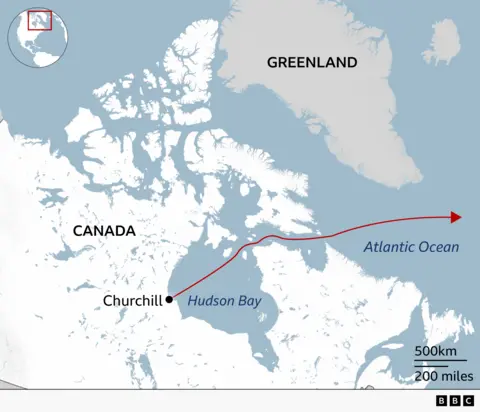
Churchill, Manitoba, a remote town nestled on the western shore of Hudson Bay, has long held the nickname "Polar Bear Capital of the World" due to its remarkable concentration of the massive Arctic predators. However, beyond its wildlife tourism appeal, this isolated northern settlement is now at the center of a transformative opportunity for Canada: the development of a year-round Arctic trade route that could fundamentally reshape global commerce patterns and establish new economic corridors between North America and Europe.
The concept of utilizing Churchill as a northern gateway port is not entirely new, but escalating climate change has suddenly transformed what was once a marginal proposal into a serious strategic consideration for Canadian policymakers and business leaders. As temperatures in the Arctic region rise at rates double or triple the global average, the permafrost that has remained frozen for millennia is thawing, and sea ice that historically made Arctic waters impassable is receding at an alarming pace. These environmental shifts have created unprecedented opportunities for maritime commerce that could bypass traditional shipping routes entirely.
Churchill's strategic geographic position makes it uniquely valuable for transcontinental trade. The port city sits approximately 1,000 kilometers closer to European markets than existing North American ports along the Atlantic coast, potentially reducing shipping times and costs significantly for goods moving between Asia and Europe via North American distribution networks. During the winter months, when traditional Arctic shipping becomes impossible, Churchill could theoretically maintain operations through infrastructure improvements and icebreaking support systems that modern technology increasingly makes feasible.
Government officials and economists are carefully analyzing the feasibility of establishing sustained Arctic shipping operations from Churchill that could remain accessible throughout the year. The potential economic implications are substantial: reduced transportation costs for goods destined for European markets, enhanced competitiveness for North American producers, and significant infrastructure development investments that would transform the regional economy of northern Manitoba.

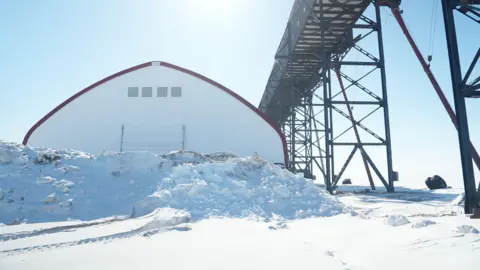
The infrastructure challenges, however, are formidable and cannot be understated. Churchill's existing port facilities, while functional, require substantial modernization and expansion to accommodate year-round commercial shipping at the scale and frequency that would make such a route economically viable. The harsh climate conditions, including extreme cold temperatures, severe storms, and extended periods of darkness during winter months, demand specialized equipment and operational procedures that significantly increase operational costs compared to conventional ports.
Investment requirements for developing comprehensive port infrastructure represent a critical hurdle. Beyond the port terminal itself, supporting systems would need to include modern icebreaker capabilities, emergency response facilities, refined fuel storage and distribution systems, and enhanced transportation infrastructure connecting Churchill to major supply chains. Preliminary estimates suggest that establishing a fully operational year-round Arctic port would require billions of dollars in capital investment, funding that must be justified by demonstrable long-term economic returns.
The climate change factor introduces both opportunities and complications. While warming Arctic temperatures have opened new shipping possibilities, this same environmental transformation brings unpredictability. Sea ice patterns are becoming increasingly erratic rather than following historical precedents, weather conditions remain extreme even as they shift, and the environmental implications of increased Arctic shipping represent legitimate concerns for conservation-minded stakeholders and Arctic indigenous communities whose traditional lifestyles depend on stable environmental conditions.
Canada's evaluation process necessarily includes consultation with multiple stakeholders, including federal and provincial governments, private shipping and logistics companies, indigenous First Nations communities whose territories encompass the region, and environmental organizations concerned with Arctic ecosystem protection. Each constituency brings different perspectives and priorities to the discussion, making consensus difficult but essential for any viable development strategy.
International dimensions add additional complexity to Canada's decision-making process. Arctic geopolitical competition has intensified dramatically in recent years, with multiple nations asserting claims and establishing presence in Arctic regions as climate change transforms the geopolitical landscape. Russia, which controls extensive Arctic coastline, has invested heavily in icebreaker fleets and Arctic port development. Norway has established itself as a leader in Arctic shipping expertise. Canada's development of Arctic trade infrastructure represents both an economic opportunity and a sovereignty assertion in a region where international interests are increasingly contested.
The shipping industry itself views Arctic routes with cautious interest. While the theoretical advantages are apparent—reduced voyage distances, time savings, and lower fuel consumption—practical challenges remain substantial. Insurance premiums for Arctic shipping exceed those of conventional routes due to elevated risks. Equipment designed for extreme Arctic conditions commands premium prices. Crew training and retention in remote northern locations presents ongoing challenges. These factors mean that even with completed infrastructure, Arctic shipping would likely remain premium-priced rather than economically advantageous for all cargo types.
Environmental assessment and permitting processes, already rigorous in Canadian governance, become even more stringent for Arctic development projects. Studies must evaluate potential impacts on marine ecosystems, Arctic wildlife populations, and indigenous hunting and subsistence practices. Baseline data collection in Arctic regions is sparse compared to more developed areas, meaning environmental assessments may require years of preliminary research before definitive conclusions can be reached regarding acceptable development parameters.
Churchill itself faces a paradox that encapsulates the broader tension at the heart of this debate. The town's tourism economy depends fundamentally on preserving Arctic wilderness conditions and maintaining polar bear populations that attract visitors from around the world seeking authentic Arctic experiences. Large-scale port development and year-round shipping activity could fundamentally alter the character of the region that makes Churchill unique, potentially undermining the very tourism industry that currently sustains the community's economy and provides essential employment.
Technological innovation will likely play a decisive role in determining whether Churchill's Arctic gateway ambitions prove achievable. Advances in icebreaker design, autonomous vessel systems, enhanced maritime navigation and communication technologies, and improved materials capable of withstanding extreme Arctic conditions could collectively reduce operational barriers and costs. Conversely, technological limitations and the inherent unpredictability of Arctic environments may prove insurmountable constraints that make year-round shipping economically unfeasible regardless of infrastructure investments.
The timeline for Canadian decision-making on this issue remains uncertain. Government studies and feasibility assessments continue, but no firm commitments to major infrastructure development have been announced. Industry observers suggest that a comprehensive evaluation could take several years, during which climate patterns, international Arctic policy, shipping industry economics, and technological capabilities will all continue evolving. The next few years will likely prove decisive in determining whether Churchill's Arctic gateway remains a theoretical possibility or becomes a realized commercial reality that reshapes continental trade patterns.
Ultimately, Canada's evaluation of Arctic shipping viability from Churchill reflects broader questions about sustainable development in vulnerable ecosystems, economic opportunity assessment in regions of strategic importance, and the appropriate balance between commercial advancement and environmental stewardship. The decision will have implications extending far beyond Churchill itself, affecting Arctic governance frameworks, Canadian economic development strategy, and the trajectory of global shipping patterns in an era of rapid climate transformation.

Source: BBC News


