
Claude's New 'Dreaming' Feature Transforms Agent Memory

Anthropic introduces dreaming capability to Claude Managed Agents, allowing AI systems to review events and store important memories for improved task performance.
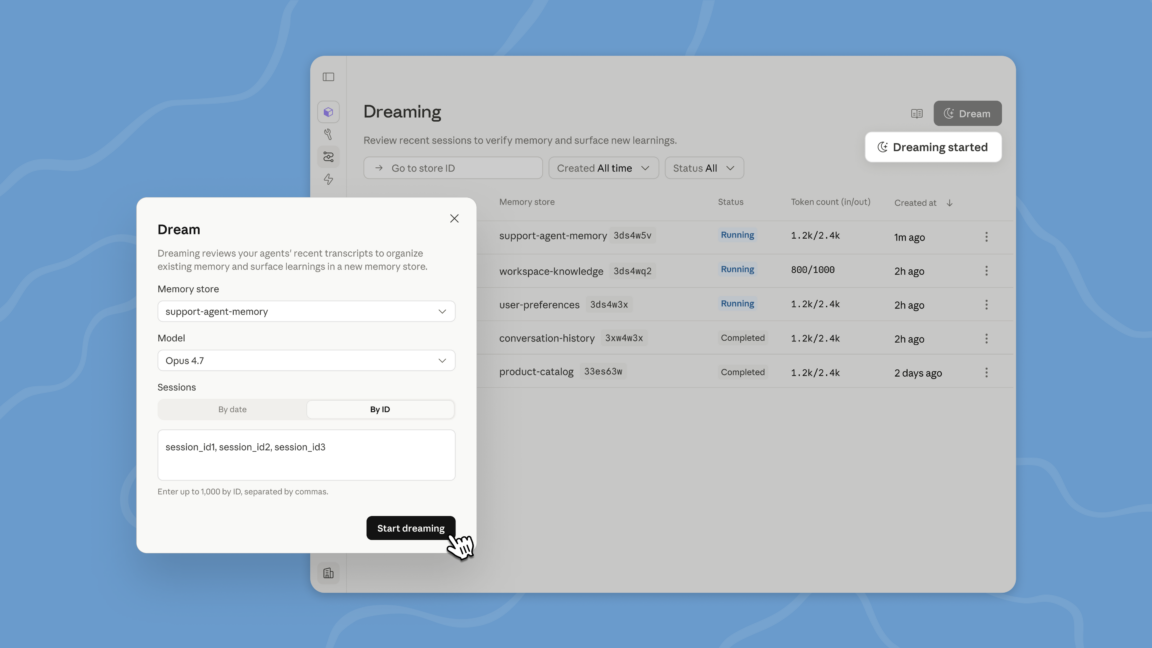
Anthropic has unveiled an innovative feature called "dreaming" for Claude Managed Agents at its Code with Claude developers' conference in San Francisco. This groundbreaking capability represents a significant advancement in how artificial intelligence systems process and retain information across extended projects and interactions. The dreaming mechanism operates as a sophisticated process designed to analyze recent events and selectively identify and store critical information in memory, ensuring that future tasks and collaborative interactions benefit from accumulated knowledge and contextual understanding.
The dreaming feature is currently positioned as a research preview, with access limited to Managed Agents operating on the Claude Platform. Managed Agents function as a higher-level alternative to direct development on the Messages API, offering what Anthropic describes as a "pre-built, configurable agent harness that runs in managed infrastructure." These agents are specifically engineered for complex scenarios involving multiple agents collaborating on tasks or projects that unfold over extended periods, ranging from several minutes to multiple hours, requiring sophisticated coordination and persistent state management.
Understanding the fundamental mechanics of dreaming requires examining how Claude AI systems manage information within their operational constraints. Anthropic characterizes dreaming as a scheduled, systematic process wherein active sessions and existing memory stores undergo thorough review and analysis. During this process, specific memories are carefully curated and prioritized based on their relevance and importance to ongoing and future operations. This deliberate curation mechanism addresses one of the most significant technical challenges in large language model deployment: the inherent limitations of context windows.
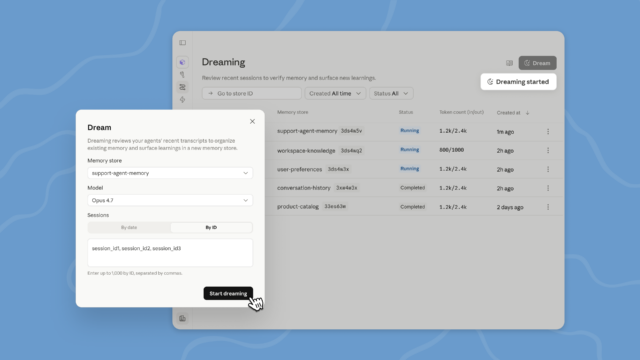
Context window limitations represent a fundamental constraint in modern large language models, and managing these constraints effectively is critical for sustained performance in long-running projects. Over the course of lengthy initiatives, vast amounts of information accumulate, and without intelligent filtering mechanisms, crucial contextual details can become lost or diluted within the expanded data. The dreaming feature directly addresses this challenge by implementing a proactive approach to information management, ensuring that only the most pertinent and valuable information is retained in an accessible format for future reference and decision-making processes.
The concept of information management through systematic review is not entirely novel within the AI industry. On the conversational side of artificial intelligence development, many contemporary language models employ a technique known as compaction, which serves a similar but slightly different purpose. In compaction processes, lengthy conversations and interaction histories are periodically subjected to automated analysis, during which the model identifies and removes redundant, irrelevant, or extraneous information from the context window while carefully preserving information that remains actively relevant to the ongoing conversation, project, or task at hand.
The distinction between dreaming and compaction reflects different approaches to managing AI memory optimization. While compaction operates on a reactive basis, condensing existing information when context windows become constrained, dreaming functions more proactively, strategically identifying and preserving information deemed important for future use before constraints become problematic. This forward-looking approach to memory management represents a meaningful evolution in how multi-agent systems can collaborate effectively over extended periods without losing critical contextual information or operational continuity.
The introduction of dreaming capabilities to Claude Managed Agents carries significant implications for enterprise and research applications requiring sophisticated, long-running automated systems. Organizations deploying multiple AI agents to tackle complex projects can now leverage persistent memory mechanisms that learn and adapt throughout project lifecycles. This capability enhances the effectiveness of agent collaboration by enabling individual agents to benefit from the collective experiences and discoveries made during project execution, even as they operate within the technical constraints of finite context windows.
For developers integrating Claude Managed Agents into their systems, the dreaming feature offers new possibilities for building more intelligent and adaptive multi-agent architectures. Rather than treating each agent interaction as isolated or requiring manual state management between operations, developers can now rely on built-in mechanisms for automatic memory curation and persistence. This simplification of agent management reduces the complexity developers must handle directly, allowing them to focus on higher-level application logic and business requirements rather than low-level memory management details.
The research preview status of the dreaming feature indicates that Anthropic continues to evaluate and refine the mechanism based on real-world usage patterns and feedback from developer communities. As the feature progresses from preview to broader availability, additional capabilities and refinements may be introduced based on insights gained during the evaluation period. This iterative development approach allows Anthropic to balance innovation with stability, ensuring that the feature matures into a reliable component of the Claude platform before wider adoption.

The strategic focus on enhancing agent capabilities reflects broader trends in the AI industry toward more sophisticated autonomous system architectures. As artificial intelligence systems take on increasingly complex responsibilities, the ability to maintain context and continuity becomes more critical. Features like dreaming represent incremental but meaningful steps toward AI systems that can reason over longer periods, remember important details across interactions, and collaborate more effectively with other agents or human operators on extended projects.
Looking toward future developments, the dreaming feature may serve as a foundation for even more advanced capabilities in AI memory management and agent coordination. Potential extensions could include more granular control over what information is prioritized during the dreaming process, mechanisms for agents to explicitly communicate important information to be included in memory stores, or distributed dreaming processes that synchronize memory across networks of agents working on shared objectives. These potential enhancements underscore the significance of the foundational work being introduced now through this research preview.
For developers working with Claude Platform infrastructure, the introduction of dreaming functionality represents an important expansion of the available toolset for building sophisticated AI-powered applications. The feature addresses real technical challenges that developers face when implementing long-running agent systems, providing built-in solutions rather than requiring custom implementations. As organizations increasingly adopt AI agents for business-critical processes, built-in mechanisms for maintaining context and memory become increasingly valuable and economically significant.
The announcement of the dreaming feature at the Code with Claude conference demonstrates Anthropic's continued commitment to advancing the capabilities of its Claude AI system and the broader ecosystem of tools and platforms built around it. By incorporating sophisticated memory management and curation mechanisms into Managed Agents, Anthropic provides developers with more powerful and flexible tools for implementing complex AI systems. The research preview status ensures that the feature will continue to evolve based on community feedback and real-world usage patterns, ultimately resulting in a more robust and feature-rich platform for AI development and deployment.
Source: Ars Technica


