
Coetzee Boycotts Israel Festival Over Gaza Genocide Claims

Nobel Prize-winning author JM Coetzee declines Jerusalem writers festival, condemning Israel's military operations in Gaza as genocidal campaign.
Nobel laureate JM Coetzee has made headlines by refusing to participate in a prestigious international literature gathering in Israel, citing deeply troubling concerns about the country's military operations in Gaza. In a pointed correspondence addressed to festival organizers, the acclaimed 86-year-old author denounced what he characterized as a genocidal campaign unfolding in the Palestinian territory, asserting that "It will take many years for Israel to clear its name." This significant decision marks a dramatic shift in Coetzee's long-standing relationship with the nation.
Born during the era of apartheid in South Africa and currently residing in Australia, Coetzee penned his letter of declination to the organizers of the Jerusalem international writers festival during the month of November. The correspondence represents far more than a simple scheduling conflict; it embodies a fundamental moral stance by one of contemporary literature's most respected voices. Coetzee's refusal carries considerable weight given his stature as a Nobel Prize recipient and globally recognized intellectual authority on matters of human rights and social justice.
In his communication to festival organizers, Coetzee revealed that he had previously maintained a sympathetic view toward Israel. However, this perspective underwent a profound transformation as the humanitarian situation in Gaza deteriorated. "The campaign of annihilation in Gaza has changed all that," Coetzee wrote, suggesting that the scale and nature of the military operations have fundamentally altered his understanding of the conflict and Israel's role within it.
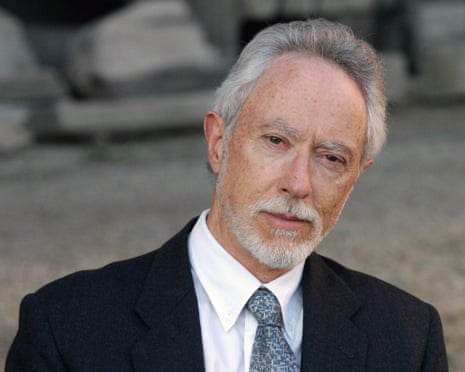
The author's intervention arrives amid an ongoing global conversation about the Israel-Gaza conflict and its implications for international relations and humanitarian law. As one of the most articulate and morally engaged figures in world literature, Coetzee's pronouncement carries symbolic significance beyond the individual festival context. His decision resonates with broader artistic and intellectual communities worldwide, where debates about the conflict have become increasingly prominent and polarized.
Coetzee's background uniquely positions him to speak on issues of state violence and systemic oppression. Having witnessed and chronicled the brutalities of apartheid South Africa throughout his literary career, he brings personal historical knowledge to his assessment of contemporary events. His novels, including "Disgrace" and "Waiting for the Barbarians," have long engaged with themes of power, violence, and moral complicity, making his stance on Gaza particularly resonant within literary circles.
The timing of Coetzee's letter, sent in November, reflects the escalating humanitarian crisis in Gaza that had captured global attention and sparked widespread debate among cultural figures. Throughout the autumn months, international concern about civilian casualties, displacement, and conditions in the territory had grown considerably, prompting many artists, writers, and intellectuals to reconsider their positions on Israel and international support for its military operations.
Festival organizers have yet to issue a comprehensive public response to Coetzee's withdrawal, though his letter itself serves as a powerful statement of principle. The incident exemplifies the complex intersections between cultural institutions, political tensions, and the moral responsibilities of prominent intellectuals in times of international crisis. When major literary figures decline high-profile invitations on grounds of political principle, it inevitably generates broader discussions about artistic freedom, institutional neutrality, and the role of cultural spaces in political discourse.
The Gaza humanitarian situation has become an increasingly divisive issue even within progressive intellectual communities, with reasonable people expressing differing perspectives on causes, consequences, and appropriate responses. Coetzee's intervention suggests that, for him, the available evidence regarding civilian harm and military tactics has crossed a threshold that demands a public statement. His refusal to participate implicitly questions whether attendance at Israeli cultural events can be ethically justified under current circumstances.
Throughout his career spanning multiple decades, Coetzee has maintained a reputation as an author deeply committed to exploring ethical dimensions of human conduct and institutional violence. His Nobel Prize citation acknowledged his contributions to understanding how individual lives are shaped by larger political and social forces. This consistency between his artistic output and his political stance on Gaza demonstrates an alignment between his intellectual principles and contemporary activism.
The broader context of cultural boycotts and artist activism against Israel has grown significantly in recent years, though opinions on such actions remain sharply divided. Supporters argue that cultural institutions bear responsibility for examining their complicity in political systems they may find morally problematic. Critics contend that politicizing cultural exchange undermines the universalizing potential of art and literature. Coetzee's position aligns him with the former perspective, suggesting that maintaining cultural connections with Israel during the current situation would constitute an implicit endorsement or normalization of Israeli state policies.
In his letter, Coetzee articulated not merely disagreement with Israeli government policies, but a conviction that the scale and nature of operations in Gaza constitute something approximating genocide—language carrying profound historical and legal weight. This characterization places him alongside human rights organizations, international law scholars, and other observers who have employed similarly grave terminology when describing civilian impacts of military operations in the territory.
The author's decision will likely influence other intellectuals and cultural figures evaluating their own participation in Israeli cultural events, given Coetzee's respected position within global literary communities. His letter effectively articulates a moral framework that many progressive intellectuals have been wrestling with privately: whether continued engagement with Israeli cultural institutions can be morally sustained given the current humanitarian circumstances.
As the conversation continues to unfold within cultural institutions worldwide, Coetzee's stance represents one of the most high-profile artistic interventions regarding the Israel-Palestine conflict in recent memory. His refusal to attend the Jerusalem festival, backed by clearly articulated moral reasoning grounded in decades of engagement with questions of justice and violence, signals that significant portions of the global intellectual community view current events as morally indefensible and requiring public opposition from those with platforms and influence to exercise.
Source: The Guardian


