
Colombia Highway Bombing Kills 21 in Pre-Election Attack

A devastating bomb blast on Colombia's Pan-American Highway kills 21 people and injures 56 in the worst civilian attack in decades, attributed to cocaine-trafficking rebels.
A tragic bombing in Colombia has claimed the lives of 21 individuals on a major highway in the southwestern region, marking one of the most devastating civilian attacks the nation has experienced in recent decades. The blast occurred on Saturday along the Pan-American Highway in the volatile Cauca department, leaving dozens more wounded and prompting urgent investigations into the incident. Government officials confirmed the casualty figures on Monday, while rescue efforts continued to locate missing persons and assess the full extent of the humanitarian crisis.
The attack has been attributed to cocaine-trafficking rebels operating in the region, highlighting the ongoing security challenges facing Colombia despite years of counterinsurgency efforts. In addition to the 21 fatalities, the bombing wounded 56 people, many of whom sustained serious injuries requiring immediate medical attention. The scale and brutality of the assault underscore the desperation and violence associated with drug trafficking organizations that maintain strongholds in Colombia's rural areas, particularly in the Cauca region known for coca cultivation and illicit drug production.
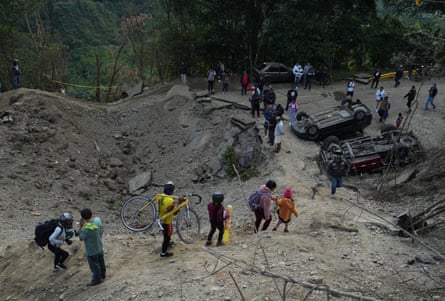
The wreckage left in the wake of the highway bombing presented a harrowing scene, with buses and vans destroyed or severely damaged along the critical transportation corridor. Emergency responders worked frantically to extract survivors from the twisted metal and debris, while families of victims gathered information about their loved ones. The Pan-American Highway serves as a vital economic lifeline connecting communities and facilitating commerce across South America, making this attack particularly damaging to regional connectivity and civilian safety.

The timing of the attack, occurring just days before scheduled Colombian elections, has added political dimensions to an already tense security situation. Electoral periods in Colombia have historically been marked by increased violence from armed groups seeking to intimidate voters or demonstrate their continued power and influence. This particular incident represents a dramatic escalation in pre-election violence, raising concerns about security measures being implemented to protect voters and election officials during the voting process.
The Cauca department, where the bombing took place, has long been considered one of Colombia's most dangerous regions due to its strategic importance in drug trafficking networks and the presence of multiple armed factions competing for control. Local residents in the area have endured years of violence, displacement, and insecurity as rival groups battle for territorial dominance. The Saturday attack represents yet another chapter in the region's troubled history of conflict and demonstrates how civilians remain vulnerable to the tactics employed by organized armed groups.
Colombian government officials have launched comprehensive investigations to identify those responsible for the bombing and determine the precise circumstances that led to the explosion. Security forces are working to gather evidence, interview witnesses, and pursue leads that might identify the perpetrators and their network. The investigation carries significant weight not only for delivering justice to victims' families but also for understanding the operational capabilities and intentions of the groups responsible for this level of coordinated violence.
International observers and human rights organizations have expressed deep concern about the civilian casualties resulting from the attack and the broader pattern of violence affecting ordinary Colombians. The incident has drawn attention from regional partners and the international community, many of whom have offered expressions of solidarity with the Colombian government and people. Diplomatic representatives have emphasized the importance of maintaining international support for Colombia's security efforts while addressing root causes of conflict including poverty, drug trafficking, and limited state presence in remote areas.
The psychological impact on survivors and families of victims extends beyond the immediate physical injuries sustained during the explosion. Trauma counseling services and mental health support have been mobilized to assist those affected by the bombing, recognizing that recovery from such incidents requires comprehensive assistance beyond emergency medical care. Communities in the Cauca region, already accustomed to violence, now face heightened anxiety and uncertainty about future security in the region.
Economic disruptions caused by the bombing include temporary closures of the Pan-American Highway and damage to regional commerce and transportation networks. The destruction of vehicles and infrastructure requires significant resources for repair and replacement, imposing additional costs on families and businesses already struggling with economic challenges. Supply chain interruptions resulting from highway closures affect food distribution, medical supplies, and other essential goods critical to regional communities.
The bombing represents a significant challenge to Colombia's election process and democratic institutions, as security forces must now balance protecting voters and election infrastructure while pursuing those responsible for the attack. Law enforcement agencies are implementing enhanced security measures at polling stations and along major transportation routes to prevent further violence. The incident underscores the ongoing struggle facing Colombian authorities in combating organized crime while maintaining the conditions necessary for free and fair elections.
Historical context reveals that this attack ranks among the deadliest civilian-targeted bombings Colombia has experienced in recent history, surpassing many previous incidents in terms of fatalities and injuries. The incident recalls earlier periods of intense conflict when armed groups frequently employed bombings as instruments of terror against civilian populations. Progress in reducing such attacks had been achieved in recent years, making this bombing a disturbing reversal and indication that security challenges remain acute in certain regions.
Victims' families and community members have called for justice and accountability, demanding that those responsible face prosecution and that preventative measures be implemented to protect civilians from future attacks. Civil society organizations have mobilized support networks for affected families, coordinating financial assistance, medical care, and psychological support. The collective response demonstrates the resilience of Colombian communities in the face of violence while maintaining determination to pursue justice and build a more secure future.
As investigations continue and the nation mourns the loss of life, questions persist about the capacities of armed groups and their determination to influence the political process through violence. Security analysts have begun examining how organized trafficking networks are evolving their tactics and utilizing increasingly sophisticated methods to perpetrate attacks. The incident serves as a stark reminder that despite significant progress in recent decades, Colombia continues to grapple with the violent consequences of drug trafficking and armed conflict.
Source: The Guardian


