
Comey's Cryptic Post Sparks Legal Battle Over Presidential Threats

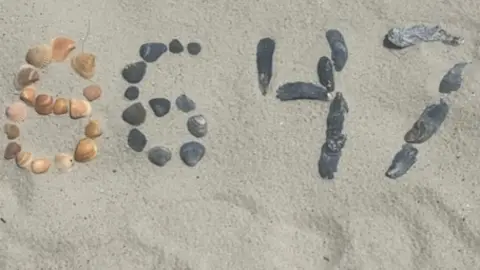
Former FBI Director James Comey faces indictment after a controversial seashell post. Legal experts question whether prosecutors can prove their case successfully.
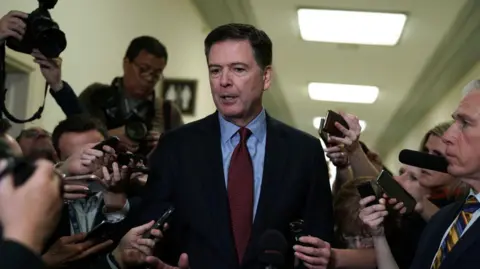
The case against former FBI Director James Comey has taken a dramatic turn following his cryptic social media post featuring a seashell, with Acting Attorney General Todd Blanche asserting that federal investigators spent months scrutinizing the message before bringing charges. Blanche emphasized the gravity of the situation during recent remarks, stating that threatening the president represents a serious federal offense that demands prosecution and accountability under the law.
The indictment of Comey marks a significant development in the ongoing tensions between the executive branch and the intelligence community. The post in question, which Comey shared on his social media accounts, has become the central piece of evidence in what prosecutors characterize as a direct threat against the sitting president. However, legal scholars and constitutional experts are expressing considerable skepticism about the government's ability to successfully prosecute and ultimately secure a conviction in this high-profile case.
Prominent constitutional law professors have begun analyzing the indictment, raising fundamental questions about whether the federal charges can withstand constitutional scrutiny. Many legal experts point to established precedent regarding protected speech and First Amendment protections, suggesting that the government faces substantial hurdles in proving its case beyond a reasonable doubt. The nuanced nature of Comey's post has become a focal point for debate regarding where authorities should draw the line between legitimate political expression and actionable threats.
The implications of this prosecution extend far beyond Comey himself, as legal observers note the potential ramifications for free speech rights and how prosecutors interpret threatening communications. Several defense attorneys specializing in First Amendment cases have publicly stated that the government's theory of the case relies on an expansive reading of what constitutes a threat. These legal professionals argue that prosecutors would need to demonstrate specific intent to harm or incite violence, rather than merely making an oblique or symbolic statement that critics could interpret as critical.
Acting AG Blanche's assertion that the investigation consumed significant resources and time suggests federal authorities conducted an extensive examination of the evidence. According to official statements, the Department of Justice's investigation team collected communications, analyzed digital records, and interviewed potential witnesses over the course of several months. This methodical approach indicates prosecutors believe they have constructed a substantive case, though critics contend that the evidence may prove insufficient when subjected to rigorous legal scrutiny.
The seashell post itself has become the subject of intense speculation and analysis across legal, political, and media circles. Some observers have suggested the image could represent peaceful or apolitical imagery, while prosecutors apparently view it as containing veiled threats or coded messages directed at the president. This fundamental disagreement about interpretation lies at the heart of the prosecution's vulnerability, as expert commentators have noted that symbolic or ambiguous posts typically do not meet the legal threshold for actionable threats.
Criminal defense specialists emphasize that threatening the president charges require prosecutors to establish clear, unambiguous language or conduct demonstrating specific intent to harm. The vagueness of the alleged threat in Comey's post could provide substantial grounds for dismissal or acquittal, particularly if the case reaches trial and defense attorneys effectively argue reasonable alternative interpretations. Constitutional law experts have noted that courts traditionally apply stringent standards when evaluating cases that implicate First Amendment protections.
The prosecution's success will likely depend on whether prosecutors can convince a jury that Comey's post crosses the threshold from political commentary or artistic expression into genuine criminal conduct. Legal analysts suggest that without clear evidence of specific intent or explicit threatening language, the government faces an uphill battle in securing a conviction. The burden of proof, which rests squarely on federal prosecutors, becomes particularly challenging when the alleged threat relies on symbolic interpretation rather than direct language.
Comey's defense team has begun preparing their legal strategy, likely focusing on constitutional protections and the ambiguous nature of the post in question. Defense attorneys are expected to argue that their client engaged in protected political expression, which has long been safeguarded under established constitutional precedent. The defense will probably emphasize that multiple reasonable interpretations of the seashell image exist, and that prosecutors bear the responsibility of proving beyond a reasonable doubt that Comey specifically intended to threaten the president.
The broader political context surrounding this case cannot be overlooked, as observers note the intensifying conflict between the Biden administration and conservative critics. The timing and nature of the prosecution have raised eyebrows among legal ethicists and government accountability advocates, who question whether such charges represent an appropriate use of federal prosecutorial resources. Some commentators have suggested that the case reflects escalating tensions in the political sphere, where traditional norms around prosecutorial restraint may be eroding.
Legal precedent offers limited guidance for the specific circumstances presented in Comey's case, as few high-profile prosecutions have hinged on interpreting social media posts as threats. Previous cases involving threatening communications have generally involved more explicit language or documented plans to harm specific individuals. The relatively novel nature of this prosecution, combined with the symbolic and ambiguous character of the alleged threat, strengthens arguments that the government may struggle to prove its case convincingly.
Expert commentators from prestigious law schools have begun publishing analyses questioning the prosecutorial strategy and predicting potential outcomes. These legal scholars stress that courts must carefully balance national security concerns and protecting government officials with essential constitutional rights protecting citizens' ability to criticize and question government actions. The fine line between these competing interests will likely determine the case's ultimate resolution, as judges and juries grapple with how to interpret Comey's post within this complex legal and political landscape.
As the legal process unfolds, observers will closely monitor how courts address the preliminary questions about whether the indictment should survive initial challenges. Many constitutional lawyers predict that dismissal motions could succeed before the case ever reaches trial, particularly if judges determine that the government's interpretation of Comey's post represents an unconstitutional restriction on speech. The outcome of these procedural battles will significantly shape the trajectory of the prosecution and could establish important precedent regarding social media expression and government prosecution standards.
The case against Comey ultimately raises profound questions about how society balances security concerns with fundamental civil liberties in an increasingly digital and polarized environment. Legal experts universally agree that while protecting government officials remains important, prosecutions must rest on solid constitutional foundations and clear evidence of criminal intent. Whether the government can overcome these substantial legal obstacles remains the central question that will determine both Comey's fate and the broader implications for free expression in American society.
Source: BBC News


