
Congress Urges Trump to Reject Cuba Military Plan

30+ lawmakers warn against unlawful Cuba takeover and migrant detention at Guantánamo Bay, citing humanitarian concerns and escalating US-Cuba tensions.
In a significant move that underscores growing congressional concern about the Trump administration's foreign policy direction, more than 30 members of Congress have publicly urged the president's senior officials to immediately cease the use of Guantánamo Bay naval base for immigrant detention operations and categorically rule out any potential military intervention on the island of Cuba. The coordinated congressional action represents a rare show of bipartisan concern about the administration's approach to hemispheric relations and immigration policy.
The letter, delivered to the secretaries of defense, state, and homeland security on Wednesday morning and reviewed by the Guardian, was spearheaded by Democratic Representative Delia Ramirez of Illinois, a vocal advocate for immigration reform and Latin American affairs. In their correspondence, the lawmakers directly connected escalating US-Cuba tensions to the rising tide of migration flowing from the Caribbean island nation, arguing that aggressive military posturing only exacerbates the humanitarian crisis rather than addressing root causes of displacement.
The congressional delegation's concerns reflect a broader anxiety within legislative circles about what some view as increasingly hawkish rhetoric emanating from the Trump administration regarding Cuba policy. The letter emphasizes that any military operation against Cuba would not only violate international law but would inevitably worsen what the lawmakers describe as "mass suffering" among vulnerable populations, particularly those seeking refuge through maritime routes.
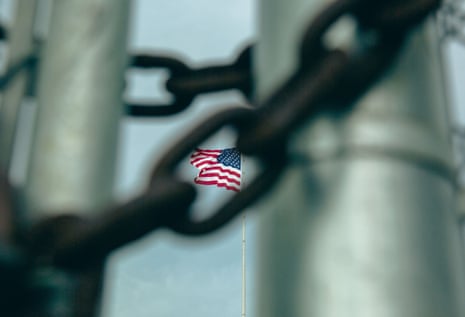
The use of Guantánamo Bay detention for migrant processing has become a particularly contentious issue, with humanitarian organizations and advocacy groups arguing that the facility's historical associations with indefinite detention without trial make it an inappropriate venue for handling asylum seekers and other migrants. The naval base, located on the eastern tip of Cuba despite the U.S. embargo against the island nation, has served various detention purposes throughout its controversial history, but the recent expansion of its use for immigration purposes has drawn widespread criticism.
Representative Ramirez and her fellow signatories argue that the administration should pursue diplomatic channels and address the underlying economic and social factors driving migration from Cuba, rather than deploying military assets or expanding detention infrastructure. The lawmakers point to decades of failed policies and the persistence of the U.S. embargo as contributing factors to Cuba's economic deterioration and the subsequent desperation that compels citizens to risk dangerous ocean crossings.
The letter further warns that military intervention in Cuba would represent a dangerous escalation that could destabilize the entire Caribbean region and invite international condemnation. The lawmakers cite international law obligations and regional security concerns, noting that unilateral military action against a sovereign nation would undermine U.S. credibility on the global stage and potentially trigger retaliatory measures from other nations.
The congressional initiative arrives amid heightened tensions between Washington and Havana, with the Trump administration having taken a hardline stance on Cuban-American relations that diverges sharply from the Obama-era rapprochement. The administration's rhetoric has increasingly referenced military options, though officials have stopped short of explicitly confirming plans for intervention, leading to speculation and concern among lawmakers who view such talk as reckless and counterproductive.
The signatories of the letter represent diverse geographic constituencies and ideological perspectives within the Democratic caucus, suggesting that concerns about the administration's Cuba policy extend beyond a narrow ideological segment. Several moderate Democrats who represent swing districts have joined progressive colleagues in signing the letter, indicating that opposition to potential military action enjoys relatively broad support within the opposition party.
The humanitarian dimensions of the letter underscore a growing recognition among policymakers that immigration policy and military strategy are inextricably linked when it comes to hemispheric relations. The lawmakers contend that treating migrant populations with dignity and addressing legitimate asylum claims represents not only a moral imperative but also a practical approach that is more likely to reduce irregular migration flows than punitive detention policies or military coercion.
The administration's defenders have argued that stronger security measures at the southern border and enhanced maritime interdiction efforts are necessary to maintain control over immigration flows. They contend that the use of Guantánamo Bay as a detention facility represents an efficient use of existing government infrastructure and that it enables the government to process migrants while maintaining appropriate security protocols and screening procedures.
However, critics point to the facility's controversial past and its symbolism as a place associated with indefinite detention without judicial review. They argue that processing migrants at Guantánamo Bay sends a troubling signal about how the U.S. government values the rights of vulnerable populations and may actually discourage legitimate asylum seekers from pursuing legal pathways to enter the United States.
The letter is expected to intensify the debate within Congress and the administration regarding appropriate Cuba foreign policy moving forward. While the letter itself is non-binding and does not carry the force of law, it represents a clear expression of legislative sentiment that could influence appropriations decisions and other congressional actions affecting administration policies in the hemisphere.
The timing of the congressional intervention is significant, coming as the administration grapples with multiple foreign policy challenges simultaneously. The administration's focus on strengthening ties with certain regional allies while taking a harder line toward others, including Cuba, reflects broader strategic shifts in U.S. hemispheric engagement that observers argue lack coherence and clear strategic vision.
Looking forward, the congressional pressure may prompt the administration to reconsider or clarify its position on potential military action, though the Trump administration has demonstrated a historical tendency to resist congressional input on matters it deems within its executive purview. The outcome of this particular congressional appeal remains uncertain, but the letter represents an important marker of legislative concern that will likely shape the debate over Cuba policy throughout the remainder of the administration's tenure.
Source: The Guardian


