
Cooper's Palestine Action Column Sparks Trial Prejudice Concerns

Exclusive: Ex-home secretary Yvette Cooper published newspaper column on Palestine Action proscription despite CPS warnings of potential trial prejudice for six activists.
In a significant development that raises serious questions about the intersection of political communication and judicial fairness, it has been revealed that Yvette Cooper, during her tenure as home secretary, authored a newspaper column addressing the proscription of Palestine Action. This disclosure is particularly noteworthy because the Crown Prosecution Service had specifically cautioned that such public statements could potentially prejudice ongoing criminal proceedings against six activists associated with the organization.
The revelations surrounding Cooper's column have intensified scrutiny over how senior government officials navigate the delicate balance between public accountability and the need to protect the integrity of criminal trials. The Palestine Action article was written to justify the government's decision to proscribe the group, a move that had generated considerable public debate and legal challenge. Cooper's decision to publish her justification in a newspaper column suggests a prioritization of public messaging over adherence to prosecutorial guidance, a choice that has now drawn criticism from legal experts and observers concerned with judicial impartiality.
The Crown Prosecution Service warning that accompanied Cooper's editorial decision cannot be understated in its significance. Prosecutors explicitly flagged concerns that a high-ranking government official's public commentary on the legitimacy of the group's proscription could unfairly influence the judicial proceedings against the six activists. This warning represents a formal acknowledgment from the prosecution that Cooper's intended column posed a tangible risk to the fairness of the trial process, yet the then-home secretary proceeded with publication regardless.
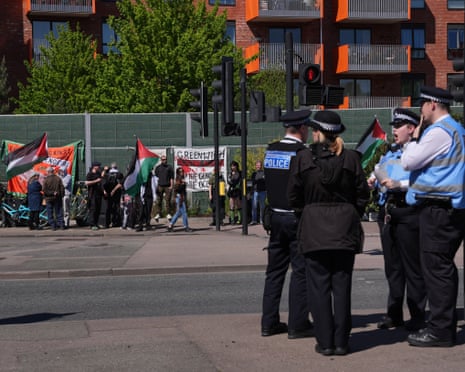
The criminal trial referenced in the CPS warning centers on a 2024 break-in at an Israeli arms manufacturer's factory, an incident that became emblematic of Palestine Action's alleged protest tactics. The six activists facing trial were directly connected to this incident, making any public statements from government officials about the legitimacy of the organization's proscription particularly sensitive from a legal perspective. The timing and source of Cooper's column—coming from the home secretary herself—amplified the potential impact on the defendants and their ability to receive a fair hearing.
Understanding the broader context of Palestine Action's proscription is essential to appreciating the full implications of Cooper's decision. The organization had engaged in various forms of direct action targeting Israeli military and weapons manufacturers operating in the United Kingdom. These activities, which included factory occupations, property damage, and other forms of protest, eventually prompted the government to pursue proscription under counterterrorism legislation. This legal classification had been contested by the group and raised important questions about protest rights, freedom of expression, and the boundaries of lawful dissent in democratic societies.
The decision to proscribe Palestine Action represented a significant governmental intervention in the landscape of political activism and protest in Britain. Proscription under terrorism legislation carries substantial consequences, including criminalizing membership in or support for the organization. Cooper's role as home secretary placed her at the center of this decision-making process, and her subsequent column was intended to publicly defend and explain the government's rationale to the broader electorate and media.

The tension between Cooper's role as a political actor defending government policy and her responsibilities to protect judicial integrity illustrates a fundamental challenge in governance. When senior officials write public commentary about matters that are simultaneously the subject of active criminal proceedings, they risk compromising the independence and fairness of the justice system. The judicial impartiality concerns raised by the CPS are not merely theoretical; they speak to how public statements can influence jury perceptions, judicial reasoning, and the overall integrity of criminal trials.
Legal experts have long emphasized that judges and officials in positions of authority must be particularly careful about public commentary that touches on matters under active legal consideration. The principle of sub judice—the restriction on discussing matters that are before the courts—exists to protect the rights of defendants and ensure that trials are decided on the merits of evidence presented in court rather than on the basis of prejudicial publicity. Cooper's decision to publish her column, despite explicit warnings from the CPS, appears to have prioritized political messaging over this fundamental legal principle.
The revelation of the CPS warning adds another layer of complexity to the situation. It demonstrates that prosecuting authorities had taken the time to assess the risks posed by Cooper's intended publication and had formally communicated their concerns to her office. This was not a case where the risks were unclear or where the official in question could claim ignorance. Rather, it appears to have been a deliberate choice to proceed with publication despite clear and documented warnings about potential prejudicial consequences.
The broader implications of this situation extend beyond the immediate criminal trial in question. The incident raises questions about whether government officials at the highest levels feel sufficiently bound by advice from the judicial and prosecutorial systems regarding matters of public communication. It also highlights potential gaps in mechanisms designed to ensure that such advice is followed or, if not followed, that the reasons for departing from professional guidance are clearly documented and explained.
The Palestine Action case has become emblematic of deeper tensions in British politics around activism, security policy, and the treatment of groups engaged in direct action protest. The proscription itself generated significant legal and political controversy, with civil liberties organizations expressing concerns about the breadth of the legislation and its potential impact on legitimate protest activities. In this context, Cooper's column was not merely a neutral explanation of government policy but an intervention in an active and contentious political debate.
As the trial of the six activists proceeds, the existence and publication of Cooper's column despite CPS warnings may yet become a matter of judicial consideration. Defense counsel could potentially argue that the column represents inappropriate prejudicial publicity that has undermined their clients' right to a fair trial. Judges will need to determine whether such high-level governmental commentary has indeed affected the fairness of proceedings and whether remedial measures are necessary.
This situation underscores the importance of clear protocols and channels of communication between prosecutorial authorities and government officials when matters of public policy intersect with active criminal proceedings. While freedom of speech and the government's ability to communicate with the public are important democratic values, they must be balanced against the equally fundamental requirement that criminal defendants receive fair trials. The revealed tension between Cooper's actions and the CPS advice demonstrates that these protocols may need to be strengthened or more rigorously enforced to prevent future instances of similar conflicts.
Looking forward, the case may influence how future government officials approach similar situations, particularly when they receive explicit warnings from prosecutorial authorities about the potential consequences of public statements. The revelation that a senior government official proceeded with publication despite such warnings may itself become a precedent that shapes how courts and prosecutors evaluate the seriousness of judicial prejudice in high-profile cases involving government actors. The implications of this incident will likely resonate through discussions about governmental accountability, judicial independence, and the proper boundaries of public communication by those in power.
Source: The Guardian


