
Cruise Ship Hantavirus Outbreak: 149 Passengers Head to Canary Islands

MV Hondius cruise ship with hantavirus outbreak expected to arrive in Canary Islands within days. 149 passengers from 23 countries remain aboard under strict precautions.
A cruise ship hantavirus outbreak has prompted Spanish health authorities to prepare for the arrival of the MV Hondius, which is expected to reach the Canary Islands within three to four days. The vessel, operated by Oceanwide Expeditions, currently carries approximately 149 individuals representing 23 different countries, all of whom remain aboard the ship under stringent precautionary health measures as officials work to contain the situation.
According to Spain's health ministry, the situation has been carefully monitored and coordinated with international health organizations to ensure proper handling of the outbreak. The hantavirus infection cases identified aboard the vessel have raised concerns about potential transmission risks, though authorities have implemented comprehensive safety protocols to minimize exposure. Oceanwide Expeditions, the cruise operator, has maintained close communication with health officials throughout the incident to facilitate a smooth and safe arrival process at the destination port.
Among those confirmed to be infected is a British crew member who is currently receiving medical attention for the condition. The hantavirus outbreak on cruise ships represents a rare but serious public health concern, as the virus can spread through contact with infected rodent droppings or saliva. The confined environment of a vessel presents unique challenges for containing infectious diseases, making the implementation of strict isolation and sanitation measures absolutely critical.
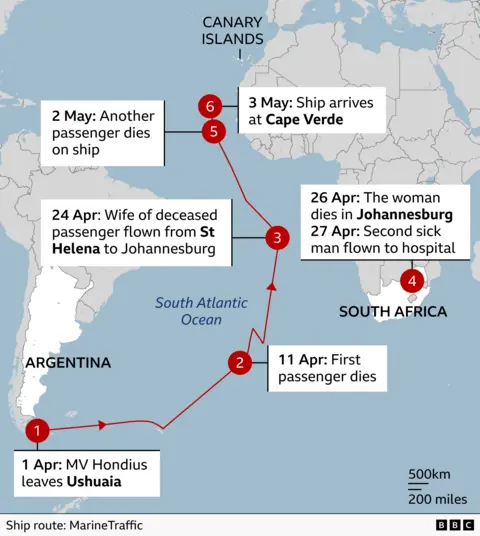
The Canary Islands location for the ship's arrival was selected based on available medical facilities and resources needed to properly manage the health crisis. Spanish authorities have been coordinating with regional and national health services to establish appropriate quarantine zones and medical treatment centers in anticipation of the vessel's arrival. The decision to allow the ship to proceed to port, rather than divert it to another location, reflects confidence in Spain's healthcare infrastructure and capacity to handle such emergencies effectively.
Hantavirus, a pathogen that can cause severe illness in humans, requires immediate medical attention when infection is suspected. The virus, which is transmitted primarily through contact with infected rodent materials, can lead to serious complications if left untreated. Healthcare professionals aboard the MV Hondius and those preparing at the port facilities have been briefed on the specific symptoms of hantavirus infection and appropriate treatment protocols to ensure rapid response to any additional cases that may develop.
The multinational composition of the passengers and crew aboard the cruise ship adds complexity to the situation, as individuals from various countries may require different levels of medical support and communication assistance. Oceanwide Expeditions has arranged for translation services and culturally sensitive support for passengers during what is undoubtedly a stressful and concerning ordeal. The operator has also been working with the passengers to provide regular updates and reassurances about the safety measures being implemented.

Public health experts have emphasized the importance of swift action in containing disease outbreaks on vessels, where close quarters and shared ventilation systems can potentially facilitate rapid transmission of infectious agents. The implementation of strict precautionary measures aboard the MV Hondius, including isolation protocols and enhanced sanitation procedures, demonstrates commitment to preventing further spread of the virus to uninfected individuals. Authorities continue to monitor all passengers and crew members for emerging symptoms that might indicate additional infections.
The specific source of the hantavirus introduction aboard the ship remains under investigation, as health officials seek to understand how the pathogen entered the vessel and spread to multiple individuals. Rodent control measures and environmental assessments are typically conducted when hantavirus cases are discovered in enclosed environments such as ships or buildings. Understanding the origin of the outbreak is crucial for preventing similar incidents in the future and for implementing targeted preventive measures.
As the MV Hondius prepares for arrival in the Canary Islands, port authorities have established comprehensive welcome and intake procedures designed to safely disembark passengers while minimizing public health risks. Medical personnel will be standing by to conduct thorough evaluations of all individuals aboard the vessel, ensuring that any additional cases are quickly identified and appropriately managed. The coordination between maritime operators, health officials, and local authorities represents an important example of emergency preparedness and response in the face of infectious disease threats.
The case highlights the ongoing need for international health cooperation and rapid information sharing when public health emergencies occur across borders. Maritime travel inherently presents unique challenges for disease surveillance and control, as vessels operate in international waters and connect multiple countries and ports. The response to this hantavirus outbreak demonstrates how modern communication technology and international health protocols enable coordinated responses to emerging infectious disease threats that would have been far more difficult to manage in previous decades.
Passengers who have been quarantined aboard the ship will undergo comprehensive medical screening upon arrival at port to determine their health status and need for ongoing treatment or observation. Those showing no symptoms will be monitored closely, while confirmed cases will receive specialized medical care tailored to treating hantavirus infection. The psychological impact of extended quarantine during a health crisis is also being considered by support services made available to passengers and crew members.
This incident serves as a reminder of the importance of maintaining rigorous hygiene and sanitation standards aboard cruise ships and other vessels where large numbers of people live in close proximity for extended periods. Regular pest control and environmental monitoring are essential preventive measures that cruise operators must implement to protect the health and safety of their passengers and crews. The successful management of this cruise ship hantavirus situation will likely influence industry-wide practices and guidelines for responding to similar health emergencies in the future.
Source: BBC News


