
Cruise Ship Passenger Tests Positive for Hantavirus

A Canadian passenger from the MV Hondius cruise ship has tested positive for hantavirus. Four former passengers are isolating on Vancouver Island, British Columbia.
A Canadian cruise ship passenger who traveled aboard the MV Hondius has tested positive for hantavirus, marking a significant health concern for the vessel's recent voyage. The individual is among four former passengers currently isolating on Vancouver Island in British Columbia as health authorities monitor their conditions closely. The positive test result has prompted officials to investigate the circumstances surrounding potential exposure and transmission during the cruise.
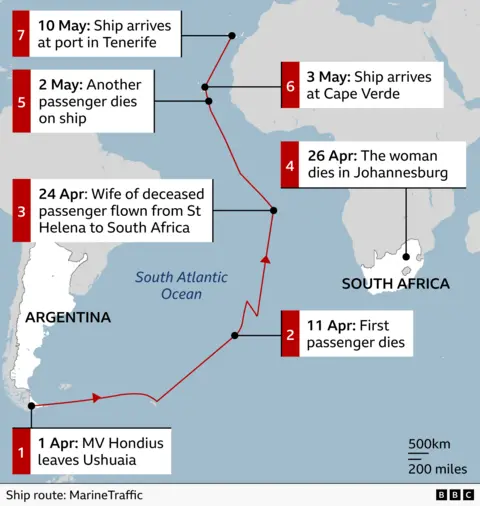
The MV Hondius departed from Argentina on April 1st and completed its international cruise journey when it docked in Tenerife in Spain's Canary Islands just under a week ago. The vessel carried a diverse passenger manifest consisting of 147 travelers and crew members representing 23 different countries. This multi-national composition of the ship's occupants has expanded the scope of health monitoring efforts across multiple jurisdictions and international borders.
Health officials have initiated comprehensive contact tracing procedures to identify other potentially exposed individuals from the cruise. The fact that passengers and crew hailed from such geographically diverse locations means that health authorities in multiple countries may need to coordinate response efforts. The situation has raised questions about disease transmission protocols aboard cruise vessels and the effectiveness of existing preventive measures in such confined environments.

The hantavirus diagnosis is of particular concern due to the virus's serious health implications and relatively high mortality rates in some cases. Hantaviruses are typically transmitted to humans through contact with infected rodent droppings, urine, or saliva, and can cause hantavirus pulmonary syndrome in severe cases. The cruise ship environment, with its complex ventilation systems and close quarters, could potentially facilitate transmission if rodent contamination occurred.
Vancouver Island health authorities have established isolation protocols for the four former passengers who are currently being monitored. These individuals are being observed for symptom development and potential disease progression. The isolation measures are intended to prevent any further spread of the infection within local communities while medical professionals gather more information about the exposure source.
The situation has prompted renewed discussions about cruise ship safety standards and disease prevention measures. Public health officials are likely reviewing the vessel's sanitation procedures, pest control protocols, and ventilation systems to determine how hantavirus exposure may have occurred. These findings could lead to recommendations for enhanced health and safety protocols across the cruise industry.
Cruise operators are increasingly scrutinized regarding their ability to manage communicable disease risks in their facilities. The close proximity of hundreds of passengers and crew members in shared spaces creates unique challenges for disease control. This incident underscores the importance of robust health screening, sanitation practices, and rapid response capabilities aboard commercial vessels.
The international travel implications of this case are significant, as passengers have dispersed to 23 different countries following the cruise. Public health agencies in each country may need to establish monitoring systems for individuals who traveled on the vessel. International coordination becomes crucial in preventing any potential spread of the infection across multiple continents.
Health authorities in both Canada and Spain are likely working together to gather detailed information about the cruise vessel's operations, passenger activities, and crew responsibilities. Understanding the timeline of symptom onset and the passenger's activities during the voyage will be essential in identifying the source of infection. This investigative process is fundamental to preventing similar incidents in the future.
The MV Hondius case serves as a reminder of the ongoing risks associated with infectious disease transmission in travel settings. Despite advances in modern medicine and public health infrastructure, cruise ships remain susceptible to disease outbreaks due to their unique operational characteristics. The vessel's recent journey highlights how quickly infections can spread across international boundaries and affect public health systems globally.
As additional test results come in and the investigation progresses, health officials will likely provide more detailed information about the circumstances of this case. The response to this situation may influence future cruise industry standards and help identify gaps in current disease prevention strategies. For now, the four isolating passengers remain under careful medical supervision as authorities work to contain any potential spread of the virus.
Source: BBC News

