
Czech Journalists Threaten Strike Over Licence Fee Plan

Czech public broadcasters warn of strike action as government moves to eliminate licence fees and shift TV/radio funding under state control, raising independence concerns.
Journalists working at the Czech Republic's public broadcasting organizations have issued a stark warning that they are prepared to initiate strike action should the government of billionaire Prime Minister Andrej Babiš refuse to abandon its controversial proposal to eliminate licence fees and consolidate media funding under direct state control. This development represents a significant escalation in tensions between the media sector and the government, highlighting fundamental disagreements about how public service broadcasting should be financed and operated in a democratic society.
The proposed restructuring would fundamentally alter the financial landscape for Czech television and radio stations. Currently, public service media in the Czech Republic operates under a model where households pay fees directly to broadcasting organizations, ensuring a degree of financial independence from political influence. The government's plan would replace this established system with direct allocations from the state budget, effectively placing control of funding decisions in the hands of elected officials. This shift has triggered considerable alarm among journalists and media professionals who fear it could compromise editorial freedom.
Culture Minister Oto Klempíř made the government's intentions unmistakably clear during a recent public statement, declaring that "licence fees are cancelled." This blunt announcement left little room for ambiguity regarding the government's resolve to push forward with the contentious reform. The minister's straightforward language reflected the administration's commitment to pursuing this policy change, despite mounting opposition from those who work in the broadcasting industry.

The journalists' threat of strike action represents a powerful form of professional protest that underscores how seriously media workers view this threat to their operational independence. Such industrial action would significantly disrupt service provision to Czech citizens who depend on these public broadcasters for news, information, and entertainment programming. The fact that journalists are willing to take this drastic step demonstrates the depth of concern within the broadcasting community about the implications of the government's proposed changes.
This controversy sits at the intersection of several critical issues affecting modern democracies. The tension between government funding and editorial independence has long been a concern for press freedom advocates and international media organizations. Many European nations have experimented with different funding models for public broadcasting, each with distinct advantages and potential vulnerabilities to political pressure or interference. The Czech situation exemplifies how funding mechanisms are not merely technical matters of finance but rather fundamental questions about democratic governance and the role of independent media.
Prime Minister Andrej Babiš, who built his considerable wealth through business ventures before entering politics, represents a particular intersection of money and political power that has itself been controversial in Czech politics. His administration's approach to media funding has drawn scrutiny from both domestic critics and international observers concerned about press freedom in Central Europe. The push to move broadcasting funding under state control must be understood within this broader context of concerns about political influence over media institutions.
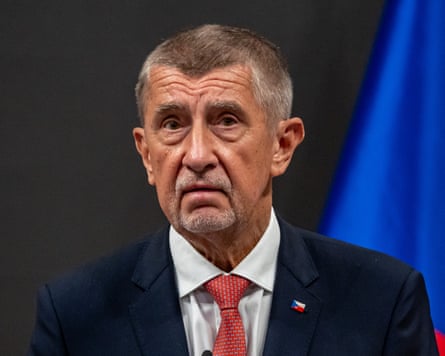
The broadcasting industry's response has been swift and organized. Public broadcaster employees have begun coordinating their resistance to the proposed changes, recognizing that collective action represents their most effective tool for opposing government policy. The threat of strikes demonstrates that these workers are not willing to passively accept what they perceive as an assault on their professional integrity and the independence that they believe is essential to their role in society.
International media organizations and press freedom groups have begun paying attention to developments in the Czech Republic, viewing them as part of a broader pattern of pressure on independent media across Central and Eastern Europe. Media independence remains a contested issue in the region, with various governments implementing policies that critics argue undermine journalistic autonomy. The Czech situation may serve as a test case for how journalists and media organizations can resist governmental pressure when fundamental principles are at stake.
The economic implications of the proposed funding shift also merit consideration. Under the current licence fee system, public broadcasters have a predictable revenue stream that allows for long-term planning and investment in quality journalism and programming. Transitioning to state budget funding introduces uncertainty and creates potential dependencies that could influence editorial decision-making, either directly through explicit interference or indirectly through the implicit understanding that funding decisions can be adjusted in response to editorial positions.
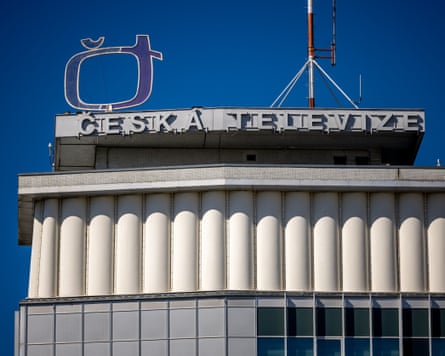
The Czech government's rationale for the proposed changes reportedly centers on modernization and efficiency arguments. Officials may contend that consolidating funding through the state budget would streamline bureaucratic processes and eliminate redundancies. However, press freedom advocates argue that whatever administrative benefits might result from the change would be vastly outweighed by the risks to editorial independence and journalistic integrity that would inevitably follow from placing funding decisions entirely in the hands of government officials.
The stance taken by Czech journalists aligns with positions articulated by international broadcasting organizations and media freedom advocacy groups. Organizations dedicated to monitoring and protecting press freedom across Europe have consistently warned against models that place excessive control over broadcast funding in the hands of government authorities. They argue that adequate distance between political power and funding mechanisms is essential for protecting the capacity of broadcasters to hold powerful institutions accountable.
As negotiations between the government and broadcaster representatives continue, the stakes for Czech democracy remain high. The outcome of this dispute will signal to other actors in the political system whether journalists and media workers can successfully resist governmental pressure through collective action, or whether the balance of power has shifted sufficiently to allow the government to implement its preferred media policy without significant opposition. The international community is watching closely to assess whether Czech democracy can maintain the institutional checks and balances necessary to protect press freedom.
The broader implications extend beyond the Czech Republic's borders, as developments in individual countries often influence policy discussions elsewhere. If the Czech government successfully implements funding changes that shift control to state authorities, other governments facing similar debates might feel emboldened to pursue comparable policies. Conversely, if Czech journalists successfully resist through collective action, it could reinforce the principle that public broadcasting independence must be protected as a cornerstone of democratic governance across Europe.
Source: The Guardian


