
Czech Police Recover Stolen 13th-Century Saint's Skull

Czech authorities recover the skull of Saint Zdislava of Lemberk days after it was stolen from a church. A suspect has been arrested in connection with the theft.
In a remarkable turn of events, Czech police have successfully recovered the skull of a 13th-century saint just days after it was stolen from a prominent religious site in the northern region of the country. The recovery marks the end of a brief but significant investigation into what authorities are treating as a case of religious artifact theft. The discovery has drawn considerable attention to issues surrounding the protection and display of sacred relics in modern times, particularly in Eastern European churches where such treasures are frequently housed.
According to official statements from Czech law enforcement officials, police apprehended a suspect in connection with the theft of the skull of Saint Zdislava of Lemberk, one of the Czech Republic's most venerated religious figures. The artifact was taken from a glass shrine located within the basilica of St Lawrence and St Zdislava situated in the town of Jablonné v Podještědí. The theft occurred on a Tuesday, prompting an immediate investigation that would lead to the suspect's arrest within a matter of days, demonstrating the effectiveness of the police response to this unusual crime.
The suspect, whose identity has been withheld pending further legal proceedings, made startling admissions to police regarding his involvement in the theft and subsequent handling of the sacred relic. According to investigators, the man confessed to not only removing the skull from its display case but also to taking the extraordinary step of coating the ancient remains in concrete. This unusual treatment of the artifact suggests deliberate intent to damage or permanently alter the relic, raising questions about the suspect's motivation and state of mind during the commission of this crime.

The motivation behind the theft appears to be rooted in religious objection rather than financial gain or black market intent. Police statements indicate that the suspect took issue with the public display of the saint's remains within the basilica. His opposition to the relic being exhibited in the shrine reportedly drove him to commit the theft, making this case unique in that it represents a form of religious protest or disagreement rather than conventional criminal activity motivated by profit. This aspect of the investigation has sparked discussions within Czech Catholic communities about appropriate handling and display of sacred artifacts.
Saint Zdislava of Lemberk holds significant religious importance within Czech cultural and spiritual traditions. The 13th-century saint is deeply revered by Catholic communities throughout the Czech Republic and represents an important connection to the nation's medieval religious history. Her remains have been preserved and honored for centuries, with the skull serving as a particularly sacred object of veneration. The theft of such an important religious artifact sent shockwaves through local parishes and prompted swift action from both civil authorities and church officials seeking its safe return.
The basilica where the theft occurred is itself a site of considerable historical and spiritual significance. Located in Jablonné v Podještědí in the northern part of the country, the basilica of St Lawrence and St Zdislava serves as a major pilgrimage destination for Catholic faithful seeking to pay respects to the saint. The church's architectural features and religious collections make it one of the region's most important religious institutions. The theft raised serious concerns about security measures in place to protect such treasured items from theft or desecration.
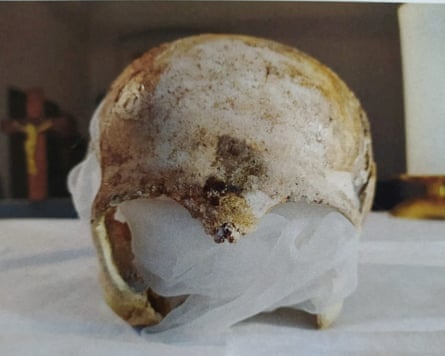
The recovery of the skull demonstrates the effectiveness of police investigation techniques and the importance of rapid response in cases involving cultural and religious property theft. Czech authorities worked diligently to trace the artifact and apprehend the responsible party within a short timeframe. The successful conclusion of the investigation provides some measure of relief to religious communities and church officials who were deeply concerned about the fate of this irreplaceable historical and spiritual treasure. The fact that the relic was recovered before permanent damage could occur is seen as a positive outcome given the suspect's apparent intention to coat it in concrete.
The case has broader implications for how religious institutions across Central Europe approach the display and protection of sacred relics and ancient artifacts. Many churches face the tension between making their collections accessible to the faithful and pilgrims while simultaneously protecting these invaluable items from theft or destruction. The incident at Jablonné v Podještědí serves as a stark reminder of the vulnerabilities that exist even in well-established religious institutions with dedicated security measures. Church officials and local authorities are likely to review and potentially enhance security protocols at the basilica and similar sites.
Legal proceedings against the arrested suspect are expected to proceed through the Czech justice system, though the unusual nature of the crime—motivated by religious objection rather than profit—may result in a complex legal situation. The suspect's apparent attempt to destroy or permanently alter the relic by encasing it in concrete could result in additional charges beyond simple theft. Prosecutors will need to determine the appropriate legal framework for charging an individual who committed what amounts to a religiously motivated desecration of a sacred object. The outcome of this case could establish important legal precedents for how such crimes are prosecuted in the Czech Republic.
The recovery of Saint Zdislava's skull represents a victory for both law enforcement and the Catholic community in the Czech Republic. The swift investigation and arrest demonstrate that even unusual crimes targeting religious sites can be solved effectively with proper police work and coordination with local authorities. For the basilica and the faithful who venerate Saint Zdislava, the return of this sacred relic is a matter of profound spiritual and cultural importance. As the case proceeds through the legal system, it will continue to raise important questions about religious freedom, artifact preservation, and the motivations that drive individuals to commit unusual crimes against cultural institutions.
Source: The Guardian


