
Danish Right-Wing Leader Gets Coalition Chance

Denmark's king asks centre-right politician Troels Lund Poulsen to form government after PM Mette Frederiksen fails to build ruling coalition following March elections.
In a significant political development that has sent shockwaves through Denmark's political landscape, the Danish monarchy has made an unprecedented decision to transition government formation responsibilities. Denmark's king has formally requested centre-right politician Troels Lund Poulsen to undertake the challenging task of forming a new government after Prime Minister Mette Frederiksen exhausted an entire month of intensive negotiations without successfully assembling a viable ruling coalition.
The announcement, delivered on Friday evening, represents a dramatic turning point in Danish politics and has left the nation's political establishment reeling from the unexpected development. Frederiksen, whose Social Democratic Party had secured a parliamentary plurality in the March elections, found herself unable to forge the necessary alliances required to maintain her grip on power. This unexpected development marks a watershed moment in contemporary Danish governance, as the traditional political dominance faced an unprecedented challenge.
The failure to form a coalition after such a decisive electoral mandate raises complex questions about the current state of Danish parliamentary politics. Frederiksen's left-leaning party won the largest share of votes during the recent parliamentary elections, yet this electoral success proved insufficient to translate into practical governmental authority. The coalition negotiations that followed the elections proved far more complicated than anticipated, with various political factions unable to reach consensus on critical policy matters and governmental priorities.
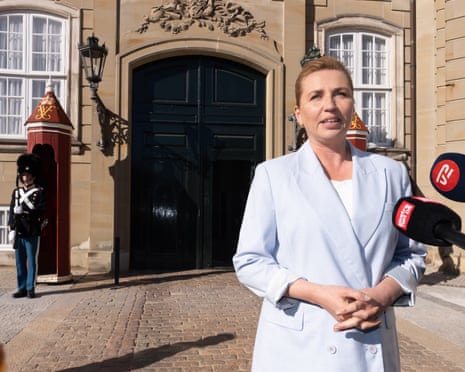
The decision to pass the coalition-formation responsibility to Poulsen, a centre-right politician, represents a notable shift in Denmark's political dynamics. This move suggests that despite the Social Democrats' electoral plurality, other parliamentary parties may have greater flexibility and potential for collaboration among themselves. The centre-right politician now faces the substantial challenge of convincing multiple political parties with diverging ideologies and policy preferences to support his governmental initiative.
Frederiksen's inability to form a government stands in stark contrast to her decades-long prominence within Danish politics. She has been a defining figure in the nation's political discourse, representing the left-leaning values that have historically shaped much of Denmark's social and economic policy. Her failed coalition efforts underscore the increasing fragmentation of Danish politics and the difficulty of achieving broad parliamentary consensus in contemporary governance.
The political landscape that confronted Frederiksen during her coalition negotiations appears to have become increasingly polarized and resistant to compromise. Even with her party's electoral victory, the prime minister encountered obstacles that proved insurmountable despite her extensive political experience and negotiating skills. This situation reflects broader trends in European politics, where traditional party alignments have become less reliable predictors of coalition success.
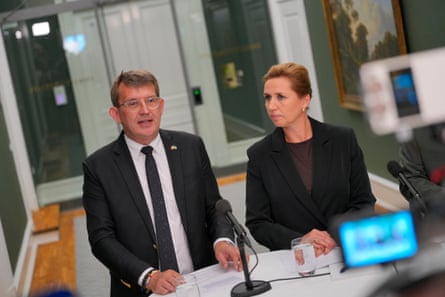
The transition from Frederiksen to Poulsen represents more than a simple change in government leadership; it signals potential shifts in Denmark's policy direction and priorities. A centre-right government would likely emphasize different economic approaches, immigration policies, and social programs compared to the left-leaning agenda that Frederiksen championed. This transition could reshape the nation's approach to key issues affecting Danish citizens and society.
Parliamentary observers suggest that Poulsen's coalition prospects may be enhanced by greater ideological flexibility among centre-right and centre-left parties. These political groupings often find common ground on pragmatic governance issues, even when they diverge on larger philosophical questions. The specific composition of any resulting coalition remains uncertain, though multiple viable combinations may exist within the current parliament.
The timing of this governmental transition also carries significance for Denmark's international standing and European relationships. The nation will continue facing pressing issues related to Nordic security, European Union participation, and global economic conditions. Ensuring smooth governance during this transition period becomes critical for maintaining Denmark's effective participation in international affairs and bilateral relationships with neighboring nations.
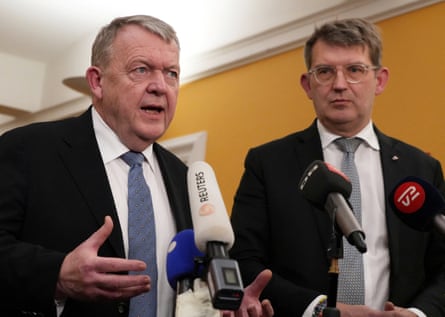
This political development demonstrates how electoral outcomes in modern democracies do not automatically guarantee governmental power. Winning the most votes represents an important mandate, yet translating that mandate into actual governing authority requires building functional coalitions and securing parliamentary majorities. Frederiksen's experience illustrates this fundamental principle of parliamentary democracy, where representation extends beyond individual party success.
The broader implications of this situation extend to questions about Danish political stability and the effectiveness of the nation's governance structures. If coalition formation continues to prove difficult despite clear electoral preferences, Denmark may face ongoing political uncertainty. This could necessitate discussions about potential reforms to electoral systems or coalition-building procedures.
Looking ahead, the coming weeks will prove crucial as Poulsen works to construct a functional government. His success or failure will depend on his ability to negotiate agreements that balance the diverse interests represented in parliament. The political community watches closely to see whether this transition ultimately produces a more stable and effective government or whether it portends continued dysfunction in Danish governance.
The situation also raises questions about Frederiksen's political future. Despite her party's electoral success, her inability to form a government may diminish her stature within Danish politics. However, her substantial experience and established position within the Social Democratic Party suggest she will likely remain a significant political figure regardless of this governmental transition.
Denmark's experience with coalition difficulties reflects challenges faced across democratic nations, where political fragmentation and ideological polarization complicate the formation of governing majorities. This broader context helps explain why winning an election increasingly does not guarantee the ability to govern, a reality that impacts political strategy and citizen expectations regarding electoral outcomes.
Source: The Guardian


