
Decentralizing the World Cup: A Game-Changer for Global Football

Explore the benefits of decentralizing the World Cup, as the world's biggest sporting event faces new challenges of political influence and expansion.
Expansion and political influence have made soccer's showpiece too big for one region to handle responsibly. The 2018 World Cup in Russia was a gentle genuflection, a dainty little bow before its strongman leader. Vladimir Putin and his Russian project of gradual conquest were most definitely centered and validated eight years ago: the tournament showcased his nation and awarded its leader prominence of place.
This summer, we will see something altogether different, as the runup to this edition of the world's biggest and most popular sporting event has become a monument to Donald Trump. The former U.S. president has been a central figure in the bidding process for the 2026 World Cup, which will be hosted across the United States, Canada, and Mexico.
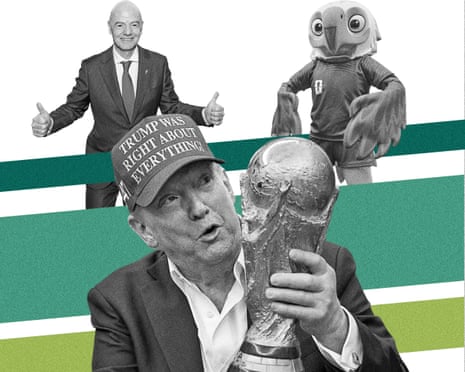
The World Cup has outgrown its current model, where a single region or nation hosts the entire tournament. The sheer scale of the event, the political influence surrounding it, and the logistical challenges of organizing a global spectacle have made a decentralized approach a necessity.
A decentralized World Cup could offer numerous benefits, including reduced environmental impact, more equitable distribution of economic benefits, and increased accessibility for fans around the world. By spreading the event across multiple locations, the World Cup can better reflect the global nature of the sport and reduce the disproportionate burden on host nations.

The political influence surrounding the World Cup has also become a growing concern. The tournament has become a platform for leaders to project their power and influence, as seen with Putin's involvement in 2018 and the ongoing role of Donald Trump in the 2026 edition. A decentralized model could mitigate these political entanglements and ensure the focus remains on the sport itself.
Furthermore, the logistical challenges of hosting the World Cup have become increasingly daunting. From infrastructure development to transportation and accommodation, the demands on host nations have escalated to the point where only a handful of countries can realistically take on the task. A decentralized approach could distribute these burdens more evenly and make the World Cup more accessible to a wider range of nations.
The future of the World Cup lies in a more decentralized model, one that embraces the global nature of the sport and reduces the disproportionate impact on host nations. By spreading the event across multiple locations, the World Cup can maintain its grandeur and significance while addressing the challenges of expansion, political influence, and logistical complexity.
As the world's most popular sporting event, the World Cup has a responsibility to evolve and adapt to the changing landscape of global football. A decentralized approach can preserve the magic of the World Cup while ensuring it remains a truly global celebration of the beautiful game.
Source: The Guardian


