
Democrats Push Rubio to Confirm Israel's Nuclear Arsenal

House Democrats urge Secretary of State Marco Rubio to publicly acknowledge Israel's nuclear weapons amid escalating Iran tensions and military operations.
A significant diplomatic push is underway as House Democrats have formally called upon Secretary of State Marco Rubio to make a public acknowledgment regarding Israel's nuclear weapons program. The letter, delivered on Monday, represents a coordinated effort by 30 Democratic lawmakers to address what they describe as decades of deliberate ambiguity surrounding one of the Middle East's most sensitive geopolitical realities.
The central argument presented by the Democratic contingent is both straightforward and compelling: the United States cannot maintain credible diplomatic and military coordination with Israel in operations targeting Iran's nuclear capabilities while simultaneously refusing to publicly acknowledge Israel's own substantial nuclear arsenal. This apparent contradiction, they argue, undermines American credibility and creates an untenable double standard in international nuclear proliferation discussions.
The timing of this diplomatic initiative is particularly significant given the current Iran-Israel conflict trajectory and the Trump administration's stated objective of preventing Iran from developing nuclear weapons. The Democrats contend that this military campaign represents a unique moment for the United States to clarify its position on Israel's nuclear status, moving away from the historical policy of deliberate strategic ambiguity that has characterized American-Israeli relations on this specific issue for many years.
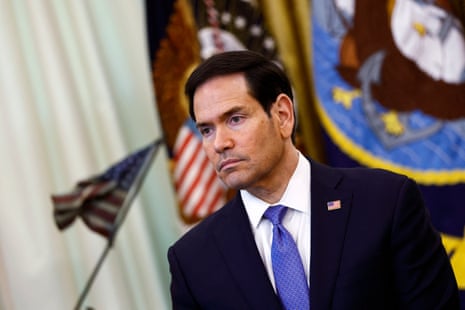
The letter emphasizes that maintaining this decades-long policy of unofficial acknowledgment while avoiding formal public statements has become increasingly counterproductive. In an era of heightened tensions in the Middle East, the Democrats argue that nuclear weapons transparency and clear international positioning have become more important than ever before. The inconsistency of promoting non-proliferation principles against Iran while tacitly accepting Israel's nuclear capability sends a confusing message to other regional actors and global observers.
Israel has historically maintained an official policy of strategic ambiguity regarding its nuclear arsenal, neither confirming nor denying the existence of nuclear weapons. This carefully calibrated approach has allowed the nation to maintain nuclear deterrence while avoiding formal treaty obligations or triggering certain international protocols. However, it is widely understood by international observers, intelligence communities, and policymakers that Israel possesses approximately 90 nuclear warheads, making it one of the world's significant nuclear powers despite the lack of official confirmation.
The Democratic lawmakers argue that the Trump administration's active pursuit of military operations with Israel against Iran's nuclear program creates a fundamentally different context than previously existed. When two nations are jointly conducting military operations with the explicit goal of preventing another nation from acquiring nuclear weapons, both partners' nuclear capabilities and intentions become matters of legitimate public discourse and international law. The lack of clarity on this point, they contend, creates legal and diplomatic ambiguities that undermine the international framework for non-proliferation.
The request to Secretary of State Rubio reflects broader concerns within Democratic circles about the conduct of Middle Eastern foreign policy under the current administration. The party's lawmakers have increasingly pushed for greater transparency and clarity in American positions on sensitive regional security issues. They argue that diplomatic effectiveness and international credibility depend on consistent application of principles, particularly when it comes to fundamental matters like nuclear weapons proliferation.
The position taken by these 30 Democrats also represents a subtle shift in how American political leaders are willing to discuss Israel's nuclear program. Historically, this topic has been avoided in official diplomatic channels, treated as a topic that could not be addressed in formal government statements. The Democratic letter signals a willingness to challenge this long-standing convention, suggesting that the political landscape regarding discussion of Israel's nuclear capabilities may be gradually evolving.
Secretary of State Rubio's response to this letter will likely set the tone for how the Trump administration handles these sensitive diplomatic questions. As the chief foreign policy officer for the United States, Rubio's public statements on this matter would carry significant weight in international relations and would reflect the administration's broader approach to Middle Eastern policy, nuclear non-proliferation issues, and the administration's relationship with Israel.
The Iran nuclear issue has been a central concern of American foreign policy for decades, with successive administrations adopting different approaches to addressing Iran's nuclear development program. The Trump administration's current military strategy represents a notably aggressive approach compared to previous diplomatic efforts. Against this backdrop, the Democratic request for clarity on Israel's nuclear status takes on additional significance as part of a broader conversation about how nuclear weapons policy should be conducted in the region.
International law and the Non-Proliferation Treaty create a complex framework for addressing nuclear weapons development around the world. The Democrats' argument implicitly suggests that more transparent American positions on regional nuclear powers would actually strengthen rather than weaken the international non-proliferation regime. By acknowledging the reality of Israel's nuclear arsenal, they contend, the United States could more effectively advocate for nuclear restraint among other regional actors and maintain greater consistency in its foreign policy positions.
The letter from the Democratic caucus also reflects recognition that public opinion and international sentiment on these issues continue to evolve. Younger generations of policymakers and international observers are increasingly unwilling to accept the strategic ambiguity that characterized Cold War-era diplomacy. There is growing consensus that effective 21st-century foreign policy requires greater transparency and consistency in how nations approach sensitive security matters.
Moving forward, the response to this Democratic initiative will likely shape how the United States addresses Middle Eastern nuclear policy throughout the remainder of the Trump administration's tenure. Whether Secretary of State Rubio chooses to acknowledge the demands of these lawmakers or maintain the status quo of strategic ambiguity will send important signals about the administration's priorities and its willingness to reshape traditional diplomatic conventions. The coming weeks and months will reveal how seriously the administration takes these concerns raised by the Democratic caucus regarding clarity in American nuclear weapons policy as it relates to its closest regional ally.

