
DHS Secretary Calls for State-Led Disaster Response, Redefining FEMA's Role

The US homeland security secretary argues that states and local governments should lead disaster response, with FEMA playing a supporting role instead of being the primary responder.
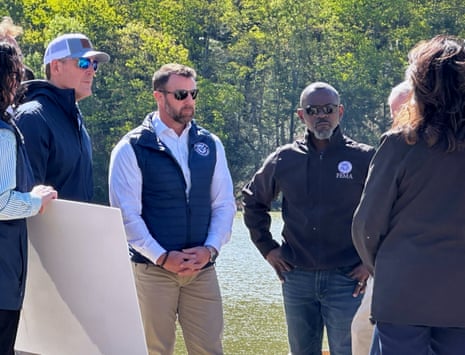
Markwayne Mullin, the US homeland security secretary, used a visit to Asheville, North Carolina to call for a fundamental shift in the role of the Federal Emergency Management Agency (FEMA), arguing that states and local governments – not the federal agency – should lead disaster response.
"We shouldn't look at FEMA as being a first responder, but look at FEMA as supporting the first responders you already have," Mullin told reporters at a roundtable discussion. This proposal represents a significant departure from the traditional model, where FEMA has often taken the lead in coordinating and managing disaster response efforts across the country.
The visit to Asheville was Mullin's first major trip since the high-profile ouster of Kristi Noem from the DHS secretary position. Noem, a rising star in the Republican party, had faced criticism over her handling of disaster response during her tenure.
The call for a more decentralized approach to disaster management comes at a time when climate change is increasing the frequency and intensity of natural disasters across the United States. Mullin believes that empowering state and local authorities to take the lead in response efforts will result in more effective and tailored solutions for communities affected by these events.
"When a disaster hits, the first responders are your local firefighters, your local police officers, your local emergency management teams," Mullin said. "FEMA should be there to support them, to provide the resources and the funding, but not to come in and take over."
The proposed shift in FEMA's role has drawn both praise and criticism from stakeholders in the disaster management community. Supporters argue that it will foster greater local autonomy and responsiveness, while critics warn that it could lead to uneven and potentially less effective disaster response efforts across the country.
Regardless of the debate, Mullin's visit to Asheville and his call for a new approach to disaster management have sparked a significant conversation about the future of FEMA and the federal government's role in emergency preparedness and response.
As the United States continues to grapple with the challenges posed by natural disasters, the outcome of this discussion will have far-reaching implications for how the nation responds to and recovers from these events in the years to come.
Source: The Guardian


