
DOJ Drops Investigation Into Fed Chair Powell

The Department of Justice has closed its probe into Federal Reserve Chairman Jerome Powell over renovation cost allegations made by President Trump.
In a significant development for the Federal Reserve's leadership, the United States Department of Justice has officially closed its investigation into Federal Reserve Chairman Jerome Powell, concluding a probe that had drawn considerable political attention and scrutiny. The decision to terminate the inquiry marks the end of a contentious period that saw President Donald Trump level serious accusations against the central bank's chief executive regarding financial management and building renovation costs.
The investigation centered on Trump's allegations that Powell and the Federal Reserve had engaged in improper cost overruns while undertaking a comprehensive renovation project of the Fed's headquarters building. Trump had publicly criticized the Fed renovation project, claiming that the expenses had spiraled out of control and represented wasteful spending of taxpayer resources. These accusations came during a period of heightened tension between the Trump administration and the Federal Reserve over monetary policy and interest rate decisions.
The Federal Reserve's building renovation initiative had been a substantial undertaking, involving modernization efforts and infrastructure improvements to the institution's iconic Washington headquarters. The project encompassed various upgrades to facilities, technology infrastructure, and building systems that required significant capital expenditure. Trump's contentions about the project's cost management had raised questions about oversight and fiscal responsibility in how the central bank handled major capital projects.
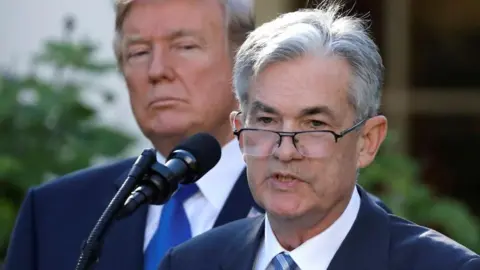
The closure of the Department of Justice investigation suggests that federal prosecutors found insufficient evidence to pursue charges or substantiate the allegations of improper conduct regarding the renovation expenses. While the specific findings and reasoning behind the DOJ's decision to close the case were not extensively detailed in public statements, the action effectively vindicates Powell from the serious accusations that had been leveled against him. This development carries significant implications for the credibility and standing of the Federal Reserve's leadership moving forward.
Powell's tenure as Federal Reserve Chairman has been marked by numerous challenges and controversies beyond the renovation issue. He has navigated the central bank through tumultuous economic conditions, including the pandemic-induced economic crisis, subsequent inflation surges, and ongoing debates about optimal monetary policy approaches. The investigation into his conduct represented an additional layer of political pressure on an already embattled Federal Reserve leader who has faced criticism from multiple directions regarding his policy decisions.
The Trump administration's focus on the Fed renovation project reflected broader concerns about government spending and institutional accountability that had been central themes of Trump's political platform. The president had consistently emphasized fiscal responsibility and opposed what he characterized as wasteful government expenditures. However, the DOJ's decision to close the investigation without pursuing charges indicates that the evidence did not support the severity of the allegations or establish clear violations of law regarding the Fed building project costs.
For the Federal Reserve as an institution, the conclusion of the investigation represents a significant moment for restoring organizational focus and credibility. The institution operates under a unique mandate to maintain price stability and promote maximum employment while functioning with a degree of independence from political interference. The investigation had raised questions about whether political actors were inappropriately scrutinizing operational decisions that fell within the Fed's purview as an autonomous institution managing its own infrastructure and resources.
The Fed's renovation project itself was a legitimate undertaking designed to modernize aging infrastructure and ensure the building could meet contemporary operational requirements. Like other large institutions, the Federal Reserve requires periodic capital investments in facilities to maintain functionality and support its workforce. The specific scope and cost of such projects can vary based on numerous factors including construction market conditions, regulatory requirements, and the complexity of work performed in a historically significant building.
Powell's confirmation and subsequent tenure have demonstrated his commitment to central banking principles and monetary policy independence. As Federal Reserve Chair, he has made significant decisions regarding interest rates and monetary policy that have affected the entire U.S. economy and financial system. While these decisions have been subject to considerable debate and criticism from various quarters, the DOJ's closure of the investigation into the renovation allegations removes one source of legal jeopardy and political distraction from his leadership.
The broader context of this investigation reflects the complex relationship between executive branch political leaders and independent institutions like the Federal Reserve. While the president nominates the Federal Reserve Chair subject to Senate confirmation, the Fed maintains operational independence in its decision-making. This independence is considered crucial for preventing political interference in monetary policy decisions that should be based on economic conditions rather than political considerations. The investigation's closure reinforces this principle by declining to pursue allegations that appeared to conflate operational and financial management decisions with improper conduct.
Going forward, Powell can focus more directly on the substantive challenges facing the Federal Reserve and the U.S. economy. The resolution of the investigation removes legal uncertainty and allows the Fed Chair to operate without this particular distraction. The decision also sends a signal that while political actors may scrutinize Federal Reserve decisions and operations, the actual threshold for legal liability regarding institutional management remains appropriately high, protecting the Fed's ability to operate with the independence necessary for effective central banking.
The closure of this investigation represents an important moment for both Powell's leadership and the Federal Reserve's institutional standing. It demonstrates that while political pressure and public criticism may accompany major institutional decisions, the legal system distinguishes between policy disagreements and actual misconduct. As the nation continues to grapple with economic challenges and monetary policy debates, the Federal Reserve under Powell's leadership can proceed with greater clarity and focus on its core mission of maintaining economic stability and promoting employment.
Source: BBC News


