
Drone Pilot Challenges DHS No-Fly Zones

A drone pilot successfully challenged federal no-fly zones around unmarked, moving ICE vehicles, forcing the US government to rescind controversial restrictions.
The landscape of civil liberties and government surveillance took a dramatic turn in early 2026 when a determined drone pilot challenged unprecedented no-fly zone restrictions imposed by federal authorities. The confrontation emerged from a turbulent period marked by widespread protests against immigration enforcement operations and raised critical questions about the balance between national security and constitutional rights.
In January 2026, during intense demonstrations opposing immigration raids across Minneapolis, federal agents fatally shot 37-year-old Renee Good, a mother of three. The incident immediately became the focal point of national debate, with the Department of Homeland Security swiftly characterizing her as an "anti-ICE rioter" who "weaponized her vehicle against law enforcement" in an alleged "act of domestic terrorism," even before a complete investigation had been conducted. This premature labeling set the stage for increasingly aggressive federal responses to civilian monitoring efforts.
Days following the shooting, government officials announced a sweeping expansion of no-fly zone regulations ostensibly intended to protect national security and federal operations. What had traditionally been airspace restrictions designed to control aircraft operations underwent a dramatic transformation. The reimagined restrictions now predominantly targeted small drone operations, reflecting growing government concerns about civilian surveillance capabilities. The expanded framework, officially announced on January 16, established exclusion zones extending 3,000 lateral feet and 1,000 vertical feet around federal facilities, substantially increasing the airspace deemed off-limits to drone operators.
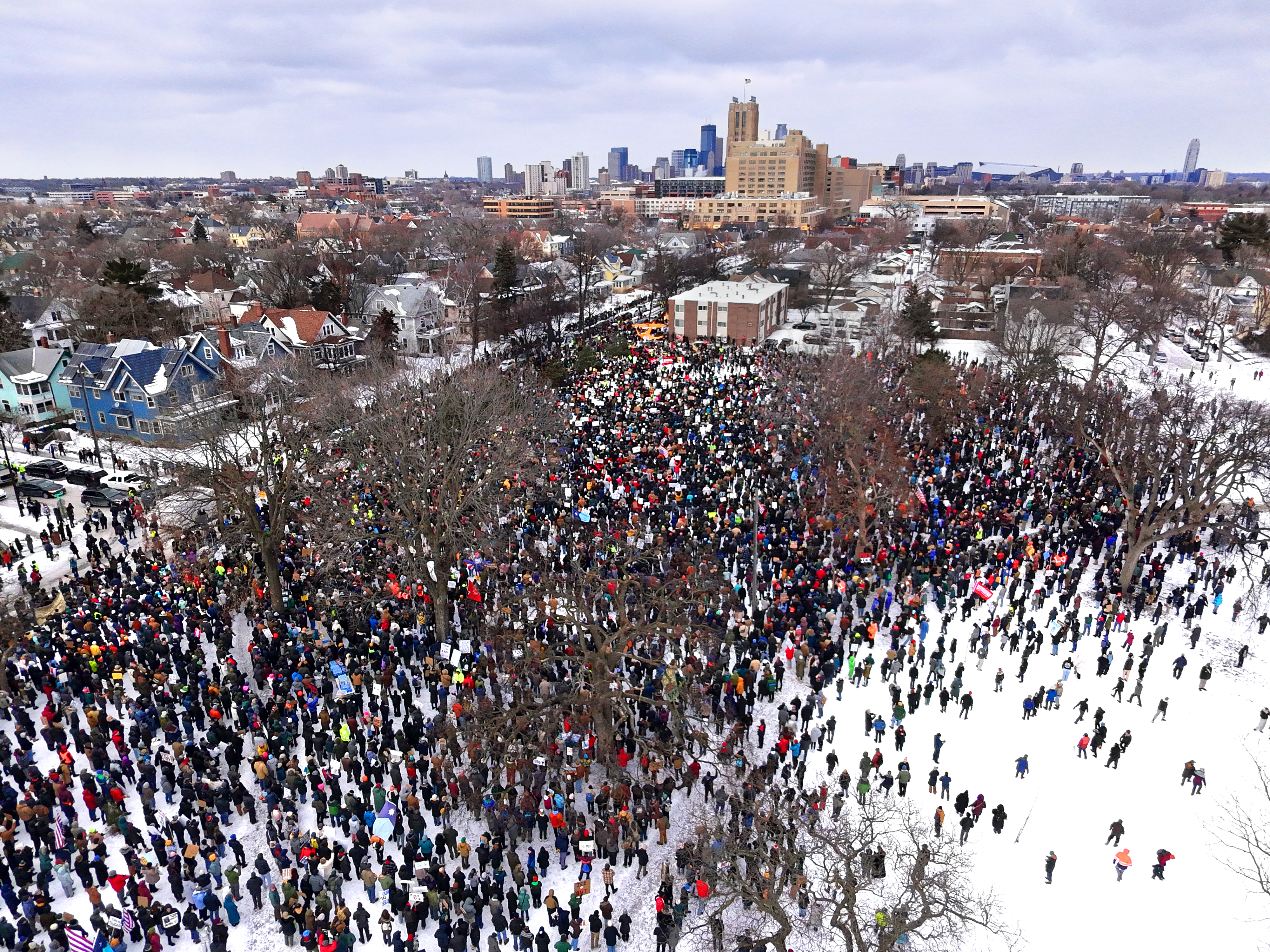
However, the most controversial aspect of this regulatory expansion lay in its unprecedented extension to ground-based DHS vehicles and Immigration and Customs Enforcement operations. The new directive created dynamic no-fly zones around moving vehicles, a significant departure from traditional stationary airspace restrictions. These mobile exclusion zones applied even to unmarked vehicles whose locations remained undisclosed to the public. Furthermore, the zones extended to vehicles whose predetermined routes had never been announced to civilian populations, effectively creating invisible perimeters around federal agents as they moved through public spaces.
This regulatory overreach represented an escalation in government control over public airspace and citizen documentation abilities. The implications were staggering: ordinary citizens with drones could face federal penalties for inadvertently flying near government vehicles whose presence and movements remained deliberately obscured. The restrictions essentially granted federal agencies the power to establish flying restrictions unilaterally, without public notice or democratic oversight, fundamentally altering the relationship between civilian surveillance capabilities and government operations.
One courageous drone pilot, recognizing the constitutional implications of these expansive regulations, decided to challenge the government's authority to impose such restrictions without clear legal justification or public disclosure. The pilot filed formal objections and pursued legal avenues to contest the legitimacy of no-fly zone enforcement around unmarked, moving vehicles. This individual action represented a broader principle: that governmental power, even in the name of security, must remain subject to constitutional constraints and public accountability.
The legal battle that ensued attracted attention from civil liberties organizations, free press advocates, and technology experts who recognized the precedent-setting implications. The case raised fundamental questions about whether federal agencies could unilaterally restrict airspace without statutory authorization, whether such restrictions could extend to moving vehicles in public spaces, and whether democratic processes should govern surveillance limitations. These questions transcended simple drone regulation to encompass core constitutional principles regarding government overreach and citizen rights.
Through persistent legal challenges and public pressure, the drone pilot ultimately succeeded in forcing the federal government to reconsider its position. The Department of Homeland Security and related agencies were compelled to rescind the most egregious aspects of the no-fly zone expansion, particularly the controversial restrictions on flights near unmarked, moving vehicles. This victory represented a significant pushback against unchecked government authority and demonstrated that individual citizens could successfully challenge even powerful federal agencies through determined legal action and principled stands for constitutional rights.
The resolution of this conflict established important precedents for the intersection of drone technology, government surveillance practices, and civil liberties protection. It clarified that while legitimate security concerns may justify certain airspace restrictions, such restrictions must remain reasonable, publicly disclosed, and subject to constitutional limitations. The case underscored the necessity of maintaining checks and balances on executive authority, even during periods of heightened security concerns or civil unrest.
Beyond the immediate legal victory, this confrontation between a drone pilot and federal authorities highlighted broader tensions in American society regarding surveillance, accountability, and the proper scope of government power. As technology continues to evolve and as federal agencies expand their operational capabilities, the need for robust legal protections against overreach becomes increasingly critical. The drone pilot's successful challenge serves as a reminder that constitutional rights remain meaningful only when citizens are willing to defend them against governmental encroachment, regardless of the security justifications offered.
This case ultimately demonstrates that even in an era of heightened security concerns and expanding federal authority, the constitutional framework remains resilient when citizens actively assert their rights. The rescission of the controversial no-fly zone restrictions represents not merely a technical regulatory change, but a reaffirmation of the principle that government power, while necessary for security, must always remain subordinate to constitutional protections and public accountability in a democratic society.
Source: Ars Technica


