
Duterte Ally Flees to Senate to Dodge ICC Arrest

Former Philippine police chief Ronald dela Rosa seeks refuge in senate after ICC arrest warrant. Dramatic CCTV footage captures his escape from authorities.
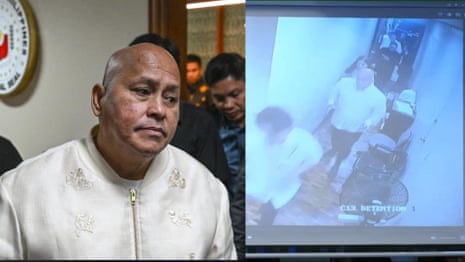
The Philippine Senate became an unexpected sanctuary as Ronald dela Rosa, a prominent figure in the Duterte administration, fled from government agents in a dramatic pursuit captured by security cameras. The former police chief found himself at the center of an international legal crisis, seeking protective custody within the halls of the nation's upper legislative chamber after another ally of ex-president Rodrigo Duterte offered him shelter from authorities.
The tense scene unfolded as dela Rosa navigated the corridors of the Philippine senate complex, his movements tracked by CCTV surveillance systems throughout the building. Video footage shows the high-ranking official attempting to evade pursuing agents, stumbling momentarily on a staircase as he made his way through the legislative facility. The dramatic escape highlighted the growing tensions between the Philippines' domestic political landscape and its obligations to international legal institutions.
Hours after the incident, dela Rosa took to social media to explain his predicament, broadcasting directly to the public via Facebook livestream. In an emotional address, he articulated his fears regarding what he characterized as a forced extradition, stating: "They want to forcibly bring me to The Hague, to surrender me there." His plea for public support underscored the political dimensions of his legal troubles and suggested he viewed his situation as part of a broader political struggle rather than a straightforward criminal matter.
The ICC arrest warrant against dela Rosa stems from allegations related to his tenure as the national police chief during Duterte's controversial drug war. The International Criminal Court has been investigating potential crimes against humanity connected to the extrajudicial killings that occurred during the anti-narcotics campaign, which resulted in thousands of deaths. The Duterte drug war has become one of the most scrutinized security operations in recent Southeast Asian history, drawing criticism from human rights organizations worldwide.
Dela Rosa's refuge in the Senate represented a calculated political move, as the legislative body traditionally enjoys certain protections and procedural complexities that can complicate the arrest process. The senator who offered him protective custody appears to be leveraging institutional protocols and legislative immunity considerations to shield the former police chief from immediate apprehension. This maneuver demonstrates the intricate relationship between legislative privilege and executive enforcement of international legal obligations.
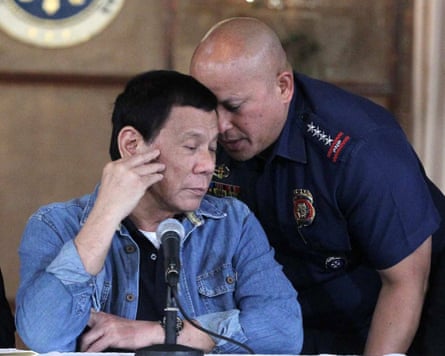
The situation illuminates broader tensions within the Philippine political system regarding how the country should balance international criminal law commitments with domestic political considerations. The Duterte administration's withdrawal from the ICC in 2019 had been intended to shield the former president and his allies from prosecution, yet the court's jurisdiction and ongoing investigations have continued to create complications for multiple figures associated with that administration.
From a legal standpoint, ICC jurisdiction over Philippine nationals remains contested terrain. While the Philippines formally withdrew from the court, the ICC contends that it retains jurisdiction over crimes allegedly committed while the country was still a member state. This jurisdictional dispute has created uncertainty regarding the legitimacy and enforceability of any international arrest warrants issued against Philippine citizens.
The government's effort to apprehend dela Rosa suggests that Philippine authorities are attempting to comply with international legal obligations, or at least are responding to pressure from the ICC. However, the ease with which a sitting senator could provide sanctuary indicates that significant political obstacles remain to any formal extradition proceedings. The protection offered to dela Rosa within the Senate walls represents a clear assertion of legislative prerogative against executive action.
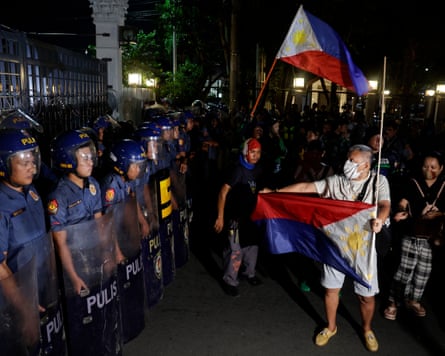
The incident also reflects the deepening divisions within Philippine politics regarding the Duterte legacy. While supporters view the former president's security approach as necessary for combating organized crime and drug trafficking, critics point to the thousands of unexplained deaths and the lack of accountability mechanisms established during that period. These opposing perspectives have created a politically fractious environment where international legal accountability efforts intersect with domestic political divisions.
Dela Rosa's plea for public support through social media indicates an awareness that his situation involves not just legal questions but also public opinion dynamics. By framing his case as an attempt to forcibly extract him to the Netherlands, he employed language designed to resonate with nationalist sentiments and concerns about Philippine sovereignty. This rhetorical strategy attempts to transform what might otherwise be viewed as a straightforward accountability matter into a question of national dignity and international fairness.
The broader implications of this situation extend beyond the individual case of dela Rosa. The pursuit of Duterte-era officials by international justice mechanisms represents a significant test of how accountability for alleged mass atrocities can function when national governments resist cooperation. The Philippines' complex relationship with the ICC—having withdrawn but still potentially subject to jurisdiction—creates unique legal and political circumstances that may serve as a precedent for other nations grappling with similar issues.
As the situation develops, observers are watching closely to determine whether the Philippine government will ultimately enforce the ICC warrant or whether domestic political considerations will ultimately prevail. The answer may have implications for international criminal justice more broadly, particularly regarding the enforceability of ICC warrants when national governments prove reluctant to cooperate. For now, dela Rosa remains in legislative sanctuary, his case emblematic of the collision between international accountability efforts and resistant national politics.
Source: The Guardian


