
Duterte Faces ICC Trial for Crimes Against Humanity

Former Philippine president Rodrigo Duterte will stand trial at the International Criminal Court for crimes against humanity stemming from his deadly war on drugs campaign.
In a landmark decision that carries significant implications for international justice, the International Criminal Court has formally proceeded to trial against Rodrigo Duterte, the former president of the Philippines. ICC judges unanimously confirmed the charges on Thursday, marking a pivotal moment in efforts to hold world leaders accountable for alleged mass atrocities. The charges center on Duterte's controversial and devastating war on drugs campaign, which human rights organizations have documented as resulting in the deaths of thousands of individuals.
The pre-trial chamber of the International Criminal Court determined that there exist substantial grounds to believe that Duterte bore responsibility for crimes against humanity, specifically the charges of murder and attempted murder. These grave accusations stem directly from the anti-drugs crackdowns that were implemented during his presidency, operations that resulted in a widespread loss of life across the Philippine archipelago. The decision represents the culmination of months of careful legal deliberation and review of extensive evidence presented by the prosecution.
Duterte's "war on drugs" campaign became one of the most brutal and deadly policy initiatives in recent Philippine history. Launched shortly after he assumed office in 2016, the program promised to eliminate drug trafficking and substance abuse through aggressive enforcement tactics. However, the campaign quickly spiraled into extrajudicial killings, with police and vigilante groups carrying out thousands of executions without legal process or judicial oversight. Human rights groups documented widespread allegations of summary executions, forced disappearances, and vigilante killings that bore the hallmarks of state-sponsored violence.
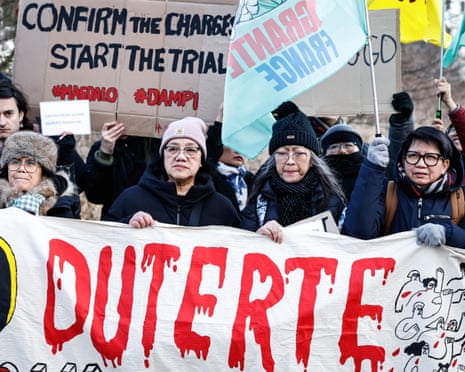
The international attention surrounding these killings prompted multiple investigations by human rights organizations, journalists, and eventually the International Criminal Court itself. Human Rights Watch, Amnesty International, and various Philippine civil society groups compiled detailed reports documenting the systematic nature of the killings and the apparent involvement of state security forces. These investigations provided crucial evidence that would eventually form the basis of the ICC's preliminary examination and subsequent investigation into potential crimes against humanity.
The ICC charges represent one of the most significant cases involving a recently sitting head of state in the organization's history. The court's jurisdiction extends to situations where member states either lack the ability or willingness to investigate and prosecute serious crimes. The Philippines' initial cooperation with the ICC, followed by its withdrawal from the court in 2019, created a complex legal landscape that prosecutors had to navigate carefully. Despite these jurisdictional challenges, the court determined it had sufficient basis to proceed with its investigation and ultimately bring charges against Duterte.
The decision to move forward with the trial carries profound symbolic and practical importance for international criminal justice. It signals that even former heads of state cannot assume immunity from prosecution for allegations of mass atrocities. The case establishes a precedent that domestic political power and the passage of time do not shield leaders from accountability under international law. This development is particularly significant given the historical pattern of former leaders evading justice through their political status or protective measures enacted by successor governments.
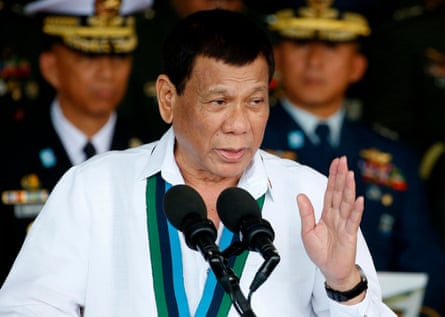
The evidence compiled by prosecutors paints a deeply troubling picture of a coordinated campaign of violence. Documents, witness testimonies, and forensic evidence reportedly demonstrate that the killings were not isolated incidents but rather part of a widespread and systematic attack against a civilian population. The Philippine National Police's official statistics acknowledged tens of thousands of drug-related killings, though independent observers have suggested the actual toll may be substantially higher when accounting for unreported cases and deaths attributed to vigilante groups operating with state tacit approval.
Duterte has consistently denied responsibility for the killings and has rejected the jurisdiction of the ICC, claiming that the court lacks legitimate authority over Philippine nationals. His legal representatives have indicated they will vigorously contest the charges and challenge the court's authority to prosecute the case. The former president has framed the "war on drugs" as a necessary law enforcement operation aimed at protecting Filipinos from the scourge of drug trafficking and addiction, arguing that deaths resulting from police operations were proportionate responses to violent resistance.
The trial process will likely be lengthy and complex, involving extensive examination of thousands of individual cases and the broader policy decisions that authorized and implemented the campaign. The prosecution will need to establish both the occurrence of the underlying crimes and Duterte's responsibility as a superior authority who either ordered the killings or failed to prevent them despite having knowledge and the means to do so. The defense will presumably argue that individual police officers acted beyond their mandate or that killings resulted from legitimate law enforcement operations rather than systematic extrajudicial violence.
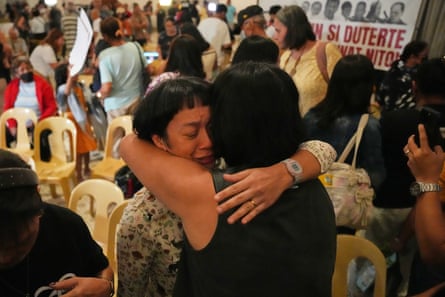
The implications of this trial extend well beyond the specific case of Duterte and the Philippines. The decision sends a powerful message to other world leaders that the international community maintains mechanisms to pursue accountability for mass atrocities, regardless of when those crimes occurred or how much time has passed. For victims' families and human rights advocates in the Philippines, the trial represents a hard-won opportunity to seek justice through an international forum when domestic judicial mechanisms proved inadequate or unwilling to act.
The broader geopolitical context surrounding this trial also deserves consideration, as Southeast Asia grapples with questions of accountability, governance, and the rule of law. The case will likely generate significant discussion about the balance between national sovereignty and international justice obligations, a tension that continues to shape debates about international law and human rights protection. As the trial proceeds, it will undoubtedly attract intense scrutiny from legal scholars, human rights organizations, and observers worldwide who view it as a crucial test of the international criminal justice system's capacity to address mass atrocities.
For the Philippines itself, this trial represents a significant moment of reckoning. The case will inevitably resurface detailed accounts of the suffering endured by families who lost loved ones during the campaign, keeping national attention focused on these events during what many hoped would be a period of moving forward. Yet proponents of the trial argue that genuine reconciliation and healing require acknowledgment of what occurred and accountability for those responsible. The trial will proceed in The Hague at the ICC headquarters, involving international judges and prosecutors alongside representatives of Philippine civil society and victim advocates.
The legal proceedings ahead will test the International Criminal Court's institutional capacity and credibility as it navigates one of its most high-profile cases involving a recently sitting leader of a major developing nation. The trial's outcome will reverberate throughout the international justice system and may influence how future alleged mass atrocities are investigated and prosecuted. As the case moves forward, the world will be watching to see whether the machinery of international law can deliver justice for thousands of victims of the Philippine drug war, setting a precedent for accountability that transcends borders and political power.
Source: The Guardian


