
Earth's Brightness Fluctuates Amid COVID, Economic Changes

A new study finds Earth's artificial light is increasing, but progression is volatile due to COVID-19, light pollution regulations, and economic shifts.
Despite the ongoing global trend of Earth becoming brighter each year, researchers have found that the location and intensity of this progression has become increasingly volatile in recent years due to the impacts of the COVID-19 pandemic, regulations on light pollution, and fluctuations in the global economy.
Researchers at the University of Connecticut (UConn), funded by NASA, analyzed over 1.1 million satellite images taken from 2014 to 2022 and determined that the planet's artificial light increased by a net 16% during this period.
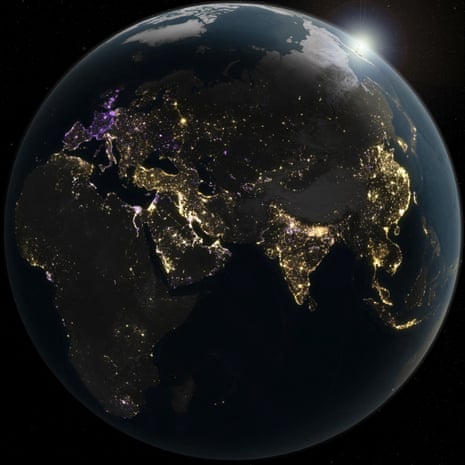
However, the researchers noted that the increases have not been consistent across all regions. Factors such as the COVID-19 pandemic, which led to reduced economic activity and less lighting in some areas, and local regulations aimed at reducing light pollution, have contributed to a more volatile pattern of change.
"The progression of Earth's brightness is not a simple, steady increase," said Christopher Kyba, a researcher at the GFZ German Research Centre for Geosciences and co-author of the study. "It is affected by a complex mix of factors, including the global economy, energy policies, and even the pandemic."
The researchers found that certain regions, such as parts of Africa and Southeast Asia, experienced significant increases in artificial light, while others, like Europe and North America, saw more modest or even decreasing levels of brightness.
"The changes we're seeing in Earth's brightness are not uniform," said Ranjay Shrestha, the lead author of the study and a postdoctoral researcher at UConn. "They reflect the complex interplay of social, economic, and environmental factors that shape our use of artificial lighting."
The researchers emphasized the importance of understanding these trends, as the increasing brightness of Earth has implications for energy consumption, light pollution, and the environmental impact of artificial lighting.
"By tracking the changes in Earth's brightness, we can gain insights into the broader societal and environmental factors that are shaping our use of artificial light," said Kyba. "This knowledge can help inform policies and strategies to manage the impacts of light pollution and promote more sustainable lighting practices."
Source: The Guardian


