
Ebola Outbreak in DR Congo: Health Emergency Status

DR Congo faces a significant health emergency with nearly 250 suspected Ebola cases. Learn about transmission, response efforts, and global health implications.
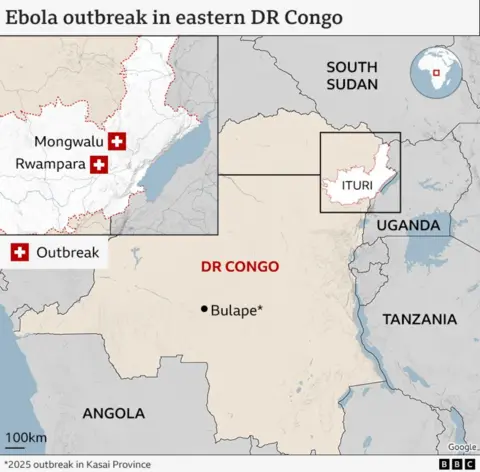
The Democratic Republic of Congo is confronting a serious public health crisis as health authorities have officially declared an Ebola outbreak in the region, triggering international concern and mobilizing response efforts from global health organizations. With approximately 250 suspected cases documented and investigations ongoing, the situation represents a significant threat to both regional and potentially global public health infrastructure. The declaration of a health emergency underscores the severity of the viral transmission and the urgent need for coordinated intervention strategies across multiple sectors.
Ebola virus disease, one of the most deadly pathogens known to medical science, spreads through contact with blood or body fluids of infected individuals or animals. The current DR Congo health emergency has raised alarms among epidemiologists and public health officials who recognize the virus's potential for rapid transmission in densely populated areas with limited healthcare infrastructure. Understanding the transmission patterns and risk factors is crucial for assessing the true scope of the threat and determining appropriate containment measures.
The outbreak's severity is compounded by challenges specific to the DR Congo's healthcare system, including limited diagnostic capabilities in remote areas, shortage of personal protective equipment for healthcare workers, and difficulty in establishing reliable communication networks for disease surveillance. These structural vulnerabilities create an environment where the virus transmission can accelerate more rapidly than in regions with robust health infrastructure. Additionally, the region's complex security situation and limited access to certain territories complicate epidemiological investigations and contact tracing efforts.
International health organizations, including the World Health Organization, have been coordinating response efforts with local authorities to contain the outbreak and prevent further spread. Disease surveillance systems have been activated to track suspected cases, confirm diagnoses through laboratory testing, and monitor potential expansion beyond currently affected regions. The global health community recognizes that swift action during the initial phases of an outbreak is critical to preventing exponential case growth and protecting both local populations and international populations from further exposure.
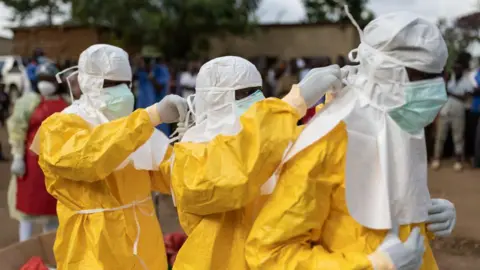
Healthcare workers on the front lines face extraordinary risks when treating Ebola patients, as the virus is transmitted through direct contact with infectious materials. Protective equipment shortages in some facilities have heightened concerns about healthcare worker safety and the ability to maintain adequate staffing levels as the outbreak progresses. Training programs have been deployed to ensure that medical personnel understand proper infection control procedures and can safely manage patient care while minimizing personal risk.
The suspected case count of nearly 250 represents confirmed diagnoses alongside probable and suspected cases under investigation. This categorization is important because not all suspected cases will be confirmed as Ebola through laboratory testing, though preliminary assessments based on clinical symptoms and epidemiological links suggest a significant proportion will be verified. The distinction between case categories helps health officials understand the true extent of confirmed transmission while investigations continue on suspected cases.
Historical context proves valuable when evaluating current outbreak severity. Previous Ebola outbreaks in the region and across Africa have ranged from small, contained clusters affecting a few dozen individuals to massive epidemics, such as the 2014-2016 West African crisis that claimed tens of thousands of lives. The current situation's trajectory will depend heavily on the effectiveness of containment measures, public health response coordination, and community cooperation with isolation and contact tracing protocols.
Environmental factors and animal reservoirs play a significant role in Ebola epidemiology, as the virus naturally occurs in fruit bats and other wildlife. Contact with infected animals, whether through hunting, butchering, or consumption of bushmeat, can initiate human transmission chains. Public health messaging campaigns focus on reducing risky behaviors, such as handling deceased animals or consuming uncooked meat from wild animals, to minimize the likelihood of new infections entering the human population.
The economic and social impacts of an Ebola health emergency extend far beyond direct mortality and morbidity statistics. Communities implementing disease containment measures face disruptions to commerce, education, and normal social activities, creating secondary hardships that can undermine public health cooperation. International travel restrictions and trade barriers may be imposed, affecting the already fragile DR Congo economy and complicating the delivery of medical supplies and humanitarian assistance to affected areas.
Trust in public health authorities and medical institutions significantly influences outbreak response effectiveness. In regions where past medical interventions have been perceived negatively or where misinformation circulates rapidly, populations may resist isolation measures, avoid seeking medical care, or conceal symptoms in household members. Building community trust through transparent communication, local healthcare worker engagement, and culturally sensitive messaging is essential for achieving the cooperation necessary to contain transmission and prevent further spread.
Vaccination strategies represent an important tool in the pandemic response arsenal. Several Ebola vaccines have been developed and demonstrated effectiveness in preventing infection when administered before exposure occurs. Vaccination campaigns targeting healthcare workers, frontline responders, and high-risk populations can reduce susceptibility and create protective barriers that limit transmission chain continuation. However, vaccine distribution logistics in the DR Congo present challenges related to cold chain maintenance and access to remote populations.
The global health surveillance network remains vigilant for any indication that the Ebola outbreak might expand beyond current geographic boundaries or jump to other countries through travel or trade. Early warning systems and rapid reporting mechanisms allow international authorities to implement border health screenings and quarantine protocols if necessary. This coordinated global approach reflects lessons learned from previous outbreaks and represents a significant evolution in international health security preparedness and response capabilities.
Looking forward, the trajectory of this outbreak will depend on multiple interconnected factors including the effectiveness of local and international response efforts, population compliance with public health measures, adequacy of medical resources, and biological characteristics of the current virus strain. Close monitoring will continue as confirmed case numbers are tracked, recovered patient data is analyzed, and new suspected cases are investigated. The global health community remains committed to supporting DR Congo's efforts to contain this serious threat and prevent it from evolving into a larger regional crisis that could have profound humanitarian consequences.
Source: BBC News

