
Ebola Outbreak in DR Congo: Rare Strain Challenges

Explore the Ebola outbreak in DR Congo involving a rare strain. Learn why stopping this epidemic is difficult amid ongoing regional conflict.
Ebola remains one of the most devastating viral diseases known to mankind, causing severe illness and death in a significant percentage of infected individuals. The recent outbreak in the Democratic Republic of Congo has sparked renewed global concern about this deadly pathogen and the challenges associated with controlling its spread. Understanding what Ebola is, how it transmits, and why containment efforts face such substantial obstacles is crucial for comprehending the current health crisis unfolding in this Central African nation.
The Ebola virus is a rare but extremely dangerous pathogen that causes Ebola virus disease (EVD), characterized by sudden onset of fever, intense weakness, muscle pain, and headache. These initial symptoms, which can appear anywhere from two to twenty-one days after infection, often progress to vomiting, rash, impaired kidney and liver function, and in some cases, internal and external bleeding. The virus belongs to the Filoviridae family and is believed to originate from fruit bats, which serve as the natural host for the disease. Understanding the progression and severity of Ebola symptoms is essential for early detection and treatment.
There are several known species of Ebola virus, each named after the geographic locations where they were first discovered. The Zaire ebolavirus is the most lethal, with fatality rates reaching up to ninety percent in some outbreaks. The Sudan ebolavirus has caused multiple epidemics with fatality rates ranging from forty to eighty-five percent. The Bundibugyo ebolavirus, Taï Forest ebolavirus, and Reston ebolavirus represent other identified species, with varying degrees of pathogenicity. The strain currently circulating in the DR Congo represents a particularly concerning variant that health authorities have identified as rare and potentially more challenging to manage than previously encountered strains.
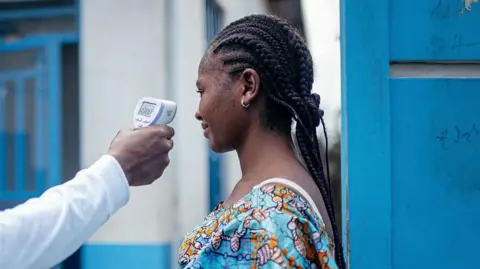
Transmission of Ebola virus disease occurs through direct contact with blood or body fluids of infected individuals or animals, including fruit bats, forest antelope, and other primates. The virus can also spread through contact with surfaces or materials contaminated with these fluids, making healthcare settings particularly vulnerable to transmission if proper infection control measures are not rigorously implemented. Person-to-person transmission is the primary mode of spread during human outbreaks, with the virus entering through breaks in the skin or mucous membranes. This transmission mechanism makes outbreak control dependent on strict infection prevention protocols.
The Democratic Republic of Congo, a nation with significant geographic and political challenges, has emerged as a focal point for Ebola in recent years due to multiple factors. The vast rainforests and remote regions of the DRC provide ideal habitats for the natural reservoir hosts of the virus, creating conditions for sporadic spillover events into human populations. Additionally, the country's healthcare infrastructure, while improving, remains strained and inadequately equipped to handle large-scale epidemics in many regions. These structural limitations compound the difficulties in detecting cases early and implementing rapid response measures.
What makes the current outbreak particularly challenging is its occurrence in an area heavily affected by regional conflict and political instability. Armed groups operating in eastern Democratic Republic of Congo have created security challenges that directly impede outbreak response efforts. Healthcare workers and epidemiologists struggle to access affected communities safely, conduct thorough contact tracing, and establish vaccination campaigns. The presence of armed conflict has led to community mistrust of health authorities, making it difficult for responders to gain access to patients and implement necessary isolation measures. This combination of disease and insecurity creates a uniquely difficult scenario for public health response.
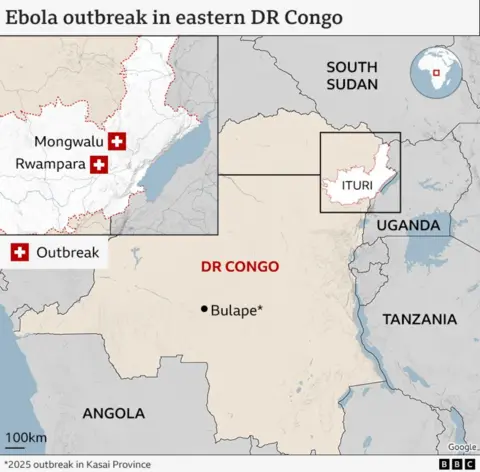
The rare strain involved in this outbreak adds another layer of complexity to containment efforts. Genetic variations in Ebola virus strains can affect transmissibility, virulence, and potentially the effectiveness of vaccines and treatment approaches. Scientists and epidemiologists must rapidly sequence and analyze the genetic characteristics of this strain to determine whether existing countermeasures remain effective or if modifications to response strategies are needed. This scientific challenge requires advanced laboratory capabilities that may not be readily available in the affected region, necessitating international collaboration and sample sharing with reference laboratories.
Vaccination efforts represent one of the most promising tools for combating Ebola outbreaks, with several experimental and approved vaccines showing significant efficacy in protecting against infection. However, delivering vaccines to affected populations in conflict zones presents logistical nightmares including poor road infrastructure, limited cold chain capacity, and security risks for vaccination teams. The vaccination campaigns must be carefully coordinated with local community leaders and health authorities, requiring extensive time and resources. Without adequate vaccine distribution and administration, even the most effective vaccines cannot prevent transmission.
Contact tracing, a fundamental epidemiological tool for controlling infectious disease outbreaks, becomes exponentially more difficult in settings marked by conflict and population displacement. Identifying individuals who have come into contact with confirmed cases requires systematic surveillance, detailed investigation, and community cooperation. In the DRC, population movements driven by violence and insecurity make it nearly impossible to maintain comprehensive contact lists. Many affected individuals may avoid health facilities due to fear, historical distrust of institutions, or lack of awareness about available treatment options. This breakdown in the ability to trace contacts undermines one of the cornerstone strategies for outbreak control.
Treatment options for Ebola virus disease have improved significantly in recent years, with supportive care and new therapeutic approaches showing promise in improving survival rates. Several monoclonal antibody treatments have demonstrated effectiveness in clinical settings, reducing mortality when administered early in the course of illness. However, access to these advanced treatments remains limited in the DRC, where many patients present to health facilities only in advanced stages of disease. The lack of adequate laboratory facilities for rapid diagnostic testing also delays confirmation of cases and initiation of appropriate treatment protocols.
Community education and risk communication represent critical components of any successful outbreak response strategy. Populations in affected areas must understand the transmission routes of Ebola, recognize symptoms in themselves and their family members, and know where to seek appropriate care. However, achieving effective communication in conflict zones where media access is limited and trust in institutions is fractured proves extraordinarily challenging. Misinformation and conspiracy theories can spread rapidly, particularly in settings with limited access to reliable health information, further undermining public health efforts.
International cooperation and resource mobilization become essential when outbreaks occur in resource-limited settings affected by conflict. Organizations including the World Health Organization, Médecins Sans Frontières, and various national health agencies must coordinate response efforts while navigating complex security situations. Financial resources, trained personnel, and medical supplies must be channeled into the response, but delivery remains complicated by infrastructure limitations and security constraints. The international community faces pressure to provide rapid, substantial support while respecting local leadership and sovereignty.
The intersection of disease, poverty, conflict, and weak healthcare systems creates a perfect storm for Ebola transmission in the Democratic Republic of Congo. Addressing this outbreak requires not only immediate emergency response measures but also longer-term investments in healthcare infrastructure, conflict resolution, and community resilience. Understanding why stopping this outbreak is so difficult illuminates the profound challenges facing global health security in fragile and conflict-affected settings. Only through sustained international commitment, local ownership, and addressing underlying drivers of instability can such outbreaks be effectively controlled and prevented.
Source: BBC News


