
El Salvador's Massive Gang Trial Tests Justice System

El Salvador launches unprecedented mass trial of 486 MS-13 members amid concerns over due process and legal representation under emergency powers.
A mass trial in El Salvador has ignited significant controversy as the Central American nation confronts one of its most ambitious prosecutions of gang-related violence. On Tuesday, a Salvadoran court commenced proceedings against 486 alleged members of the Mara Salvatrucha organization, commonly known as MS-13, marking one of the largest collective prosecutions undertaken during President Nayib Bukele's aggressive anti-gang campaign. This sweeping legal action represents a watershed moment in El Salvador's ongoing battle against organized crime, though it has simultaneously raised serious questions about fundamental legal protections and the integrity of the judicial process.
International human rights organizations have issued stern warnings regarding the nature and implications of these collective prosecutions. According to concerned observers and legal experts, the mass trial format fundamentally violates established due process standards that form the cornerstone of fair judicial systems. The grouped prosecution structure severely restricts defendants' ability to mount individual defenses and effectively prevents meaningful access to adequate legal counsel, creating what many view as an insurmountable barrier to a just outcome. These procedural concerns have elevated the case into a matter of international scrutiny, with multiple advocacy groups calling for transparent adherence to international legal standards.
The charges brought against these alleged gang members are staggering in both scope and severity. Prosecutors have documented alleged criminal activities spanning more than 47,000 individual crimes committed throughout a ten-year period from 2012 through 2022. This extensive criminal timeline encompasses some of the most violent episodes in El Salvador's recent history, including specific incidents that rank among the bloodiest the nation has experienced since the conclusion of its devastating civil war. The accumulated charges reflect years of alleged gang-related violence, extortion, drug trafficking, and homicides that have plagued Salvadoran communities.
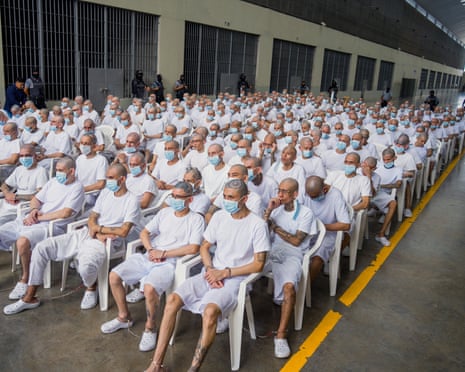
President Nayib Bukele's administration has pursued an increasingly hardline approach to gang violence through the invocation of emergency powers that have fundamentally altered the legal landscape. These extraordinary governmental authorities have enabled the rapid initiation of mass prosecutions while circumventing certain traditional procedural safeguards. Bukele's supporters argue that such measures are necessary given the existential threat that organized crime poses to national security and public safety. The president's administration contends that conventional legal approaches have proven insufficient to combat the scale and brutality of gang violence affecting El Salvador's population.
The MS-13 gang, which originated in Los Angeles during the 1980s before establishing a powerful presence throughout Central America, represents one of the most formidable criminal organizations in the Western Hemisphere. The gang has maintained a fierce reputation for violence, territorial control, and systematic intimidation of local communities across El Salvador and neighboring countries. MS-13's organizational structure, criminal networks, and capacity for extreme violence have made it a primary target of government enforcement efforts. The gang's influence extends beyond simple criminality into the fabric of communities, where its presence shapes daily life and economic activity across multiple regions.
The concept of mass trial proceedings represents a dramatic departure from traditional individual prosecution methods that have historically characterized the Salvadoran legal system. Advocates for such collective approaches argue they offer practical efficiency in addressing the overwhelming volume of gang-related crimes and alleged perpetrators awaiting trial. However, this efficiency-focused rationale has encountered substantial resistance from legal scholars and human rights defenders who prioritize individual rights and case-by-case judicial examination. The tension between administrative efficiency and legal fairness lies at the heart of the ongoing debate surrounding Bukele's judicial reforms.
Legal representation remains among the most troubling aspects of the mass trial format. With 486 defendants proceeding through the court system simultaneously, the provision of adequate individual legal counsel becomes logistically challenging and practically compromised. Defense attorneys struggle to thoroughly investigate individual cases, prepare adequate arguments, and provide personalized representation when managing such overwhelming caseloads within the collective trial structure. This systemic constraint fundamentally undermines defendants' ability to exercise their fundamental legal rights to a defense and representation.
The decade-long period covered by the prosecution encompasses some of El Salvador's most turbulent and violent years. Between 2012 and 2022, the nation witnessed escalating gang violence that resulted in tens of thousands of murders and transformed El Salvador into one of the world's most dangerous countries by homicide rates. Specific weeks and months during this period, including the referenced weekend described as the bloodiest since the civil war, underscore the scale of the crisis that prompted such aggressive government intervention. These tragic statistics form the backdrop against which the current mass trial must be understood.
President Bukele's administration has justified extraordinary measures as necessary responses to extraordinary circumstances. The government contends that traditional incremental approaches to gang prosecution cannot adequately address the scope and severity of organized crime's threat to national stability. The emergency powers framework enables faster case processing, larger-scale arrests, and more rapid prosecutions than standard legal procedures would permit. Supporters emphasize that public safety improvements and reduced violence metrics vindicate the administration's controversial approaches, even as concerns persist regarding procedural justice.
The international community remains divided regarding the appropriate assessment of Bukele's governance approach. Some nations and organizations commend the measurable reductions in violence and gang-related homicides that have accompanied the emergency measures. Conversely, human rights organizations and numerous international legal bodies have expressed alarm at the apparent disregard for due process, legal representation, and other fundamental protections that international conventions obligate governments to maintain. This divergence in perspective reflects broader questions about the balance between security and rights in democratic societies confronting organized crime.
The mass trial proceeding commenced this week will likely extend substantially over time, given the complexity of managing 486 individual defendants through the judicial system. Each phase of the trial will present opportunities for examining how the Salvadoran justice system handles such unprecedented circumstances and whether defendants receive meaningful due process protections. The proceedings will be carefully monitored by international observers and legal experts seeking to assess compliance with established international standards and the consistency of verdicts with individual evidence and circumstances. The eventual outcomes will carry profound implications for how El Salvador's legal system addresses organized crime in the future.
As this historic trial unfolds, fundamental questions about justice, fairness, and the proper limits of government emergency powers remain actively contested. El Salvador's experience may serve as an important case study for how democracies balance security imperatives against legal obligations to protect individual rights. The decisions made during these proceedings will influence not only the immediate defendants but also shape El Salvador's legal landscape for years to come. The tension between addressing endemic violence and preserving judicial integrity continues to define this critical moment in Central American governance.
Source: The Guardian


