
England Football Kit Collector Warns Fans

A dedicated England shirt collector argues that vintage kits offer superior value compared to modern merchandise priced at premium rates.
Les Motherby, a passionate and dedicated collector who has invested over £40,000 into his extensive collection of England national team football shirts, has sparked an important debate about the pricing practices of modern sports merchandise. The seasoned collector, whose vast archive spans decades of Three Lions memorabilia, has made a compelling case that classic England shirts often represent significantly better value for money than the latest releases flooding the market today.
In an industry where football kit pricing has become increasingly controversial, Motherby's perspective carries considerable weight given his extensive experience in the vintage sports merchandise market. His collection, meticulously assembled over years of dedicated hunting through auctions, specialty dealers, and private sales, provides him with a unique vantage point from which to assess the true market value of England football apparel. The collector's observations highlight a growing sentiment among fans that contemporary shirt releases are pushing the boundaries of affordability.
Motherby points out that vintage England kits from the 1980s, 1990s, and early 2000s frequently command comparable or even lower prices than brand-new offerings from the official manufacturer. This counterintuitive market reality suggests that nostalgia and historical significance, combined with limited availability, have created a robust secondary market for heritage shirts. The condition, rarity, and iconic status of these classic pieces mean they retain their value far better than contemporary merchandise that becomes obsolete with each new season's release.
The economics of football merchandise pricing have transformed dramatically over the past two decades. Official retailers have significantly increased their price points, driven by licensing agreements, manufacturing costs, and the premium attached to official endorsements. Meanwhile, the secondary market for historical England shirts has remained relatively stable, with many pieces appreciating modestly or holding their value consistently as collectors recognize their enduring appeal and limited supply.
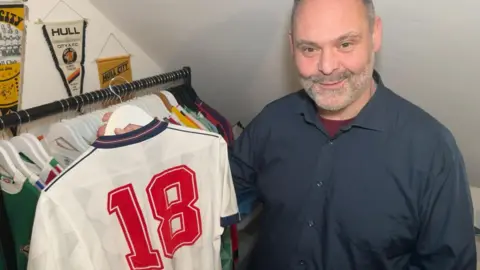
For collectors like Motherby, the pursuit of rare England shirts has become not merely a hobby but an investment strategy that outperforms many contemporary retail purchases. Classic shirts commemorating significant tournaments, featuring legendary players, or representing milestone moments in English football history carry cultural weight that transcends their material composition. These pieces tell stories of memorable campaigns, unforgettable performances, and pivotal moments that shaped the nation's football heritage.
The England shirt market has attracted increasingly sophisticated collectors who understand the fundamentals of supply and demand. Shirts from specific eras—particularly those from major tournaments or limited production runs—have proven to be remarkably resilient investments. A pristine 1996 Euro 96 shirt, for instance, maintains value far superior to a standard current-season release, despite both technically serving the same purpose as fan apparel.
Motherby's observations carry particular significance in an era when major sporting goods manufacturers face mounting criticism over merchandise affordability. His collection demonstrates that fans seeking quality England football shirts have genuine alternatives to paying premium prices for the newest releases. The vintage market offers not only comparable or superior value but also the satisfaction of owning genuine historical artifacts connected to memorable periods in English football.

The retail strategy employed by official kit manufacturers typically revolves around annual or seasonal releases, designed to encourage regular purchasing among supporters. This commercial model has raised the price ceiling for official merchandise to levels that many fans find difficult to justify. In contrast, the classic shirt market operates on different principles, where scarcity, historical importance, and collector interest determine value rather than marketing budgets and retail cycles.
Environmental considerations also factor into Motherby's perspective on sustainable football apparel consumption. By directing fans toward existing vintage shirts rather than continuously purchasing new merchandise, collectors advocate for more thoughtful consumption patterns. This approach reduces unnecessary production and waste while encouraging the appreciation of existing quality pieces that have already survived decades of use and ownership.
The debate sparked by Motherby's insights reflects broader conversations within the sports fan community about fair pricing and consumer value. As official merchandise prices continue climbing, more supporters are discovering the practical and economic benefits of exploring the secondary market for their favorite team's historic kits. The collector's £40,000 investment serves as a testament to the depth of passion that vintage England football memorabilia can inspire while simultaneously highlighting rational economic arguments for choosing heritage pieces over contemporary retail options.

Motherby's advocacy for classic shirts demonstrates that being a devoted fan does not necessarily require supporting the most expensive contemporary offerings. Instead, fans can celebrate their passion for English football while making economically sound decisions that favor both their wallets and their collections. The vintage market for England kits stands as a accessible alternative for supporters seeking authentic, meaningful memorabilia that honors the sport's rich history without requiring excessive financial investment.
Source: BBC News


