
Epstein Survivors Break Silence One Year After Giuffre

Virginia Giuffre's legacy empowers other Jeffrey Epstein survivors to speak out and seek justice. Her courage paved the way for public reckoning.
Saturday marks a solemn milestone—one year since the death of Virginia Giuffre, a pioneering survivor who fundamentally changed how society discusses and confronts the predatory actions of Jeffrey Epstein. Giuffre's decision to abandon anonymity and publicly detail her traumatic experiences served as a watershed moment for countless other victims who had suffered in silence for decades. Her courageous testimony and willingness to face her abuser in the public eye provided a template for healing and accountability that has resonated throughout the survivor community.
As one of the first women to publicly name Epstein and demand criminal charges against the convicted child sex offender, Giuffre's impact extended far beyond her personal journey. Her actions created space for other survivors to emerge from the shadows and reclaim their narratives. Figures like Liz Stein, Jess Michaels, and numerous others found the courage to speak out largely because Giuffre had already proven that breaking silence was possible, that people would listen, and that the powerful could be held accountable.
The ripple effect of Giuffre's public reckoning cannot be overstated in terms of how it transformed the landscape for Epstein survivors seeking justice and healing. By refusing to remain anonymous, she shattered the shame and stigma that typically silences abuse victims. Her testimony demonstrated that speaking one's truth, despite the inevitable scrutiny and pain that accompanies it, could catalyze broader systemic change and inspire others to demand accountability from institutions and individuals who enabled abuse.

Danielle Bensky, who was drawn into Epstein's sphere of exploitation when she was just 17 years old, describes the transformative moment when she recognized herself in Giuffre's testimony. "I saw myself in Virginia, in Maria Farmer, in all of them," Bensky explained, referencing fellow survivor Maria Farmer who also bravely came forward. This moment of identification—of understanding that she was not uniquely culpable or uniquely damaged—proved liberating for Bensky and many others navigating the complex trauma of childhood sexual abuse.
The psychological impact of Giuffre's visibility extended beyond individual survivors to create a collective awakening within the community. When survivors saw someone they recognized—someone who had experienced similar horrors—publicly declare that what happened to them was wrong and criminal, it fundamentally altered their relationship to their own trauma. Bensky's realization that "if they can be victimized, anyone can be" speaks to a crucial shift in understanding that Epstein's abuse crossed socioeconomic, racial, and social boundaries, making his crimes a systemic indictment rather than isolated incidents.
What makes Giuffre's legacy particularly significant is her role in catalyzing a broader culture shift regarding how survivors are treated and perceived. Prior to her public declarations, many victims remained trapped in a cycle of silence, shame, and self-blame—a dynamic that Epstein's network had deliberately cultivated and perpetuated. By standing up and naming her abuser without apology, Giuffre demonstrated that survivor advocacy was not only possible but necessary for achieving justice and preventing future abuse.
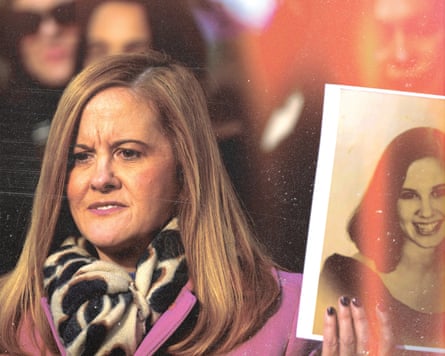
The statement from Danielle Bensky encapsulates one of the most powerful outcomes of Giuffre's courage: the dissolution of isolation. For years, survivors had internalized the false narrative that they were alone, that their experiences were somehow unique to them personally, or that they bore responsibility for what had been done to them. Giuffre's public testimony shattered these destructive myths by creating a visible community of survivors who could recognize themselves in one another's stories.
As this commemorative moment approaches, it serves as an opportunity to reflect on how far the survivor movement has come, while simultaneously acknowledging the ongoing work that remains. The decision by survivors to no longer remain silent represents not just a personal act of courage but a collective refusal to accept the normalization of abuse. These women are not simply sharing their stories; they are actively constructing new frameworks for understanding accountability, justice, and healing in the aftermath of systematic exploitation.
The phrase "we were not going to be silent any more" that emerges from the survivor community encapsulates a profound determination to reclaim agency and authority over their own narratives. For too long, institutions—from law enforcement to media to educational systems—had decided how survivors' stories would be told, contextualized, and understood. By speaking publicly, survivors like Giuffre reasserted control over their own testimonies and demanded that their experiences be recognized as valid, important, and worthy of response.

The timing of this remembrance also invites examination of how the legal system has responded to Epstein survivors' demands for justice and accountability. While significant progress has been made in prosecuting Epstein himself and pursuing civil suits, many survivors continue to seek validation, restitution, and systemic reforms that would prevent similar abuse from occurring in the future. Giuffre's legacy includes not just her personal story but her unwavering commitment to ensuring that other survivors receive the support and recognition they deserve.
Looking ahead, the Epstein survivor community continues to grow and evolve as more women find the courage to come forward. This expansion of public testimonies creates an increasingly comprehensive picture of Epstein's criminal enterprise and the networks of enablers who facilitated his abuse. Each new survivor who speaks adds texture and evidence to the collective narrative, making it increasingly difficult for institutions and individuals to deny, minimize, or ignore the scope and severity of the crimes committed.
As Saturday arrives and the survivor community marks another year without Virginia Giuffre, her absence is felt alongside her enduring influence. The women who continue to speak out, to organize, and to demand accountability are in many ways carrying forward the work that Giuffre made possible. Their voices, joined together and increasingly amplified by media attention and public support, represent a new era in which survivor testimony is recognized as legitimate historical evidence and a crucial component of social reckoning and institutional reform.
The path forward for Epstein survivors remains complex and multifaceted. Beyond criminal justice, many are pursuing civil litigation, seeking therapeutic support, and working to reform institutions that failed to protect them. The solidarity that Giuffre's public stance helped forge among survivors has strengthened their collective voice and increased their capacity to effect meaningful change. Organizations supporting survivors continue to report increasing requests for services, indicating that more victims are ready to break their silence and seek healing in the context of a supportive community.
In the final analysis, Virginia Giuffre's greatest legacy may be the demonstration that speaking truth, despite its costs, can fundamentally alter the trajectory of one's own life and the lives of countless others. By refusing to remain anonymous, by naming her abuser, and by persisting in her demands for justice, she showed an entire generation of survivors that silence was optional—that there was another way, however difficult and painful, toward reclamation and healing. One year after her death, her influence continues to reverberate through the survivor community and beyond.
Source: The Guardian


