
Es Devlin's Selfie Portrait Unites Fractured Britain

Artist Es Devlin creates a living national portrait using thousands of UK selfies at the National Portrait Gallery, aiming to unite a divided nation through collective art.
Es Devlin's groundbreaking installation at the National Portrait Gallery represents a bold artistic statement about unity and national identity in contemporary Britain. In an era where social fragmentation and political polarization dominate the cultural landscape, the renowned British artist has conceived an ambitious project that transforms thousands of ordinary citizen selfies into a collective national portrait. This innovative approach challenges traditional notions of portraiture, which have historically focused on monarchy, political leadership, and celebrity figures rather than the everyday people who constitute the true fabric of society.
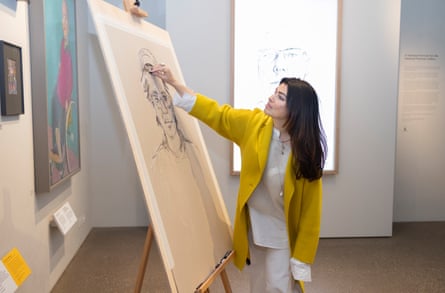
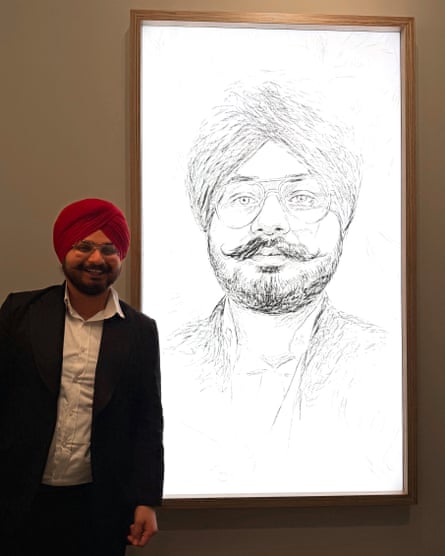
The project, titled A National Portrait for the National Portrait Gallery, was developed in close collaboration with Google Arts & Culture Lab, combining cutting-edge digital technology with classical artistic techniques. Each selfie submitted by participants across the United Kingdom undergoes a remarkable artistic transformation, being rendered in Devlin's distinctive smoky charcoal-and-chalk style that lends an almost ethereal quality to the images. Rather than existing as static photographs, these transformed portraits are then incorporated into a constantly evolving digital carousel that projects onto a framed screen, creating a mesmerizing and perpetually changing display.
At its core, this living portrait initiative embodies a quietly radical philosophy about what it means to be British in the twenty-first century. By inviting people from all corners of the country to submit their selfies, Devlin democratizes the act of portraiture itself, suggesting that every citizen—regardless of status, wealth, or public prominence—deserves representation in the nation's cultural conversation. The project's underlying message, captured in the simple yet powerful statement "we can all coexist," offers a counterpoint to the divisiveness that has characterized recent years of British public life.

The National Portrait Gallery itself has long served as a repository of British identity, housing paintings and sculptures of historical figures deemed worthy of remembrance. By launching this project, the institution is fundamentally reimagining its purpose and scope, suggesting that the narrative of the nation need not be written exclusively through the lives of the powerful and celebrated. Instead, the gallery is now actively soliciting participation from ordinary citizens, creating an inclusive space where the collected faces of the British public become a form of national documentation.
Devlin's artistic practice has always been concerned with the intersection of technology, human connection, and collective experience. Her previous works have explored themes of community and shared identity through immersive installations and large-scale public art projects. With this new commission, she has found a particularly resonant approach to these recurring concerns, one that harnesses the ubiquity of the selfie—often dismissed as a trivial product of contemporary culture—and elevates it to the status of serious artistic material.
The mechanics of the project are designed to maximize engagement and accessibility across different regions and demographics. Participants can submit their selfies through a dedicated online portal, making it possible for people across the entire United Kingdom to contribute regardless of their proximity to London. The use of Google's technology infrastructure ensures that the project can handle submissions from thousands of users simultaneously, creating a truly national scope that reflects the geographical and cultural diversity of Britain.
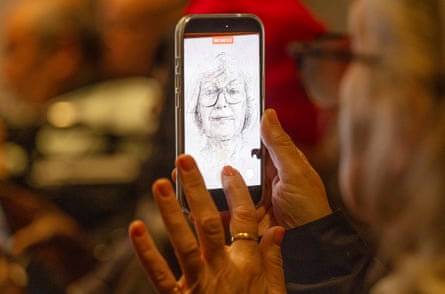
The transformation of each selfie into Devlin's distinctive artistic style is itself a fascinating process that bridges the digital and the analog. The algorithmic translation of photographic images into charcoal-and-chalk renderings creates a visual consistency across the carousel while preserving the individual characteristics that make each portrait unique. This technological mediation adds another layer of meaning to the work, suggesting how modern identity is constructed through multiple technological filters and artistic interventions.
As the carousel of portraits projects continuously onto the gallery screen, viewers experience a profound meditation on time, change, and permanence. Faces flow into and out of view in an endless stream, their appearances never quite settling into a fixed state. This visual metaphor for the constant flux of contemporary life reflects the reality of a nation perpetually grappling with change—whether social, political, or economic. The constantly revolving carousel suggests both the impermanence of individual identity and the enduring continuity of collective national consciousness.
The collaborative partnership between Devlin and Google Arts & Culture Lab represents a significant moment in the evolution of digital art and cultural institutions. By combining the artistic vision of a contemporary creator with the technological capabilities of a major tech company, the project demonstrates how innovation can emerge from unexpected collaborations. This partnership also raises interesting questions about the role of corporations in supporting public cultural expression and how technology companies are increasingly positioning themselves as patrons of the arts.
The timing of this project is particularly significant given the current state of British society. Over the past decade, the country has experienced unprecedented political divisions around issues including European integration, Scottish independence, and the future direction of the economy. In this context, Devlin's gentle insistence that "we can all coexist" functions as both an artistic statement and a political aspiration. The project suggests that beneath the polarizing headlines and divisive rhetoric, there exists a shared humanity and mutual recognition among British citizens that can be visualized and celebrated.
The National Portrait Gallery exhibition invites viewers to contemplate their own place within this collective portrait while simultaneously observing the vast diversity of faces represented. There is something inherently moving about seeing one's own likeness (or the likeness of someone one knows) briefly appear among thousands of others before dissolving back into the flowing stream. This experience replicates the way individuals simultaneously maintain their sense of personal identity while existing as part of larger communities and national populations.
Looking forward, this project may prove to be a significant precedent for how cultural institutions engage with their audiences in the digital age. Rather than simply displaying artworks for passive observation, the National Portrait Gallery has created an interactive experience that transforms visitors and participants into co-creators of the institutional narrative. This fundamental shift in the relationship between museums and their publics suggests new possibilities for how heritage organizations can remain relevant and meaningful in increasingly atomized societies.
The project's success will ultimately be measured not merely in the number of selfies submitted or the aesthetic quality of the resulting digital carousel, but in whether it achieves its deeper goal of fostering a sense of national unity and mutual recognition. In a country feeling increasingly fractured along multiple social, generational, and geographical lines, Devlin's artistic intervention offers a moment of collective reflection. It suggests that despite our differences and disagreements, we remain connected by our shared citizenship and our basic human need for recognition and belonging within a national community. The quietly radical hope embedded in this installation is that art, in its most democratic and accessible forms, still possesses the power to bring people together.
Source: The Guardian


