
Escalating Tensions: Airline Disruptions Persist Amid Iran Strikes

Ongoing military action in the Middle East forces airlines to cancel thousands of flights to major hubs, leaving passengers stranded and airlines struggling to cope.
The recent military strikes between Iran and the United States have led to a significant disruption in air travel across the Middle East, with thousands of flights being cancelled or rerouted over the past several days. As the conflict continues, airlines are being forced to make tough decisions to ensure the safety of their passengers and crews.
The majority of flights to key hubs like Dubai, Abu Dhabi, and Doha have been cancelled for Monday, continuing the trend from the past weekend. Major carriers such as Emirates, Etihad, and Qatar Airways have all been forced to ground large portions of their schedules, leaving travelers stranded and airlines struggling to manage the fallout.
Industry experts say the situation is highly volatile and unpredictable, making it difficult for airlines to plan ahead. With the region's airspace effectively closed off, carriers have had to reroute flights, often adding hours to travel times and burning through extra fuel.
"This is an incredibly challenging time for the airline industry in the Middle East," said aviation analyst Samantha Jones. "Not only are they dealing with the immediate operational disruptions, but there's also a lot of uncertainty about how long this situation will last and what the long-term impacts could be."

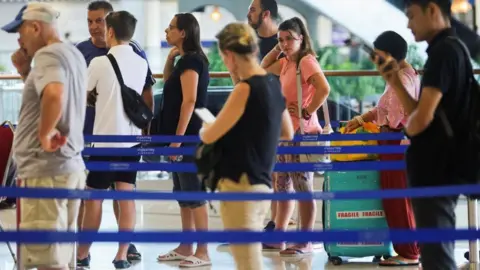
For travelers, the cancellations have meant long delays, missed connections, and the need to find alternative routes to their destinations. Many have been left scrambling to rebook flights or find other modes of transportation, adding to the overall chaos.
Airlines are doing their best to accommodate affected passengers, but the sheer scale of the disruptions has made it difficult. Some carriers have offered refunds or the opportunity to rebook at a later date, while others have provided hotel vouchers and other assistance.
As the situation in the Middle East remains tense, it's clear that the ripple effects will continue to be felt across the global aviation industry. Travelers are advised to stay in close contact with their airlines, monitor the news, and be prepared for further disruptions in the days and weeks ahead.
Source: BBC News


