
EU Court Rules Hungary's Anti-LGBTQ+ Law Violates Core Values

European Court of Justice declares Hungary's 2021 anti-LGBTQ+ law discriminatory and contrary to EU principles, challenging incoming PM Péter Magyar.
The European Court of Justice has delivered a landmark ruling that Hungary's controversial anti-LGBTQ+ legislation fundamentally contradicts the foundational principles upon which the European Union was established. This significant legal decision arrives at a critical juncture for Hungary, occurring just as the nation prepares for a transition in leadership with incoming Prime Minister Péter Magyar set to assume office in the coming weeks. The ruling represents a decisive moment that will test the new administration's commitment to EU values and democratic standards.
The court's comprehensive judgment centered on the 2021 Hungarian law that prohibits the dissemination of content depicting or promoting LGBTQ+ identities to minors, effectively banning such material from educational institutions and mainstream television broadcasts during primetime hours. The European Court of Justice determined that this legislation stands in direct opposition to the core tenets of a pluralistic society and violates essential fundamental rights including the prohibition of discrimination and protection of freedom of expression. The decision underscores the tension between Hungary's domestic policies and the broader European commitment to protecting minority rights.
This ruling carries profound implications for Hungary's relationship with the European Union and its standing among member states. The judgment explicitly states that the law is discriminatory and stigmatising, creating a legal framework that marginalizes an entire segment of the Hungarian population based on sexual orientation and gender identity. By framing the legislation as contrary to the very identity of the union, the court has elevated this case beyond a simple matter of national sovereignty, positioning it as a test of whether Hungary's policies align with the fundamental principles that all EU members are expected to uphold.
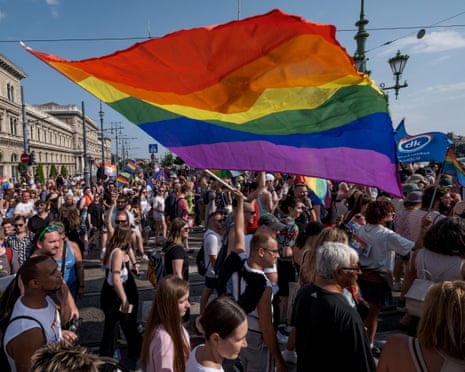
The timing of this decision presents Péter Magyar with an immediate challenge upon taking office. The incoming Prime Minister will face mounting pressure from both European institutions and civil society organizations to address this legal rebuke and potentially move toward revising or repealing the controversial legislation. Magyar's response to this court ruling will be closely watched as an indicator of his government's willingness to prioritize EU compliance and international human rights standards. This early test could set the tone for his entire tenure and Hungary's trajectory within the European community.
Hungary's anti-LGBTQ+ law has been one of the most contentious pieces of legislation passed by any EU member state in recent years, drawing widespread condemnation from human rights organizations, LGBTQ+ advocacy groups, and numerous EU institutions. The law effectively creates a two-tiered system of information access, preventing young people from learning about diverse sexual orientations and gender identities through conventional media and educational channels. This restriction has been widely criticized as incompatible with modern understandings of child development, education, and the right to information that is essential in democratic societies.
The European Court of Justice decision emphasizes that freedom of expression and the prohibition of discrimination are not merely peripheral concerns but rather central to what it means to be part of the European Union. The court's reasoning suggests that laws which selectively suppress information about particular groups of people undermine the pluralistic foundations necessary for democratic governance and social cohesion. By connecting Hungary's anti-LGBTQ+ law to broader violations of fundamental rights, the judgment establishes a precedent that could influence how other EU institutions and member states approach similar legislation.
This case also reflects growing tensions within the European Union regarding member state autonomy and adherence to shared values. While EU law traditionally respects the domestic policy decisions of individual member states, the union has increasingly asserted that certain principles—including protection of minorities and safeguarding democratic norms—are non-negotiable. The judgment against Hungary demonstrates that when national laws cross what the EU considers fundamental lines, European institutions are prepared to intervene and declare such measures incompatible with membership requirements.
The implications of this ruling extend beyond Hungary itself, serving as a warning to other member states considering similar legislation targeting marginalized communities. The European Court of Justice has made clear that protecting minority rights is not optional for EU members but rather an integral component of their commitment to the union. Countries contemplating policies that discriminate against LGBTQ+ individuals or other vulnerable populations should recognize that such measures are likely to face legal challenges and European-level resistance.
For the incoming Magyar government, this decision presents both challenges and opportunities. While the ruling obligates Hungary to address the court's concerns, it also provides an opening for the new administration to signal a fresh approach to governance that prioritizes European integration and human rights protection. How the government responds—whether through legislative reform, administrative adjustments, or other measures—will be watched closely by Brussels, other member states, and civil society organizations throughout Europe.
The broader context of this ruling must also consider Hungary's previous conflicts with EU institutions over fundamental rights and democratic governance. In recent years, the country has faced criticism from the European Commission regarding judicial independence, press freedom, and anti-corruption measures. This anti-LGBTQ+ law represents another dimension of these ongoing disputes, suggesting a pattern of Hungarian legislation that EU authorities consider inconsistent with union values.
Looking forward, the European Union will likely monitor Hungary's compliance with this judgment and the new government's actions regarding LGBTQ+ protections and non-discrimination measures. The outcome of this case could influence broader discussions within the EU about enforcement mechanisms for fundamental rights violations and the consequences for member states that adopt policies deemed incompatible with union principles. As Europe continues to grapple with questions about how to balance member state sovereignty with protection of universal rights, Hungary's response to this ruling will provide important insights into the future direction of European integration.
Source: The Guardian


