
EU Simplifies Cross-Border Train Bookings

New EU rules enable single-ticket bookings across multiple rail operators, eliminating the need to juggle multiple websites and apps for European train journeys.
The European Union is taking decisive action to transform the frustrating experience of booking cross-border train tickets across the continent. For years, travelers attempting to journey through multiple European countries have faced a Byzantine maze of separate booking platforms, incompatible systems, and unclear liability when connections fail. The new regulatory framework promises to fundamentally reshape how passengers book rail travel throughout Europe, making international train journeys as seamless as domestic ones.
The challenge of multi-country rail bookings has long been a source of frustration for European travelers and tourism operators alike. Currently, a passenger seeking to travel from Spain to Poland, for instance, must navigate a complex web of different rail operators, each with their own ticketing systems and terms of service. As one Member of the European Parliament colorfully described the ordeal, the process typically requires "five tabs, three apps and a prayer," highlighting the absurdity of a fragmented system in an increasingly connected Europe.
This fragmentation not only inconveniences individual travelers but also undermines the European Union's broader vision of an integrated continental market. The lack of unified European rail ticketing standards creates barriers for both leisure and business travelers, while also limiting the competitiveness of train travel against other transport modes like low-cost airlines and car rentals. For cross-border commuters and frequent international travelers, the current system represents a significant administrative burden that detracts from the convenience and appeal of rail transportation.

The European Commission's proposed solution centers on enabling single-ticket bookings that seamlessly span multiple rail operators and national borders. Under this new regulatory framework, passengers would be able to purchase one comprehensive ticket that covers their entire journey, regardless of how many different operators are involved along the way. This represents a fundamental shift from the current system, where each leg of a multi-country journey typically requires a separate booking transaction with different providers.
The implementation of this unified booking system would require significant coordination among Europe's numerous railway operators, many of whom are state-owned enterprises with entrenched legacy systems. However, the benefits to the traveling public are substantial and far-reaching. Passengers would no longer need to worry about coordinating connections between different operators or understanding complex transfer procedures that vary from country to country. Instead, responsibility for the entire journey would rest with a single ticketing platform or operator, clarifying liability and customer service obligations.
One of the most critical advantages of this new approach involves addressing the thorniest issue in cross-border train travel: what happens when a connection is missed. Under the current fragmented system, passengers often have no clear recourse when one operator's delay causes them to miss a connection with another operator. The new rules would establish clear protocols for handling missed connections, ensuring that passengers are either rebooked on alternative services or compensated appropriately. This clarity and certainty represents a major improvement over the current situation where responsibility is ambiguous and passengers may be left stranded without clear options.

The proposed EU rail reform also addresses the technical infrastructure required to make unified ticketing possible. Rail operators throughout Europe would need to implement compatible booking systems, real-time connection information sharing, and integrated payment processing. While this represents a significant investment for individual railway companies, the collective benefits in terms of increased passenger volume and market integration justify the expenditure. The European Commission is expected to provide technical guidelines and may offer financial support to help operators implement these necessary changes.
Beyond the purely transactional benefits, the unified booking system is expected to generate significant economic benefits for the European travel and tourism industry. By making cross-border train travel more convenient and predictable, the reforms should increase ridership on international routes. This would benefit not only the railways themselves but also the tourism sectors in various European countries, as more travelers would have the ability to embark on multi-country rail journeys with confidence. Regional economies that depend on tourism would particularly benefit from increased visitor traffic enabled by easier travel arrangements.
The proposal has garnered support from multiple stakeholder groups, including tourism boards, environmental organizations, and consumer advocates. Environmental groups particularly favor measures that encourage train travel over private vehicles or short-haul flights, as rail represents one of the most carbon-efficient modes of long-distance transportation. Tourism operators see the streamlined booking process as a competitive advantage that could help European destinations compete more effectively against non-European travel options. Consumer advocates emphasize the rights protection aspects of the proposal, noting that the clarified responsibility structures will better protect passenger interests.

Implementation of the new single-ticket European rail system is expected to unfold over several years, with different operators coming online at different times. The European Commission has indicated that it will take a phased approach, starting with the largest and most frequently traveled routes before expanding to smaller connections. This staged implementation approach allows operators to gradually adapt their systems while ensuring that the most popular routes benefit from the changes quickly.
The regulatory framework also includes provisions for protecting consumers during the transition period. Operators will be required to maintain clear information about which routes are included in the new unified system and which still require separate bookings. This transparency helps ensure that passengers understand exactly what they are purchasing and avoid the confusion that might otherwise result from a partially implemented system. The regulations also establish minimum customer service standards that apply to all cross-border journeys, regardless of whether they utilize the new unified booking system or consist of separately booked tickets.
Looking ahead, the EU's rail reform initiative represents a watershed moment for European transportation infrastructure. By breaking down the technical and regulatory barriers that have fragmented cross-border rail booking, the EU is taking a significant step toward creating a truly integrated European mobility ecosystem. What was once an exhausting process requiring multiple browser tabs, downloaded apps, and more than a little luck may finally become a straightforward consumer transaction. This transformation will not happen overnight, but the commitment to unified cross-border transportation standards signals that European policymakers are serious about making rail travel a competitive and attractive option for continental travelers.
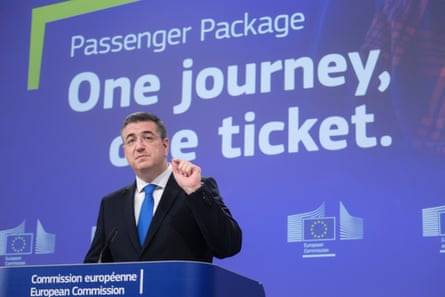
The success of this initiative will ultimately depend on the willingness of individual railway operators to embrace the new standards and invest in the necessary technological changes. While the regulatory framework provides the mandate for change, the practical execution will require cooperation and goodwill across the industry. Some operators may view the changes as burdensome, while others may see them as opportunities to expand their market reach and increase revenue through increased cross-border traffic. The European Commission's role will be critical in facilitating dialogue, providing technical support, and ensuring that the transition moves forward smoothly despite the competing interests of various stakeholders.
Source: The Guardian


