
Europe Can Rebuild Global Order, Says Canadian PM

Mark Carney argues Europe isn't destined for submission, can instead lead new international rules-based order amid NATO concerns.
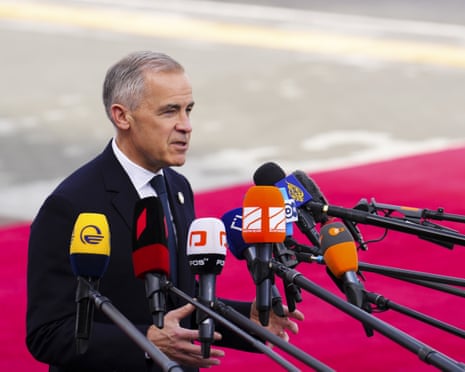
In a significant address to the European Political Community, Canadian Prime Minister Mark Carney delivered an optimistic message about Europe's role in shaping the future of global governance. Carney emphasized that the continent is not destined to capitulate to what he characterized as a more "transactional, insular and brutal world," instead positioning Europe as a potential cornerstone for rebuilding a rules-based international order that respects democratic values and multilateral cooperation.
Carney's remarks come at a particularly pivotal moment in international relations, as geopolitical tensions continue to mount across multiple regions. Speaking as the first non-European leader invited to address this high-profile gathering, the Canadian prime minister underscored the importance of collective action among democratic nations. His comments reflected broader concerns within the international community about the future direction of global politics and the viability of institutions that have underpinned international stability for decades.
The European Political Community meeting, which commenced on Monday, convened at a time of considerable uncertainty regarding Western alliances. Multiple challenges have converged to create an environment of heightened diplomatic concern, from escalating tensions in critical maritime passages to growing questions about the steadfastness of longstanding security commitments. The timing of Carney's attendance and remarks underscores the significance many leaders place on reaffirming the bonds between North America and Europe during this period of flux.
Tensions in the Strait of Hormuz, one of the world's most crucial maritime chokepoints through which a significant portion of global energy supplies transit, have become increasingly pronounced. This strategic waterway has long been a flashpoint for regional tensions, and recent developments have renewed concerns about potential disruptions to international commerce and security. The strait's geopolitical importance cannot be overstated, as any serious disruption to shipping through these waters could have cascading effects on the global economy and international stability.
Perhaps equally concerning to many European and North American policymakers is the question of Washington's commitment to the NATO alliance. For over seven decades, the North Atlantic Treaty Organization has served as the primary security framework binding North America and Europe together, with Article 5 guaranteeing collective defense. However, recent political developments and policy shifts have prompted renewed scrutiny of American intentions and the durability of these security guarantees, leading to discussions about Europe's capacity for strategic autonomy.
Carney's message appears designed to address these anxieties head-on by articulating a vision of European leadership in constructing a new international architecture. Rather than accepting a passive role in a world shaped by great power competition and transactional diplomacy, the Canadian PM suggested that Europe possesses the diplomatic, economic, and political resources necessary to champion principles of multilateralism and rules-based governance. This perspective carries particular weight coming from a North American leader, as it signals continued commitment from Canada to supporting European-led initiatives in international affairs.
The concept of a "rules-based international order" has become increasingly central to discussions among Western democracies seeking to counter what they view as challenges from authoritarian or revisionist powers. This framework emphasizes adherence to international law, respect for sovereignty, transparent negotiations, and institutional mechanisms for resolving disputes peacefully. Advocates for this approach argue that such systems, while imperfect, provide better outcomes than alternatives based on military might or economic coercion alone.
Carney's emphasis on Europe's potential role in reconstructing and reinforcing this order reflects recognition that traditional institutions and frameworks may require significant reform and revitalization. The World Trade Organization, United Nations, and various regional security arrangements all face questions about their relevance and effectiveness in addressing contemporary challenges. A European-led initiative to strengthen and modernize these systems could provide the diplomatic momentum necessary to build consensus among democratic nations on a shared vision for global governance.
The gathering of the European Political Community itself represents an important diplomatic initiative, bringing together leaders from across the continent to discuss shared challenges and opportunities. The forum serves as a broader platform than the European Union, allowing countries outside the EU but within Europe's sphere of influence to participate in strategic conversations. This inclusive approach reflects recognition that addressing contemporary challenges requires engagement with as broad a coalition as possible.
The distinction between Carney's optimistic vision and the more pessimistic assessments offered by some analysts lies in contrasting views about European capabilities and resolve. While critics argue that Europe faces insurmountable challenges ranging from internal divisions to military constraints, proponents of the Carney perspective contend that the continent's economic strength, technological sophistication, and diplomatic experience position it well for leadership. The outcome of this debate will likely shape international relations for years to come.
Moving forward, the success of any European-led international initiative will depend on several factors, including the level of political commitment from major EU member states, the degree of alignment between European and North American interests, and the ability to attract support from other democratic nations globally. Carney's remarks suggest that Canada views itself as a potential partner in these efforts, offering both diplomatic support and substantive contributions to whatever frameworks emerge from contemporary discussions about global governance reform.
The broader context for these discussions involves recognition among Western leaders that the post-Cold War international system faces unprecedented challenges and that adaptation is necessary. Whether Europe can indeed serve as the foundation for rebuilding and strengthening this order, as Carney suggests, will depend on whether political leaders across the continent can overcome internal disagreements and project unified purpose on the world stage. The coming months and years will provide crucial tests of whether such visions can be translated into concrete institutional and policy changes.
Ultimately, Carney's message represents a call for hope and proactive leadership during a period of considerable uncertainty. Rather than accepting a diminished role or accommodating forces he characterizes as "brutal," the Canadian prime minister advocates for Europe to chart its own course in service of values the continent claims to uphold. Whether this vision proves achievable will depend on the political will, diplomatic skill, and material resources that Europe's leaders are willing to commit to such ambitious objectives in the years ahead.
Source: The Guardian


