
Europe Grapples with Unified Voice on Delicate Iran Issue

As Europe navigates complex relations with Iran, leaders face challenges in aligning their approaches. This in-depth analysis explores the obstacles to a cohesive EU stance on this geopolitical hot spot.
As tensions between Iran and the West continue to simmer, Europe's leaders have found it increasingly difficult to speak with one voice on the matter. The region's diverse political, economic, and historical ties to Iran have made it a challenge for European nations to coordinate a unified approach, despite their shared desire to play a more prominent role in resolving the crisis.
The nuclear deal struck in 2015 between Iran and world powers, including the European Union, initially presented an opportunity for Europe to exert greater influence. However, the unilateral withdrawal of the United States from the agreement in 2018 and the subsequent reimposition of sanctions have complicated the continent's efforts to maintain the fragile accord.

France, Germany, and the United Kingdom, known as the E3, have sought to preserve the nuclear deal and prevent further escalation between Iran and the U.S. Meanwhile, other European nations, such as Italy and Spain, have been more cautious in their approach, mindful of potential economic consequences and geopolitical ramifications.
The divergent national interests and priorities of European states have hindered their ability to develop a cohesive strategy on Iran. Some countries have prioritized maintaining trade and investment ties with Iran, while others have been more willing to align with U.S. sanctions and pressure.
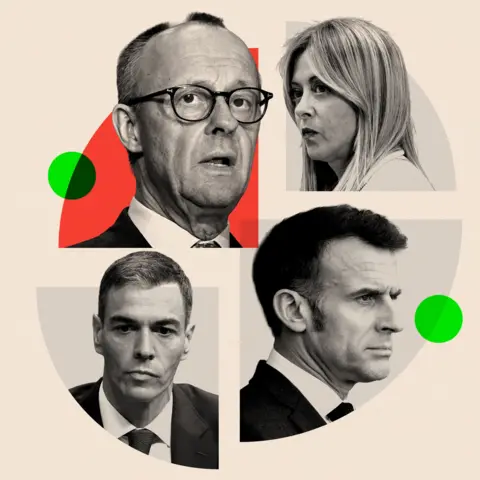
This lack of unity has not gone unnoticed by Iran, which has exploited the divisions within Europe to its advantage. Tehran has been adept at playing European nations against each other, offering economic incentives to those willing to defy U.S. sanctions while threatening consequences for those who comply.
The war in Ukraine and the resulting energy crisis have further complicated the European response to Iran, as many nations have had to prioritize securing alternative energy sources and maintaining economic stability at home.
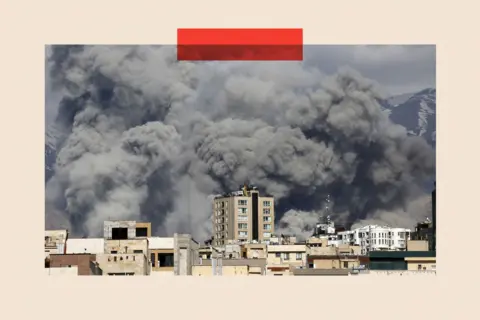
As the geopolitical landscape continues to shift, Europe's leaders will be under increasing pressure to overcome their differences and present a united front on Iran. Failure to do so could not only undermine the EU's credibility on the global stage but also limit its ability to influence the outcome of the complex and ever-evolving situation in the Middle East.
Source: BBC News


