
Eurovision's Israel Crisis: Will It Transform the Competition?

Eurovision faces unprecedented boycotts over Israel's participation. Explore how this controversy could fundamentally reshape the iconic song competition's future.
The Eurovision Song Contest, one of the world's longest-running and most beloved international entertainment spectacles, is confronting an existential challenge that threatens to reshape its very foundation. As the competition grapples with its most significant boycott movement in seven decades, serious questions are emerging about whether Eurovision can survive this moment of profound division, or whether it will be permanently transformed by the forces dividing it.
The Eurovision boycott movement has reached unprecedented levels, with multiple countries withdrawing from participation and numerous artists declining to perform. This groundswell of protest centers on the participation of Israel in the competition, marking a sharp departure from Eurovision's traditional role as a celebration of unity through music and cultural exchange. The scale of the current controversy dwarfs previous disputes that have plagued the contest's seven-decade history.
Historically, Eurovision has weathered various political storms and controversies. However, the current situation represents something qualitatively different in both scope and intensity. The Eurovision controversy over Israel has mobilized activists, musicians, and nations in ways that previous disputes never achieved, suggesting that the competition's apolitical pretense may no longer be tenable in today's deeply polarized world.

The competition's fundamental charter emphasizes bringing nations together through the universal language of music, deliberately steering clear of political divisions. Yet this aspiration has consistently collided with geopolitical realities throughout Eurovision's history. From the Cold War tensions of earlier decades to recent disputes over representation and inclusion, the contest has never truly existed in a purely apolitical vacuum.
What distinguishes the current Eurovision Israel debate from past controversies is the mobilization of civil society organizations, prominent musicians, and international solidarity movements. The boycott efforts have transcended traditional state-level complaints to engage grassroots activism on a global scale. This expansion of the protest beyond formal governmental channels represents a new dynamic in Eurovision politics that organizers must now confront.
The participation of Israel in Eurovision has previously sparked controversy, but never at the current magnitude. The escalation reflects broader international tensions and the increasing politicization of cultural events. Many argue that by hosting Eurovision, participating nations implicitly endorse Israel's participation, creating a moral dilemma for those who oppose current Israeli government policies.

Industry observers and cultural commentators have begun analyzing what fundamental changes might be necessary for Eurovision to navigate this crisis. Some propose Eurovision reform measures that would establish clearer frameworks for handling political controversies. Others suggest that the competition must develop new mechanisms for addressing the concerns of activist communities while maintaining its commitment to international participation and cultural exchange.
The European Broadcasting Union (EBU), which organizes Eurovision, faces unprecedented pressure to articulate a coherent position that acknowledges the legitimate concerns of protesters while defending the competition's inclusive principles. This balancing act has proven extraordinarily difficult, as any position taken will inevitably alienate significant constituencies. The EBU's historical commitment to political neutrality has been tested before, but never quite so comprehensively as in the current moment.
Beyond the immediate crisis, fundamental questions loom about Eurovision's future relevance and viability. Can a competition maintain legitimacy when substantial portions of the global community view its operation as implicitly political? How should international cultural events navigate the reality that pure apoliticism may be impossible in an interconnected world where every decision carries political implications?
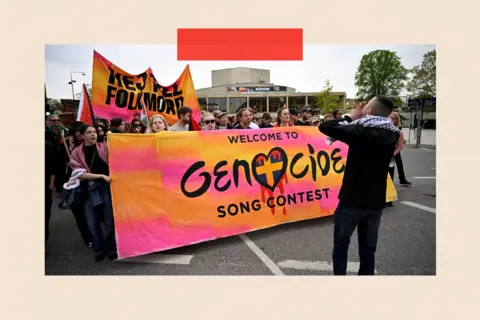
The boycott movement has included both countries withdrawing from competition and Eurovision artists refusing to participate. This dual-level withdrawal represents a direct challenge to the competition's ability to function as intended. When nations and artists actively avoid the platform, it undermines the fundamental premise that Eurovision represents a universal celebration of diverse musical cultures.
Historical precedent suggests that major institutions can adapt and survive significant challenges when they demonstrate genuine responsiveness to legitimate concerns. However, Eurovision's traditional approach of procedural formality and political neutrality statements may no longer suffice. The contemporary moment demands more substantive engagement with the underlying tensions driving the boycott movement.
Looking forward, Eurovision faces a critical inflection point. The competition could attempt to maintain its traditional formula while hoping the current controversy eventually subsides, though this approach risks further erosion of legitimacy. Alternatively, it could undergo more fundamental structural reforms designed to address the political realities that make true apoliticism impossible.
Some analysts propose that Eurovision might establish explicit frameworks for addressing controversial participation, developing transparent processes for evaluating geopolitical concerns raised by member states or activist organizations. Others suggest more radical reimagining of the competition's structure, potentially devolving decision-making authority to regional broadcasting unions or establishing independent oversight mechanisms.
The stakes extend beyond Eurovision itself. How international cultural competitions navigate contemporary political divisions will influence broader institutional approaches to similar challenges. Television broadcasters worldwide are observing how the EBU handles this moment, recognizing that their own international sporting events and cultural programs face analogous pressures.
The Eurovision competition's future depends substantially on whether organizers can acknowledge that political considerations have always shaped international cultural exchanges, even when explicitly denied. This honest reckoning might enable the development of more sophisticated approaches that neither pretend to impossible apoliticism nor surrender the competition to become a vehicle for political struggles.
What remains certain is that Eurovision will not emerge from this crisis unchanged. Whether the changes will strengthen the competition by making it more responsive and legitimate, or whether they will represent capitulation that destroys its essential character, remains to be determined. The next months and years will reveal whether the Eurovision Song Contest can transform itself into an institution better suited to the political complexities of contemporary global culture.
Source: BBC News


