
Everest Ice Block Halts Hundreds of Climbers

A dangerous serac above Everest base camp has forced climbers to pause summit attempts. Officials assess route safety as conditions remain unstable.
A significant ice block on Mount Everest has created an unexpected obstacle for hundreds of climbers attempting to reach the world's highest peak. The serac between base camp and camp one has been deemed unstable and dangerously risky for mountaineers, forcing officials to implement a temporary halt on forward progression while safety assessments are conducted. This development marks a critical juncture in the climbing season, affecting expeditions from around the globe and testing the resilience of climbers who have already invested considerable resources and preparation time.
Himal Gautam, an official from Nepal's department of mountaineering, confirmed the hazardous conditions on Friday, stating that the unstable ice formation poses significant risks to climber safety. The serac, which is a large block or column of ice formed by intersecting crevasses, has become increasingly unstable due to natural melting and shifting patterns that occur regularly on the mountain. This particular serac sits on the critical route that connects the relatively sheltered base camp environment to the more exposed camp one location, making it an unavoidable obstacle for all climbers pushing toward higher elevations.
The Everest route assessment has become a routine but essential practice as climate change and natural mountain processes continue to alter the climbing environment. Officials must balance the ambitious goals of climbers with the paramount concern of safety, knowing that even minor delays can significantly impact expedition timelines and success rates. The decision to halt climbers reflects the cautious approach that Nepal has increasingly adopted in recent years following several tragedies on the mountain that claimed numerous lives.
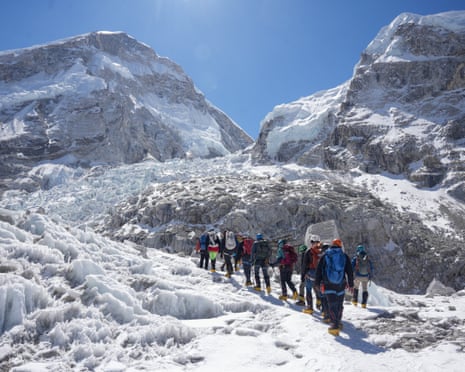
Hundreds of climbers from various nationalities currently stationed at base camp face the prospect of extended delays as they await clearance to proceed. These mountaineers have already acclimatized to the higher elevation and have been preparing mentally and physically for the challenging push toward the summit. The unexpected halt disrupts carefully planned schedules, forcing climbers to manage resources, maintain physical conditioning, and manage the psychological demands of remaining at base camp while unable to advance.
The specific location of this dangerous ice block—between base camp and camp one—makes it a critical chokepoint on the standard route up Everest. This section of the mountain, while lower than other camps, still requires tremendous endurance and technical skill to traverse safely. The serac's instability means that even attempting to navigate around it could expose climbers to increased avalanche risk and other hazards. Officials must therefore determine whether the ice formation will naturally stabilize, whether it can be safely reinforced, or whether alternative routes need to be established.
Climate patterns and seasonal weather have long influenced Everest climbing conditions, but in recent years, the effects have become more pronounced and unpredictable. Warmer temperatures are causing increased ice and snow melt, destabilizing formations that climbers have safely navigated for decades. The ice block challenge currently blocking progress represents a microcosm of the larger environmental challenges facing high-altitude mountaineering in the era of climate change.
Nepal's mountaineering department has established protocols for evaluating such hazards, involving experienced guides, rope fixers, and technical assessments of ice stability. The department must gather comprehensive data about the serac's current condition, monitor it for changes, and determine the optimal timing for allowing climbers to progress. This process can take anywhere from hours to several days, depending on the complexity of the assessment and the rate of environmental change.
The delay has implications beyond individual climbers, affecting the broader mountaineering ecosystem in Nepal. Local guides who depend on climbing season work, commercial expedition companies managing multiple teams, and support staff at base camp all feel the impacts of extended delays. These interruptions can affect profit margins, guide income, and the overall viability of climbing operations during the limited window when Everest is typically accessible.
Previous incidents involving ice falls and serac collapses on Everest have resulted in fatalities and injuries, underscoring the necessity of rigorous safety protocols. The 2014 season saw a devastating avalanche kill 16 Sherpa guides, demonstrating the severe consequences when ice and snow conditions become unstable. This history informs current decision-making, with officials taking a precautionary stance when uncertain about ice formation stability.
Communication between Nepal's mountaineering department, expedition companies, and climbers has been essential in managing the situation. Clear information about the nature of the hazard, the expected timeline for assessment, and the prospects for route clearance helps climbers plan accordingly. Transparency about risk factors and decision-making processes builds confidence in the safety measures being implemented.
The situation highlights the ongoing tension between enabling ambitious mountaineering adventures and ensuring adequate safety protections. Nepal's mountaineering regulations have evolved significantly over the past decade, incorporating more stringent safety requirements and environmental assessments. This approach reflects lessons learned from previous disasters and a growing recognition that sustainable mountaineering requires prioritizing climber welfare over rushing expeditions.
As officials continue their ice formation assessment, climbers at base camp remain in a state of watchful waiting. Many have invested months or years in preparing for their Everest attempt, and delays, while frustrating, represent the reality of mountaineering at extreme altitudes where natural forces ultimately determine feasibility. The outcome of the current situation will likely influence climbing practices and safety protocols for seasons to come, as the mountaineering community learns from each challenge the mountain presents.
Looking ahead, the Everest climbing season continues to evolve as environmental conditions change and safety practices improve. This incident serves as a reminder that even with extensive preparation and modern equipment, natural forces remain the ultimate arbiter of success on the world's highest peak. For the hundreds of climbers currently waiting, patience and respect for the mountain's power may ultimately prove as important as physical conditioning and technical skill in achieving their summit dreams.
Source: The Guardian


