
Falcon 9 Rocket Upper Stage Set to Crash Into Moon This Summer

A Falcon 9 rocket upper stage launched in early 2025 will impact the Moon on August 5 at 2:44 AM ET, traveling at seven times the speed of sound.
A Falcon 9 rocket upper stage is on a collision course with the Moon, according to recent astronomical analysis. The defunct rocket component, which was launched into space during the early months of 2025, is expected to strike the lunar surface during the summer months, with astronomers pinpointing August 5 as the most probable impact date. This lunar impact event represents a rare opportunity for scientists to observe how spacecraft debris interacts with the Moon's pristine surface.
Bill Gray, the renowned developer of Project Pluto software, has emerged as the leading authority tracking this anticipated collision. His widely-respected tracking software is extensively used by astronomers and space agencies worldwide to monitor near-Earth objects and other celestial bodies. Gray's comprehensive technical report provides detailed calculations and analysis regarding the upcoming impact, establishing it as the definitive source for information about this event.
According to Gray's findings, the impact will occur at 2:44 am Eastern Time on August 5, which corresponds to 06:44 Coordinated Universal Time (UTC). This precise timing has been calculated through rigorous orbital mechanics analysis, taking into account gravitational influences and the rocket's trajectory through space. The predicted impact location is on the near side of the Moon, the hemisphere constantly facing Earth, which makes it theoretically observable from our planet.
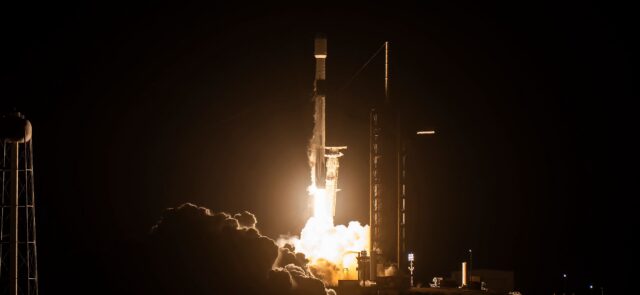
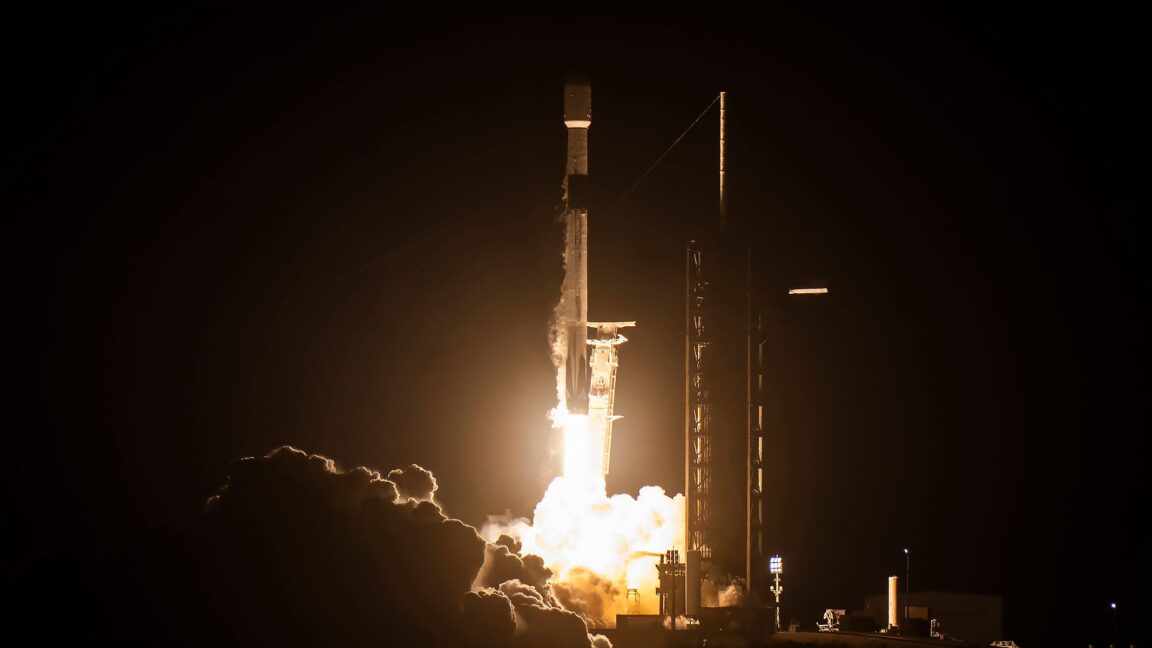
The Falcon 9 rocket upper stage dimensions are quite substantial, measuring 13.8 meters (approximately 45 feet) in height and featuring a diameter of 3.7 meters (about 12 feet). These specifications indicate a significant amount of mass that will be transferred to the Moon during the collision. The upper stage, also known as the second stage or orbital stage, is the component responsible for final orbital insertions and is typically much lighter than the first stage booster but still represents considerable physical mass.
Because the Moon possesses virtually no atmosphere to slow down or burn up incoming objects, the Falcon 9 upper stage will strike the lunar surface intact. This is fundamentally different from impacts with Earth, where atmospheric friction causes most objects to burn up before reaching the ground. The lack of lunar atmosphere means the rocket component will maintain its full velocity through impact, creating a more dramatic collision event. The absence of weathering forces on the Moon also means the impact crater will remain pristine and well-defined for future observation.
The velocity at which this collision will occur is extraordinarily high, with the upper stage approaching at approximately seven times the speed of sound. In actual terms, this translates to speeds exceeding 24,000 miles per hour or roughly 35,000 kilometers per hour. At such extreme velocities, the kinetic energy released upon impact will be substantial, though precise estimates of crater size require knowledge of the upper stage's exact mass and composition. The energy release will be equivalent to a localized explosion of considerable magnitude.
Geographically, the impact timing presents an interesting observation opportunity for Earth-based astronomers. The Moon will be visible from the eastern half of North America, encompassing much of the United States and Canada, as well as throughout large portions of South America. This geographic positioning might suggest favorable viewing conditions for detecting the impact event from Earth-based observatories and telescopes positioned across these regions.
However, Gray has tempered expectations regarding visual detection of the event. Despite the Moon's visibility from populated regions during the predicted impact time, Gray believes the impact will likely be too faint for Earth-based telescopes to detect. This assessment is based on extensive calculations considering the impact brightness, lunar surface reflectivity, and the sensitivity limitations of ground-based astronomical equipment. The expected flash of light from such an impact, while energetic in absolute terms, would be dim when viewed across the quarter-million-mile distance separating Earth and Moon.
The challenge of observing the impact from Earth highlights the limitations of ground-based astronomy when dealing with distant and relatively small-scale events. Space-based observatories, particularly those in lunar orbit or equipped with sensitive infrared capabilities, may have substantially better chances of detecting the impact event. NASA's Lunar Reconnaissance Orbiter, for instance, routinely orbits the Moon and possesses cameras capable of detecting much smaller impacts. Such spacecraft-based observations would provide invaluable scientific data about the impact's characteristics and effects on the lunar surface.

This upcoming lunar impact event raises broader questions about space debris management and the long-term consequences of human space activities. As space exploration accelerates and more missions are launched each year, the accumulation of dead rocket stages and defunct satellites in space becomes an increasingly significant concern. While this particular impact occurs on the Moon rather than in Earth orbit, it exemplifies the challenge of tracking and accounting for all objects launched into space.
The incident also underscores the importance of advanced tracking systems like Project Pluto in monitoring potential hazards. Bill Gray's work in orbital mechanics and object tracking contributes significantly to our understanding of space traffic and potential collision risks. As commercial space activities expand with companies like SpaceX launching dozens of missions annually, such monitoring capabilities become ever more critical for space situational awareness.
From a scientific perspective, the impact presents an opportunity to study how celestial bodies respond to hypervelocity collisions. The crater formed by this impact could provide researchers with valuable data about the Moon's subsurface composition, impact dynamics, and energy dissipation patterns. Future lunar exploration missions and orbital surveys may examine the impact site to gather additional scientific information about this unintended experiment on the Moon's surface.
As August 5 approaches, space enthusiasts and professional astronomers will be watching for any opportunities to observe this rare spacecraft-Moon collision. While the visual impact may be subtle for ground-based observers, the event itself represents a milestone in the history of human space exploration, marking the first confirmed impact of a SpaceX rocket stage on another celestial body. This milestone, whether intended or accidental, will be recorded as part of the broader narrative of humanity's expanding presence beyond Earth.
Source: Ars Technica


