
Family Demands Justice for Palestinian-American Killed

Nasrallah Abu Siyam becomes the sixth American citizen killed in West Bank violence, as family calls for accountability from Israeli forces and settlers.
The family of Nasrallah Abu Siyam, a Palestinian-American citizen who was fatally shot in the occupied West Bank, is demanding immediate accountability from both Israeli authorities and the U.S. government following his tragic death. Abu Siyam's killing marks a disturbing milestone, as he becomes the sixth American citizen to lose their life at the hands of Israeli settlers or military forces in the West Bank over the past two years.
The incident has reignited international concerns about the escalating violence in the occupied territories and raised serious questions about the protection of American citizens in conflict zones. Abu Siyam's death represents not only a personal tragedy for his loved ones but also a broader pattern of violence that has claimed the lives of multiple Palestinian-American citizens in recent years.
Family members and community leaders are calling for a thorough investigation into the circumstances surrounding Abu Siyam's death, demanding that those responsible be held accountable under both Israeli and international law. The family has expressed frustration with what they perceive as a lack of meaningful action from U.S. officials in previous cases involving American citizens killed in similar circumstances.
The broader context of this tragedy reflects the deteriorating security situation in the West Bank, where tensions between Palestinian residents and Israeli settlers have reached dangerous levels. Human rights organizations have documented a significant increase in settler violence and military operations that have resulted in civilian casualties, including several American citizens of Palestinian descent.
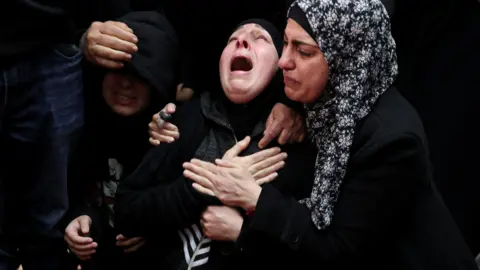
Over the past 24 months, the deaths of six American citizens in the West Bank have created a diplomatic challenge for the U.S. government, which maintains strong ties with Israel while also having obligations to protect its citizens abroad. Each case has involved either direct confrontations with Israeli settlers or incidents during military operations conducted by Israeli forces in Palestinian communities.
Legal experts and human rights advocates argue that the pattern of violence against Palestinian-Americans in the West Bank requires immediate intervention from U.S. diplomatic channels. They contend that the State Department must take stronger action to ensure the safety of American citizens and demand accountability when violence occurs.
The Abu Siyam family's call for justice echoes similar pleas from other families who have lost loved ones in the region. Community organizations representing Palestinian-Americans have organized advocacy campaigns to pressure both governments to address what they describe as a crisis of accountability in the occupied territories.
International law experts note that the killing of American citizens in the West Bank raises complex jurisdictional questions about which legal system should prosecute such cases. The occupied status of the West Bank under international law creates additional complications for families seeking justice through formal legal channels.
The State Department's response to previous incidents involving American citizens in the West Bank has been criticized by advocacy groups as insufficient. Critics argue that diplomatic protests and calls for investigation have not translated into concrete consequences or meaningful changes in policy that would better protect American citizens in the region.
Abu Siyam's death occurs against the backdrop of increasing settler violence in the West Bank, which has been documented by Israeli and international human rights organizations. Recent reports indicate that attacks by settlers on Palestinian communities have reached unprecedented levels, often occurring with impunity and limited intervention by Israeli security forces.
The family's demand for accountability extends beyond the immediate circumstances of Abu Siyam's death to address systemic issues related to the protection of Palestinian civilians and American citizens in the occupied territories. They argue that without meaningful consequences for those who commit violence, the cycle of impunity will continue to claim innocent lives.
Community leaders are also calling attention to the psychological impact on Palestinian-American families who maintain connections to the West Bank. The deaths of six American citizens have created an atmosphere of fear and uncertainty among those who travel to the region to visit family or maintain cultural ties.
The Abu Siyam case highlights the complex relationship between U.S. foreign policy objectives and the protection of American citizens in conflict zones. Balancing diplomatic relationships with Israel while ensuring accountability for violence against American citizens presents ongoing challenges for U.S. policymakers.
Legal advocacy groups are exploring multiple avenues for seeking justice, including potential civil litigation in U.S. courts and appeals to international legal bodies. These efforts face significant obstacles due to various legal immunities and the complex political dynamics surrounding the Israeli-Palestinian conflict.
The timing of Abu Siyam's death coincides with broader international discussions about accountability for violence in the occupied territories. Recent developments in international legal forums have increased attention on the situation in the West Bank and the protection of civilian populations.
As the family continues their fight for justice, their case serves as a stark reminder of the human cost of ongoing conflict and the urgent need for effective mechanisms to protect civilians and ensure accountability for violence in the region. The outcome of their advocacy efforts may have significant implications for other families seeking justice and for U.S. policy toward protecting American citizens in conflict zones worldwide.
Source: BBC News


